

Archives: Products

Siglent SMM3000X Source Measure Unit (SMU)

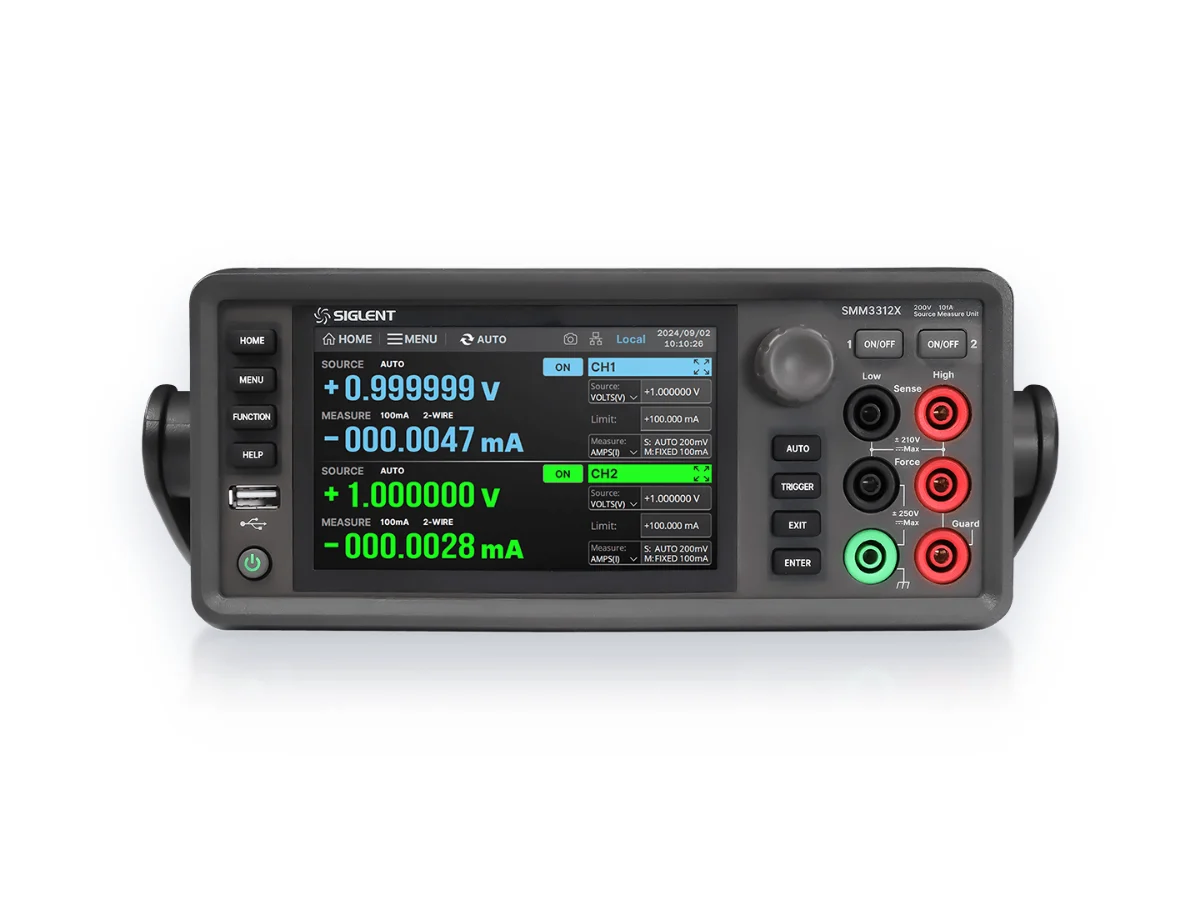
The Siglent SMM3000X is a four-quadrant precision source measure unit (SMU) with one or two channels. It sources and measures up to +/-210 V and 3.03 A DC (10.5 A pulsed) at 31.8 W per channel, with 10 fA / 100 nV resolution, a 6½-digit display and up to 100,000 readings per second. Pertech, an authorized Siglent distributor in Israel, quotes in ILS with local invoicing, handles warranty in Israel and arranges calibration and repair.

SMM3000X highlights

  • Four-quadrant source and measure, single or dual channel
  • +/-210 V, +/-3.03 A DC and +/-10.5 A pulsed
  • Source and measure resolution down to 10 fA and 100 nV
  • 6.5-digit display
  • Sampling up to 100 ksps (0.0005 PLC interval, up to 100 PLC)
  • Minimum programmable pulse width 50 us; minimum trigger interval 10 us
  • Linear and logarithmic sweep plus list mode with 10 us minimum interval
  • Up to 100k points of internal storage with timestamps
  • 5-inch capacitive touchscreen with Graph, Roll and Measurement Results views

Models

ModelChannelsRating
SMM3311X1+/-210 V / 3.03 A / 31.8 W
SMM3312X2+/-210 V / 3.03 A / 31.8 W

Where the SMM3000X fits

  • Semiconductor characterization (I-V curves of diodes and transistors)
  • Nano-scale devices and materials
  • Organic semiconductors
  • Power device pulse testing, e.g. GaN and SiC switching loss characterization
  • Multi-segment stress profiling and irregular transient tests

Key Specifications

SpecValue
Channels1 (SMM3311X) or 2 (SMM3312X)
Voltage range+/-210 V
Current range+/-3.03 A DC, +/-10.5 A pulsed
Power31.8 W
Resolution10 fA / 100 nV
Voltage accuracy0.015% + 225 uV
Current accuracy0.1% + 100 pA
Display digits6.5
Max sampling rate100 ksps
Min pulse width50 us
Internal storageUp to 100k points with timestamps
Display5-inch touchscreen

Siglent SMM3000X in Israel

Buy the SMM3000X from Pertech, an authorized Siglent distributor in Israel: quotes in ILS and local invoicing, warranty handled in Israel, calibration and repair arranged through Pertech, some models in stock in Israel, and technical support from Pertech engineers.

Frequently asked questions

What is the Siglent SMM3000X?

The Siglent SMM3000X is a four-quadrant precision source measure unit (SMU) with one or two channels. It sources and measures up to +/-210 V and 3.03 A DC (10.5 A pulsed) at 31.8 W per channel, with 10 fA / 100 nV resolution, a 6½-digit display and up to 100,000 readings per second.

Which SMM3000X models are there?

SMM3311X (channels 1, rating +/-210 V / 3.03 A / 31.8 W); SMM3312X (channels 2, rating +/-210 V / 3.03 A / 31.8 W).

Where can I buy the Siglent SMM3000X in Israel?

From Pertech, an authorized Siglent distributor in Israel. Contact Pertech for a quote in ILS, availability and help choosing the model and options.

Who handles warranty and calibration in Israel?

Pertech handles Siglent warranty in Israel: you return the unit to Pertech and Pertech deals with Siglent. Pertech also arranges calibration and repair.

Can Pertech help me set it up?

Yes. Pertech engineers help with setup and application questions for Siglent instruments bought through Pertech.

Related Siglent products at Pertech

Need a quote for the Siglent SMM3000X? Contact Pertech.

Siglent SPS6000X 1500 W Wide-Range Programmable DC Power Supply

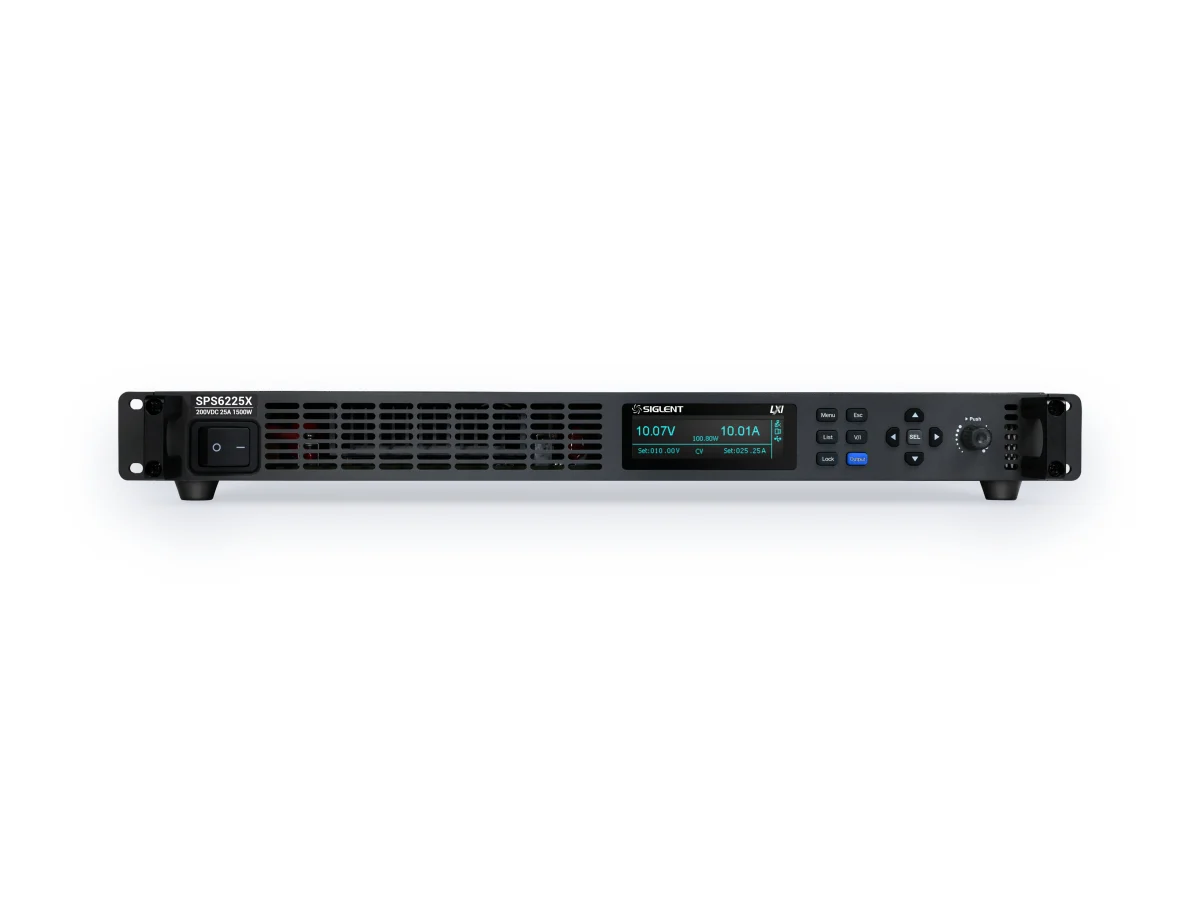
The Siglent SPS6000X is a 1500 W wide-range programmable switching DC power supply in a 1U, 19-inch chassis: 200 V / 25 A (SPS6225X) or 100 V / 50 A (SPS6150X). Up to five units of the same model run in parallel for more power. Pertech, an authorized Siglent distributor in Israel, quotes in ILS with local invoicing, handles warranty in Israel and arranges calibration and repair.

SPS6000X highlights

  • 1500 W rated power, wide-range output with automatic voltage/current range switching
  • Up to five chassis of the same model can be paralleled to expand output power
  • CV / CC priority mode selection
  • Load transient recovery time < 2.5 ms
  • Adjustable slew rates: voltage 0.001-4 V/ms, current 0.001-2.4 A/ms
  • Protection: OVP, OCP, OTP and limit power protection (LPP, about 102% of rated power)
  • Internal output discharge circuit and remote sense
  • Local list function with up to 50 steps; external analog voltage control and V/I monitor outputs
  • 1U (44 mm) height, 19-inch width for rack mounting

Models

ModelChannelsRating
SPS6225X1200 V / 25 A / 1500 W
SPS6150X1100 V / 50 A / 1500 W

Where the SPS6000X fits

  • High-power bench and ATE racks (1U)
  • Capacitive loads and devices with high inrush current (adjustable slew rate)
  • Systems that need more than 1500 W (up to five units in parallel)

Key Specifications

SpecValue
Outputs1
Rated voltage200 V (SPS6225X) / 100 V (SPS6150X)
Rated current25 A (SPS6225X) / 50 A (SPS6150X)
Rated power1500 W
Setting / readback resolution10 mV, 10 mA
Setting accuracyVoltage 0.1% +/- 10 mV; current 0.2% +/- 30 mA
Readback accuracyVoltage 0.1% +/- 20 mV; current 0.2% +/- 40 mA
Load transient recovery< 2.5 ms
Voltage slew rate0.001-4 V/ms
Current slew rate0.001-2.4 A/ms
Display3.12-inch OLED
Size1U (44 mm) height, 19-inch width

Siglent SPS6000X in Israel

Buy the SPS6000X from Pertech, an authorized Siglent distributor in Israel: quotes in ILS and local invoicing, warranty handled in Israel, calibration and repair arranged through Pertech, some models in stock in Israel, and technical support from Pertech engineers.

Frequently asked questions

What is the Siglent SPS6000X?

The Siglent SPS6000X is a 1500 W wide-range programmable switching DC power supply in a 1U, 19-inch chassis: 200 V / 25 A (SPS6225X) or 100 V / 50 A (SPS6150X). Up to five units of the same model run in parallel for more power.

Which SPS6000X models are there?

SPS6225X (channels 1, rating 200 V / 25 A / 1500 W); SPS6150X (channels 1, rating 100 V / 50 A / 1500 W).

Where can I buy the Siglent SPS6000X in Israel?

From Pertech, an authorized Siglent distributor in Israel. Contact Pertech for a quote in ILS, availability and help choosing the model and options.

Who handles warranty and calibration in Israel?

Pertech handles Siglent warranty in Israel: you return the unit to Pertech and Pertech deals with Siglent. Pertech also arranges calibration and repair.

Can Pertech help me set it up?

Yes. Pertech engineers help with setup and application questions for Siglent instruments bought through Pertech.

Related Siglent products at Pertech

Need a quote for the Siglent SPS6000X? Contact Pertech.


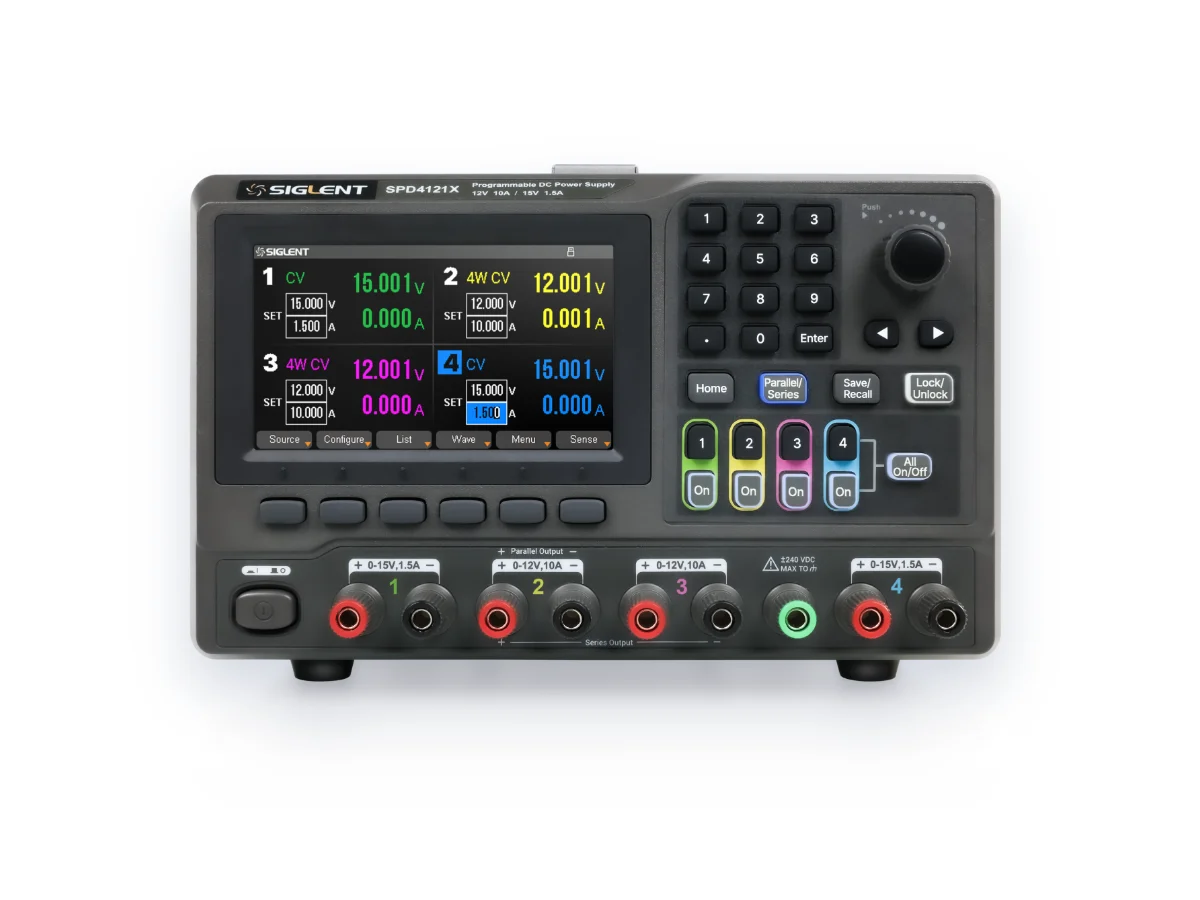
Siglent SPD4000X 4-Channel Programmable Linear DC Power Supply

The Siglent SPD4000X is a programmable linear DC power supply with four independent outputs in a 3U half-rack box. Three models deliver 240 W, 285 W or 400 W in total, with 1 mV / 1 mA resolution, output response under 50 us, remote sense on the high-current channels and live voltage and current waveforms on screen. Pertech, an authorized Siglent distributor in Israel, quotes in ILS with local invoicing, handles warranty in Israel and arranges calibration and repair.

SPD4000X highlights

  • Up to four independent, controllable outputs; CH2 and CH3 support series and parallel connection
  • Total rated output power of 240 W, 285 W or 400 W
  • 5-digit voltage and current display with 1 mV / 1 mA minimum resolution
  • Fast output response time: < 50 us
  • Remote voltage compensation sense on the high-current channels, up to 0.6 V compensation
  • Real-time waveform display of voltage and current for all 4 channels, plus timer display mode
  • List function: 50 steps natively, 8 built-in list sequences, list files importable via USB
  • Up to 4 channels in a 3U half-rack package
  • Embedded web server for browser control, no software installation needed

Models

ModelChannelsOutputs
SPD4323X4CH1 0-6 V / 0-3.2 A; CH2 0-32 V / 0-3.2 A; CH3 0-32 V / 0-3.2 A; CH4 0-6 V / 0-3.2 A
SPD4121X4CH1 0-15 V / 0-1.5 A; CH2 0-12 V / 0-10 A; CH3 0-12 V / 0-10 A; CH4 0-15 V / 0-1.5 A
SPD4306X4CH1 0-15 V / 0-1.5 A; CH2 0-30 V / 0-6 A; CH3 0-30 V / 0-6 A; CH4 0-15 V / 0-1 A

Where the SPD4000X fits

  • Powering multi-rail embedded boards from one supply
  • R&D benches that need 4 isolated rails
  • Production test with LAN and SCPI control

Key Specifications

SpecValue
Outputs4 independent channels
Rated voltage32 V, 12 V or 30 V (by model)
Rated output power240 W, 285 W or 400 W (by model)
Max channel current3.2 A (SPD4323X), 10 A (SPD4121X), 6 A (SPD4306X)
Resolution1 mV, 1 mA
Setting accuracyVoltage +/-(0.03% of reading + 10 mV); current +/-(0.3% of reading + 10 mA)
Readback accuracyVoltage +/-(0.03% of reading + 10 mV); current +/-(0.3% of reading + 10 mA)
Output response time< 50 us
Remote sense compensationUp to 0.6 V (high-current channels)
Display4.3-inch TFT-LCD, 480 x 272
ProtectionOvervoltage (OVP) and overcurrent (OCP)
Form factor3U half rack

Siglent SPD4000X in Israel

Buy the SPD4000X from Pertech, an authorized Siglent distributor in Israel: quotes in ILS and local invoicing, warranty handled in Israel, calibration and repair arranged through Pertech, some models in stock in Israel, and technical support from Pertech engineers.

Frequently asked questions

What is the Siglent SPD4000X?

The Siglent SPD4000X is a programmable linear DC power supply with four independent outputs in a 3U half-rack box. Three models deliver 240 W, 285 W or 400 W in total, with 1 mV / 1 mA resolution, output response under 50 us, remote sense on the high-current channels and live voltage and current waveforms on screen.

Which SPD4000X models are there?

SPD4323X (channels 4, outputs CH1 0-6 V / 0-3.2 A; CH2 0-32 V / 0-3.2 A; CH3 0-32 V / 0-3.2 A; CH4 0-6 V / 0-3.2 A); SPD4121X (channels 4, outputs CH1 0-15 V / 0-1.5 A; CH2 0-12 V / 0-10 A; CH3 0-12 V / 0-10 A; CH4 0-15 V / 0-1.5 A); SPD4306X (channels 4, outputs CH1 0-15 V / 0-1.5 A; CH2 0-30 V / 0-6 A; CH3 0-30 V / 0-6 A; CH4 0-15 V / 0-1 A).

Where can I buy the Siglent SPD4000X in Israel?

From Pertech, an authorized Siglent distributor in Israel. Contact Pertech for a quote in ILS, availability and help choosing the model and options.

Who handles warranty and calibration in Israel?

Pertech handles Siglent warranty in Israel: you return the unit to Pertech and Pertech deals with Siglent. Pertech also arranges calibration and repair.

Can Pertech help me set it up?

Yes. Pertech engineers help with setup and application questions for Siglent instruments bought through Pertech.

Related Siglent products at Pertech

Need a quote for the Siglent SPD4000X? Contact Pertech.


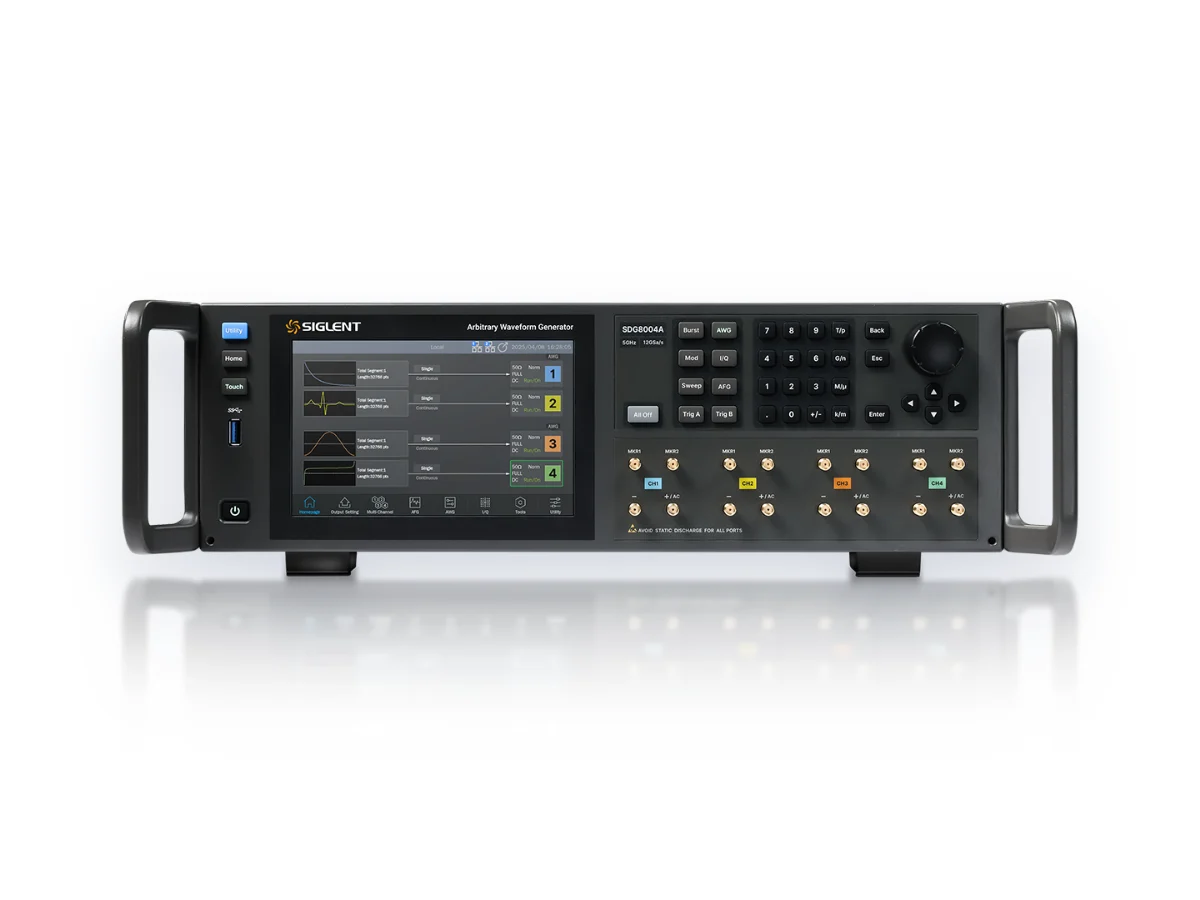
Siglent SDG8000A High-Speed Arbitrary Waveform Generator

The Siglent SDG8000A is a 2- or 4-channel arbitrary waveform generator with 4 GHz output at 10 GSa/s (5 GHz at 12 GSa/s with an option), 16-bit resolution and 2 Gpts per channel (4 Gpts with an option). Options add vector signal output up to 2 GHz bandwidth, high-speed serial patterns and multi-level sequencing. Pertech, an authorized Siglent distributor in Israel, quotes in ILS with local invoicing, handles warranty in Israel and arranges calibration and repair.

SDG8000A highlights

  • 2 or 4 channels, 4 GHz at 10 GSa/s; 5 GHz at 12 GSa/s with an option
  • 16-bit vertical resolution
  • 2 Gpts per channel, 4 Gpts with an option
  • Multi-level sequence playback: Segment, Sequence, Scenario (option)
  • Vector signal output up to 2 GHz bandwidth (option)
  • PRBS and high-speed serial up to 1.25 Gbps (option)
  • Bluetooth, OFDM, IoT, LTE and WiFi signals with SigIQPro
  • EasyPulse low-jitter pulses; multi-tone and chirp (option)
  • Single-ended and differential outputs; built-in 250 GB SSD

Models

ModelMax frequencyChannelsWaveform length
SDG8002A4 GHz at 10 GSa/s, 5 GHz at 12 GSa/s22 Gpts, optional 4 Gpts
SDG8004A4 GHz at 10 GSa/s, 5 GHz at 12 GSa/s42 Gpts, optional 4 Gpts

Where the SDG8000A fits

  • Wireless communications and RF testing
  • Power device switching-parameter and dynamic-characteristic measurement
  • Industrial and scientific research test
  • Interference immunity testing with noise, frequency hopping and LFM signals

Key Specifications

SpecValue
Max output frequency4 GHz at 10 GSa/s, 5 GHz at 12 GSa/s
Channels2 or 4
Sample rate10 GSa/s, optional 12 GSa/s (interpolation)
Vertical resolution16-bit
Waveform memory2 Gpts per channel; 4 Gpts option
Modulation bandwidthUp to 2 GHz (option)
PRBSUp to 1.25 Gbps (option)
ModulationAM, DSB-AM, FM, PM, FSK, ASK, PSK, PWM
Built-in waveforms196
Storage250 GB SSD
Display7-inch touch screen

Siglent SDG8000A in Israel

Buy the SDG8000A from Pertech, an authorized Siglent distributor in Israel: quotes in ILS and local invoicing, warranty handled in Israel, calibration and repair arranged through Pertech, some models in stock in Israel, and technical support from Pertech engineers.

Frequently asked questions

What is the Siglent SDG8000A?

The Siglent SDG8000A is a 2- or 4-channel arbitrary waveform generator with 4 GHz output at 10 GSa/s (5 GHz at 12 GSa/s with an option), 16-bit resolution and 2 Gpts per channel (4 Gpts with an option). Options add vector signal output up to 2 GHz bandwidth, high-speed serial patterns and multi-level sequencing.

Which SDG8000A models are there?

SDG8002A (max frequency 4 GHz at 10 GSa/s, 5 GHz at 12 GSa/s, channels 2, waveform length 2 Gpts, optional 4 Gpts); SDG8004A (max frequency 4 GHz at 10 GSa/s, 5 GHz at 12 GSa/s, channels 4, waveform length 2 Gpts, optional 4 Gpts).

Where can I buy the Siglent SDG8000A in Israel?

From Pertech, an authorized Siglent distributor in Israel. Contact Pertech for a quote in ILS, availability and help choosing the model and options.

Who handles warranty and calibration in Israel?

Pertech handles Siglent warranty in Israel: you return the unit to Pertech and Pertech deals with Siglent. Pertech also arranges calibration and repair.

Can Pertech help me set it up?

Yes. Pertech engineers help with setup and application questions for Siglent instruments bought through Pertech.

Related Siglent products at Pertech

Need a quote for the Siglent SDG8000A? Contact Pertech.


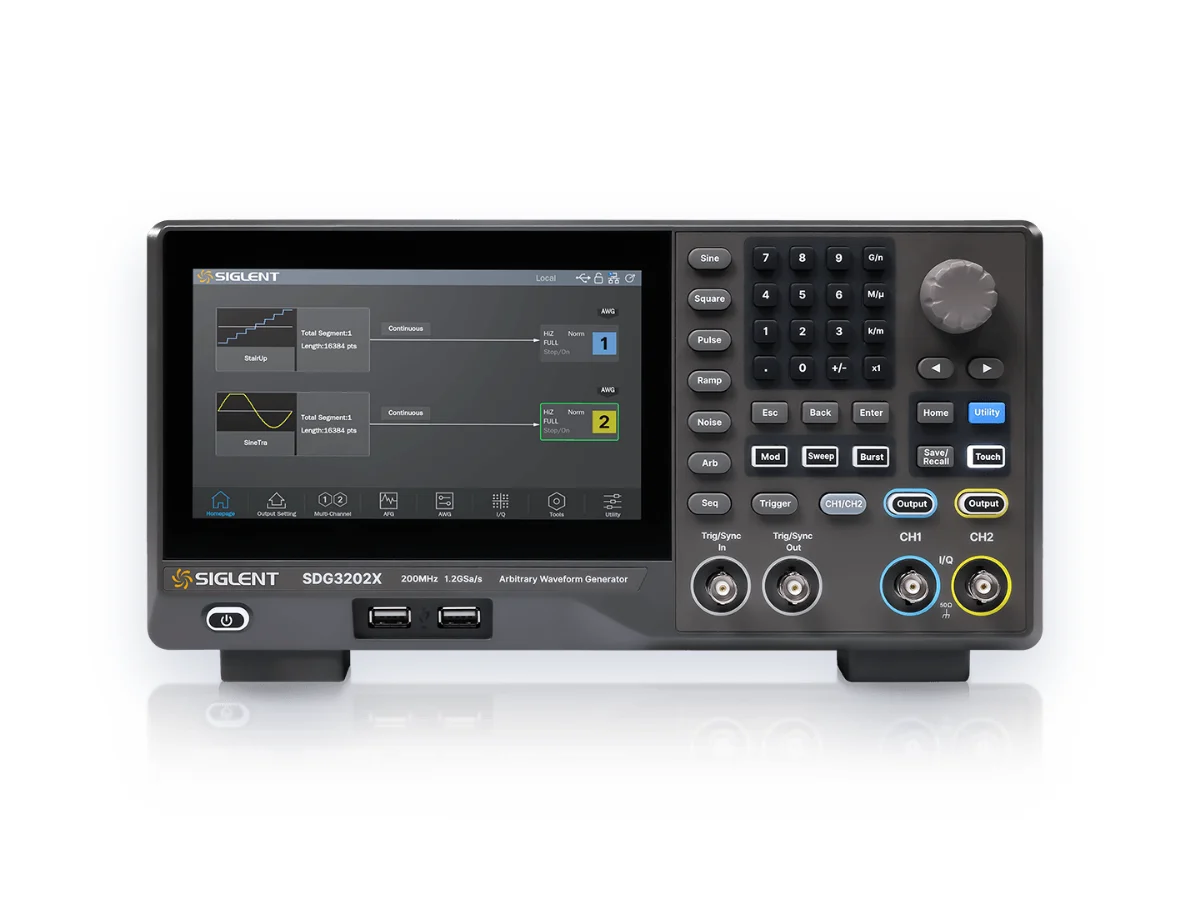
Siglent SDG3000X Function/Arbitrary Waveform Generator

The Siglent SDG3000X is a 2-channel function and arbitrary waveform generator at 80, 160 or 200 MHz, with 1.2 GSa/s, 16-bit resolution, 20 Mpts per channel (40 Mpts with an option) and up to 20 Vpp output, built on Siglent’s TrueArb and EasyPulse technologies. Pertech, an authorized Siglent distributor in Israel, quotes in ILS with local invoicing, handles warranty in Israel and arranges calibration and repair.

SDG3000X highlights

  • 80/160/200 MHz output, 1.2 GSa/s, 16-bit vertical resolution
  • Arbitrary waveform length 20 Mpts per channel, 40 Mpts with an option
  • TrueArb and EasyPulse for high-fidelity, low-jitter signals
  • Maximum output amplitude 20 Vpp
  • Sequence playback up to 1024 segments, five operating modes
  • Multi-pulse output up to 30 pulses (dual pulse for power devices)
  • PRBS3 to PRBS32 up to 120 Mbps, custom polynomial, differential output
  • Vector signal output: ASK, FSK, PSK, QAM, 250 Symb/s to 50 MSymb/s (option)
  • AM, DSB-SC, FM, PM, FSK, ASK, PSK, PWM modulation; 196 built-in waveforms

Models

ModelMax frequencyChannelsWaveform length
SDG3082X80 MHz220 Mpts std / 40 Mpts opt
SDG3162X160 MHz220 Mpts std / 40 Mpts opt
SDG3202X200 MHz220 Mpts std / 40 Mpts opt

Where the SDG3000X fits

  • Double-pulse and switching tests of power devices, with an oscilloscope
  • Baseband and IF vector signals (option)
  • General lab signal generation up to 200 MHz

Key Specifications

SpecValue
Max output frequency80 MHz to 200 MHz
Channels2
Sample rate1.2 GSa/s
Vertical resolution16-bit
Waveform length20 Mpts std, 40 Mpts opt
Max amplitude20 Vpp
Sequenceup to 1024 segments
Multi-pulseup to 30 pulses
PRBSPRBS3 to PRBS32, up to 120 Mbps
Vector symbol rate250 Symb/s to 50 MSymb/s
Built-in waveforms196
Display7-inch touch screen

Siglent SDG3000X in Israel

Buy the SDG3000X from Pertech, an authorized Siglent distributor in Israel: quotes in ILS and local invoicing, warranty handled in Israel, calibration and repair arranged through Pertech, some models in stock in Israel, and technical support from Pertech engineers.

Frequently asked questions

What is the Siglent SDG3000X?

The Siglent SDG3000X is a 2-channel function and arbitrary waveform generator at 80, 160 or 200 MHz, with 1.2 GSa/s, 16-bit resolution, 20 Mpts per channel (40 Mpts with an option) and up to 20 Vpp output, built on Siglent’s TrueArb and EasyPulse technologies.

Which SDG3000X models are there?

SDG3082X (max frequency 80 MHz, channels 2, waveform length 20 Mpts std / 40 Mpts opt); SDG3162X (max frequency 160 MHz, channels 2, waveform length 20 Mpts std / 40 Mpts opt); SDG3202X (max frequency 200 MHz, channels 2, waveform length 20 Mpts std / 40 Mpts opt).

Where can I buy the Siglent SDG3000X in Israel?

From Pertech, an authorized Siglent distributor in Israel. Contact Pertech for a quote in ILS, availability and help choosing the model and options.

Who handles warranty and calibration in Israel?

Pertech handles Siglent warranty in Israel: you return the unit to Pertech and Pertech deals with Siglent. Pertech also arranges calibration and repair.

Can Pertech help me set it up?

Yes. Pertech engineers help with setup and application questions for Siglent instruments bought through Pertech.

Related Siglent products at Pertech

Need a quote for the Siglent SDG3000X? Contact Pertech.

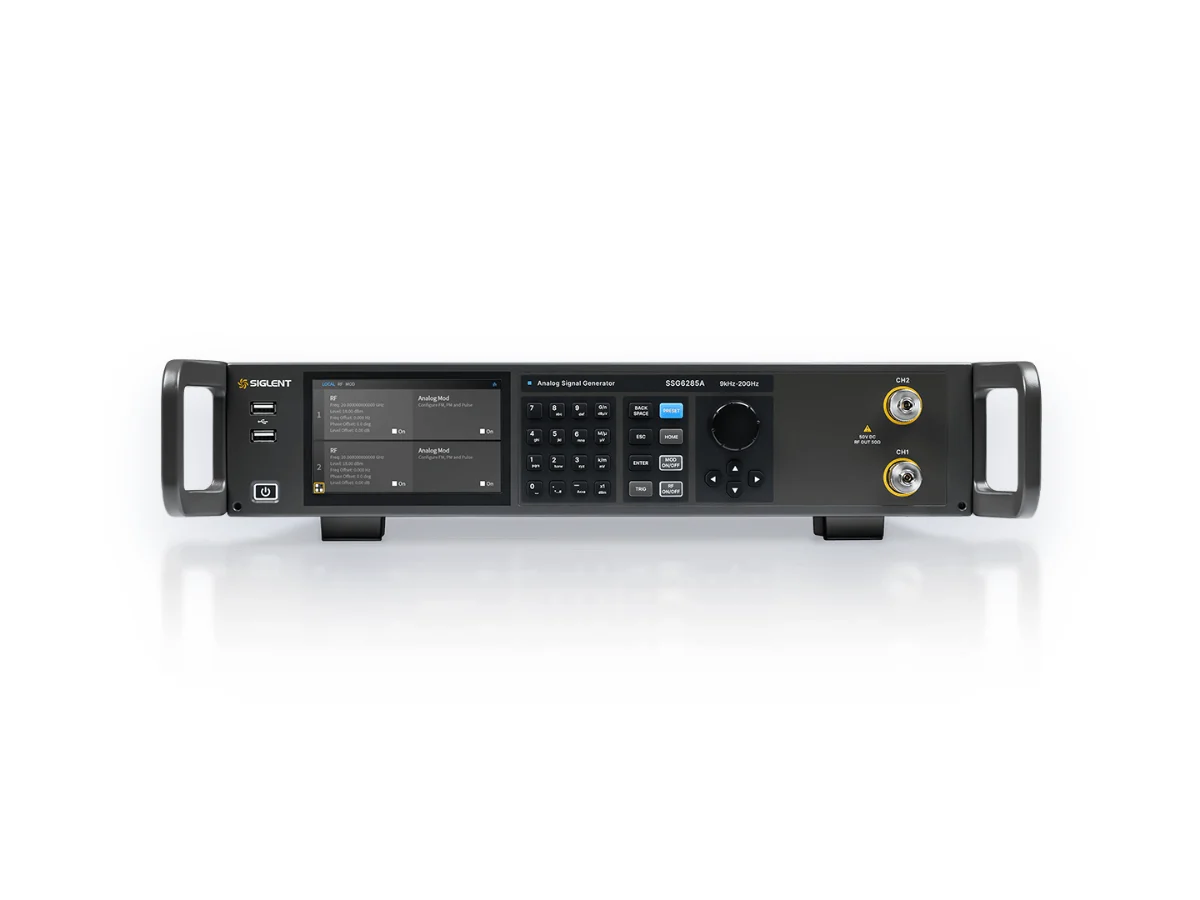
Siglent SSG6M80A Multi-Channel Phase-Coherent Signal Generator

The Siglent SSG6M80A is a 2- or 4-channel phase-coherent analog signal generator from 9 kHz to 13.6 GHz or 20 GHz, with -135 dBc/Hz phase noise at 1 GHz (10 kHz offset, typical) and independent frequency, amplitude and phase on every channel. Pertech, an authorized Siglent distributor in Israel, quotes in ILS with local invoicing, handles warranty in Israel and arranges calibration and repair.

SSG6M80A highlights

  • 2 or 4 phase-coherent channels, up to 13.6 GHz / 20 GHz
  • Phase noise -135 dBc/Hz at 1 GHz, 10 kHz offset (typ.)
  • Independent frequency, amplitude and phase per channel
  • Intra-device and inter-device phase coherence; phase memory function
  • Phase fluctuation under 1.5 degrees at 10 GHz over 5 hours (+/-2 C)
  • Level range -110 dBm to +25 dBm, level error <= 0.7 dB (typ.)
  • Multi-unit sync via 10 MHz and 1 GHz reference outputs
  • Standard OCXO; FM and PM modulation; optional pulse and pulse train
  • Step or list sweep up to 65,535 points

Models

ModelFrequencyChannels
SSG6283A9 kHz to 13.6 GHz (CW)2
SSG6285A9 kHz to 20 GHz (CW)2
SSG6483A9 kHz to 13.6 GHz (CW)4
SSG6485A9 kHz to 20 GHz (CW)4

Where the SSG6M80A fits

  • Beamforming
  • Phased-array systems
  • MIMO testing
  • Differential signal generation
  • Multi-tone measurements

Key Specifications

SpecValue
Frequency range9 kHz to 13.6 GHz or 20 GHz
Channels2 or 4
Frequency resolution0.001 Hz
Amplitude resolution0.01 dB
Level range-110 dBm to +25 dBm
Level error<= 0.7 dB (typ.)
Phase noise-135 dBc/Hz at 1 GHz, 10 kHz offset (typ.)
Phase stability< 1.5 deg, 10 GHz, 5 h, +/-2 C
ModulationFM, PM (internal, external, Int+Ext); pulse options
I/Q modulationNot supported
SweepStep or list, up to 65,535 points

Siglent SSG6M80A in Israel

Buy the SSG6M80A from Pertech, an authorized Siglent distributor in Israel: quotes in ILS and local invoicing, warranty handled in Israel, calibration and repair arranged through Pertech, some models in stock in Israel, and technical support from Pertech engineers.

Frequently asked questions

What is the Siglent SSG6M80A?

The Siglent SSG6M80A is a 2- or 4-channel phase-coherent analog signal generator from 9 kHz to 13.6 GHz or 20 GHz, with -135 dBc/Hz phase noise at 1 GHz (10 kHz offset, typical) and independent frequency, amplitude and phase on every channel.

Which SSG6M80A models are there?

SSG6283A (frequency 9 kHz to 13.6 GHz (CW), channels 2); SSG6285A (frequency 9 kHz to 20 GHz (CW), channels 2); SSG6483A (frequency 9 kHz to 13.6 GHz (CW), channels 4); SSG6485A (frequency 9 kHz to 20 GHz (CW), channels 4).

Where can I buy the Siglent SSG6M80A in Israel?

From Pertech, an authorized Siglent distributor in Israel. Contact Pertech for a quote in ILS, availability and help choosing the model and options.

Who handles warranty and calibration in Israel?

Pertech handles Siglent warranty in Israel: you return the unit to Pertech and Pertech deals with Siglent. Pertech also arranges calibration and repair.

Can Pertech help me set it up?

Yes. Pertech engineers help with setup and application questions for Siglent instruments bought through Pertech.

Related Siglent products at Pertech

Need a quote for the Siglent SSG6M80A? Contact Pertech.


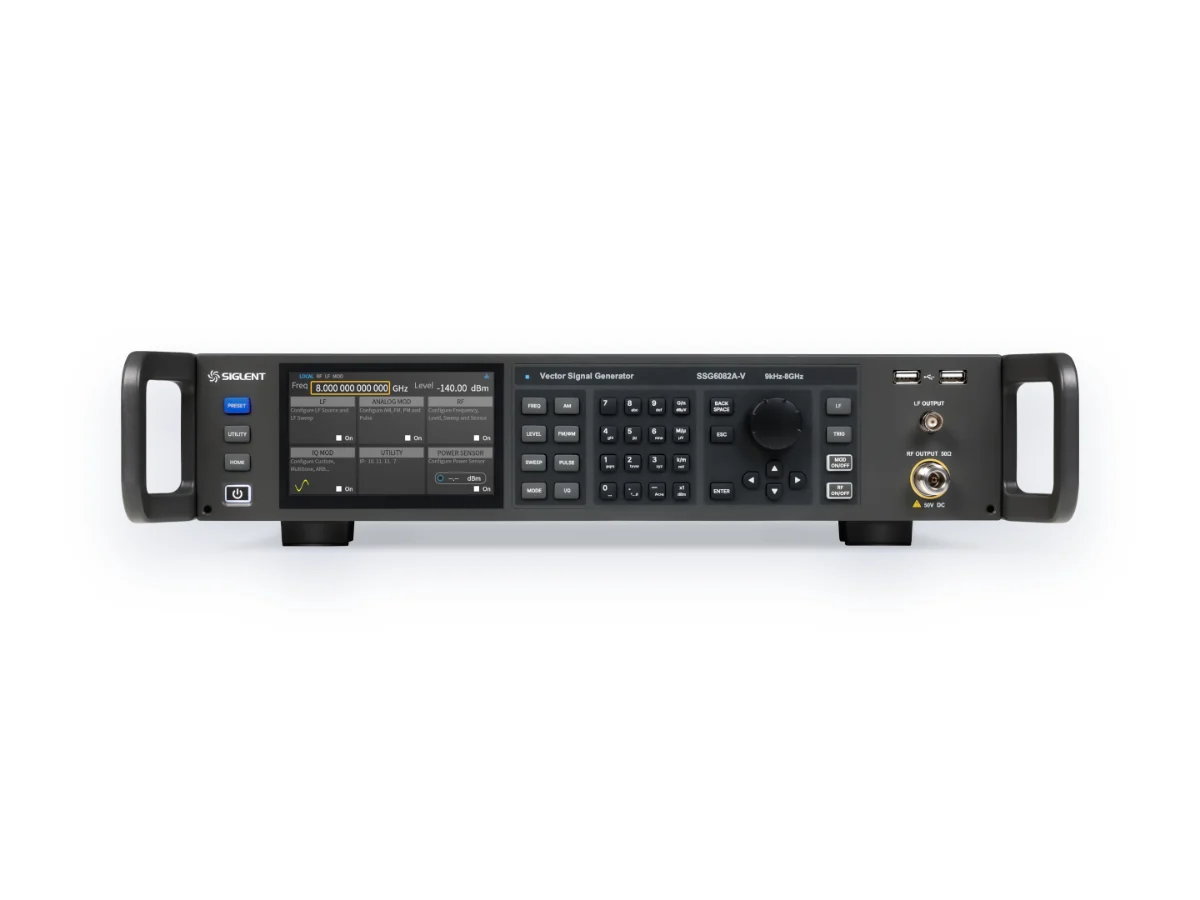
Siglent SSG6082A-V RF Vector Signal Generator

The Siglent SSG6082A-V is a vector signal generator from 9 kHz to 8 GHz with phase noise below -132 dBc/Hz at 1 GHz (10 kHz offset, typical) and a -140 dBm to +30 dBm level range. Its internal IQ baseband is 500 MHz wide (1 GHz RF modulation bandwidth with an option), and with SigIQPro it generates 5G NR, LTE, WLAN, Bluetooth and IoT signals. Pertech, an authorized Siglent distributor in Israel, quotes in ILS with local invoicing, handles warranty in Israel and arranges calibration and repair.

SSG6082A-V highlights

  • Frequency up to 8 GHz, 0.001 Hz resolution
  • Phase noise < -132 dBc/Hz at 1 GHz, 10 kHz offset (typ.)
  • Level setting range -140 dBm to +30 dBm
  • Amplitude accuracy <= 0.7 dB (typ.)
  • 500 MHz internal IQ baseband; 1 GHz RF modulation bandwidth with an option
  • Real-time QAM, FSK, ASK, PSK, multi-tone; waveform file and sequence playback
  • 5G NR, WLAN, LTE, Bluetooth, IoT signals with SigIQPro software
  • Real-time IQ baseband AWGN for receiver measurements
  • S-parameter (S2P) compensation in vector mode; supports pre-distorted signals and MIMO

Models

ModelFrequencyIQ modulation
SSG6082A-V9 kHz to 8 GHz (CW); IQ 10 MHz to 8 GHzYes

Where the SSG6082A-V fits

  • 5G NR, LTE, WLAN and IoT receiver testing
  • MIMO and multi-unit test setups
  • Transmitter simulation with test-fixture (S2P) compensation

Key Specifications

SpecValue
Frequency range9 kHz to 8 GHz (CW), 10 MHz to 8 GHz (IQ)
Frequency resolution0.001 Hz
Amplitude resolution0.01 dB
Level range-140 dBm to +30 dBm
Amplitude accuracy<= 0.7 dB (typ.)
Phase noise< -132 dBc/Hz at 1 GHz, 10 kHz offset (typ.)
IQ baseband500 MHz internal; 1 GHz RF bandwidth (B1000 option)
Analog modulationAM, FM, PM; internal and external
PulsePulse modulation, pulse train, user-defined sequences (optional)
Protocols (SigIQPro)5G NR, LTE, WLAN, Bluetooth, IoT, GSM/EDGE, WCDMA/HSPA+

Siglent SSG6082A-V in Israel

Buy the SSG6082A-V from Pertech, an authorized Siglent distributor in Israel: quotes in ILS and local invoicing, warranty handled in Israel, calibration and repair arranged through Pertech, some models in stock in Israel, and technical support from Pertech engineers.

Frequently asked questions

What is the Siglent SSG6082A-V?

The Siglent SSG6082A-V is a vector signal generator from 9 kHz to 8 GHz with phase noise below -132 dBc/Hz at 1 GHz (10 kHz offset, typical) and a -140 dBm to +30 dBm level range. Its internal IQ baseband is 500 MHz wide (1 GHz RF modulation bandwidth with an option), and with SigIQPro it generates 5G NR, LTE, WLAN, Bluetooth and IoT signals.

Which SSG6082A-V models are there?

SSG6082A-V (frequency 9 kHz to 8 GHz (CW); IQ 10 MHz to 8 GHz, iq modulation Yes).

Where can I buy the Siglent SSG6082A-V in Israel?

From Pertech, an authorized Siglent distributor in Israel. Contact Pertech for a quote in ILS, availability and help choosing the model and options.

Who handles warranty and calibration in Israel?

Pertech handles Siglent warranty in Israel: you return the unit to Pertech and Pertech deals with Siglent. Pertech also arranges calibration and repair.

Can Pertech help me set it up?

Yes. Pertech engineers help with setup and application questions for Siglent instruments bought through Pertech.

Related Siglent products at Pertech

Need a quote for the Siglent SSG6082A-V? Contact Pertech.


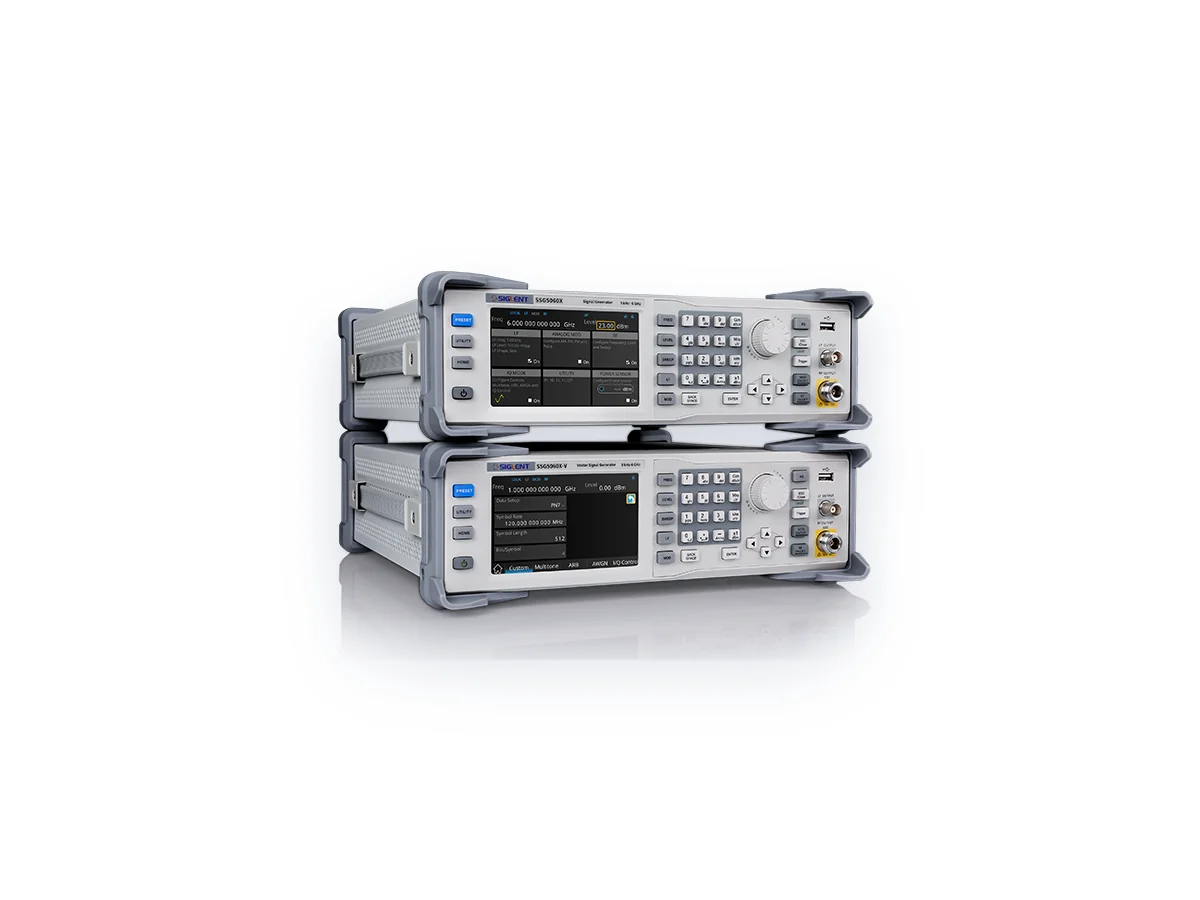
Siglent SSG5000X and SSG5000X-V RF Signal Generator

The Siglent SSG5000X is an RF signal generator from 9 kHz to 4 GHz or 6 GHz with up to +26 dBm output (typical) and -120 dBc/Hz phase noise at 1 GHz. The SSG5000X-V models add internal IQ modulation (75 MHz bandwidth standard, 150 MHz with an option), custom digital modulation and ARB playback with real-time AWGN. Pertech, an authorized Siglent distributor in Israel, quotes in ILS with local invoicing, handles warranty in Israel and arranges calibration and repair.

SSG5000X highlights

  • Frequency up to 4 GHz / 6 GHz
  • Maximum output power up to +26 dBm (typ.)
  • Phase noise -120 dBc/Hz at 1 GHz, 20 kHz offset (typ.)
  • 0.001 Hz frequency setting resolution
  • -V models: internal IQ modulation, factory calibrated; 150 MHz bandwidth with an option
  • -V models: custom mode for QAM, PSK, ASK, FSK, MSK at up to 120 Msps
  • -V models: analog differential I/Q outputs and external I/Q input
  • ARB playback with multi-carrier, real-time AWGN and CCDF display
  • User-programmable flatness correction and USB power meter measurement

Models

ModelFrequencyIQ modulation
SSG5040X9 kHz to 4 GHz (CW)No
SSG5060X9 kHz to 6 GHz (CW)No
SSG5040X-V9 kHz to 4 GHz (CW); IQ 10 MHz to 4 GHzYes
SSG5060X-V9 kHz to 6 GHz (CW); IQ 10 MHz to 6 GHzYes

Where the SSG5000X fits

  • Digital wireless signal generation for R&D and education
  • Receiver sensitivity and AWGN tests
  • Manufacturing test of RF modules

Key Specifications

SpecValue
Frequency range9 kHz to 4 GHz or 6 GHz
IQ mode range (-V)10 MHz to 4 GHz or 6 GHz
Frequency resolution0.001 Hz
Amplitude resolution0.01 dB
Max output power+26 dBm (typ.)
Phase noise-120 dBc/Hz at 1 GHz, 20 kHz offset (typ.)
IQ modulation bandwidth (-V)75 MHz standard; 150 MHz option
Custom IQ sample rate (-V)up to 120 Msps
Analog modulationAM, FM, PM; internal, external or Int+Ext
PulseSingle, double pulse and pulse train (option)
Display5-inch TFT capacitive touch screen

Siglent SSG5000X in Israel

Buy the SSG5000X from Pertech, an authorized Siglent distributor in Israel: quotes in ILS and local invoicing, warranty handled in Israel, calibration and repair arranged through Pertech, some models in stock in Israel, and technical support from Pertech engineers.

Frequently asked questions

What is the Siglent SSG5000X?

The Siglent SSG5000X is an RF signal generator from 9 kHz to 4 GHz or 6 GHz with up to +26 dBm output (typical) and -120 dBc/Hz phase noise at 1 GHz. The SSG5000X-V models add internal IQ modulation (75 MHz bandwidth standard, 150 MHz with an option), custom digital modulation and ARB playback with real-time AWGN.

Which SSG5000X models are there?

SSG5040X (frequency 9 kHz to 4 GHz (CW), iq modulation No); SSG5060X (frequency 9 kHz to 6 GHz (CW), iq modulation No); SSG5040X-V (frequency 9 kHz to 4 GHz (CW); IQ 10 MHz to 4 GHz, iq modulation Yes); SSG5060X-V (frequency 9 kHz to 6 GHz (CW); IQ 10 MHz to 6 GHz, iq modulation Yes).

Where can I buy the Siglent SSG5000X in Israel?

From Pertech, an authorized Siglent distributor in Israel. Contact Pertech for a quote in ILS, availability and help choosing the model and options.

Who handles warranty and calibration in Israel?

Pertech handles Siglent warranty in Israel: you return the unit to Pertech and Pertech deals with Siglent. Pertech also arranges calibration and repair.

Can Pertech help me set it up?

Yes. Pertech engineers help with setup and application questions for Siglent instruments bought through Pertech.

Related Siglent products at Pertech

Need a quote for the Siglent SSG5000X? Contact Pertech.

Siglent SSG5000A Microwave Signal Generator

The Siglent SSG5000A is a microwave analog signal generator from 9 kHz to 13.6 GHz or 20 GHz, with -120 dBc/Hz phase noise at 1 GHz (20 kHz offset, typical), 0.001 Hz resolution, a standard OCXO reference and AM, FM and PM modulation. Pulse modulation and pulse trains are options. Pertech, an authorized Siglent distributor in Israel, quotes in ILS with local invoicing, handles warranty in Israel and arranges calibration and repair.

SSG5000A highlights

  • Frequency up to 13.6 GHz / 20 GHz
  • 0.001 Hz frequency setting resolution
  • Level setting -130 dBm to +25 dBm (with LP attenuator option)
  • Phase noise -120 dBc/Hz at 1 GHz, 20 kHz offset (typ.)
  • Level error <= 0.7 dB (typ.)
  • AM, FM, PM with internal, external or Int+Ext source
  • Single pulse, double pulse and pulse train generator (option)
  • Power meter control kit for power measurement and line-loss correction
  • Standard OCXO reference

Models

ModelFrequencyIQ modulation
SSG5083A9 kHz to 13.6 GHz (CW)No
SSG5085A9 kHz to 20 GHz (CW)No

Where the SSG5000A fits

  • Receiver and component testing up to 20 GHz
  • Local oscillator substitution in R&D
  • Production test with remote control over LAN or USB

Key Specifications

SpecValue
Frequency range9 kHz to 13.6 GHz or 20 GHz
Frequency resolution0.001 Hz
Amplitude resolution0.01 dB
Level range-130 dBm to +25 dBm (with LP option)
Level error<= 0.7 dB (typ.)
Phase noise-120 dBc/Hz at 1 GHz, 20 kHz offset (typ.)
ModulationAM, FM, PM; pulse modulation and pulse train (options)
ReferenceOCXO (standard)
Display5-inch TFT capacitive touch screen
Upgrade13.6 GHz to 20 GHz upgrade available (SSG5080A-F85)

Siglent SSG5000A in Israel

Buy the SSG5000A from Pertech, an authorized Siglent distributor in Israel: quotes in ILS and local invoicing, warranty handled in Israel, calibration and repair arranged through Pertech, some models in stock in Israel, and technical support from Pertech engineers.

Frequently asked questions

What is the Siglent SSG5000A?

The Siglent SSG5000A is a microwave analog signal generator from 9 kHz to 13.6 GHz or 20 GHz, with -120 dBc/Hz phase noise at 1 GHz (20 kHz offset, typical), 0.001 Hz resolution, a standard OCXO reference and AM, FM and PM modulation. Pulse modulation and pulse trains are options.

Which SSG5000A models are there?

SSG5083A (frequency 9 kHz to 13.6 GHz (CW), iq modulation No); SSG5085A (frequency 9 kHz to 20 GHz (CW), iq modulation No).

Where can I buy the Siglent SSG5000A in Israel?

From Pertech, an authorized Siglent distributor in Israel. Contact Pertech for a quote in ILS, availability and help choosing the model and options.

Who handles warranty and calibration in Israel?

Pertech handles Siglent warranty in Israel: you return the unit to Pertech and Pertech deals with Siglent. Pertech also arranges calibration and repair.

Can Pertech help me set it up?

Yes. Pertech engineers help with setup and application questions for Siglent instruments bought through Pertech.

Related Siglent products at Pertech

Need a quote for the Siglent SSG5000A? Contact Pertech.


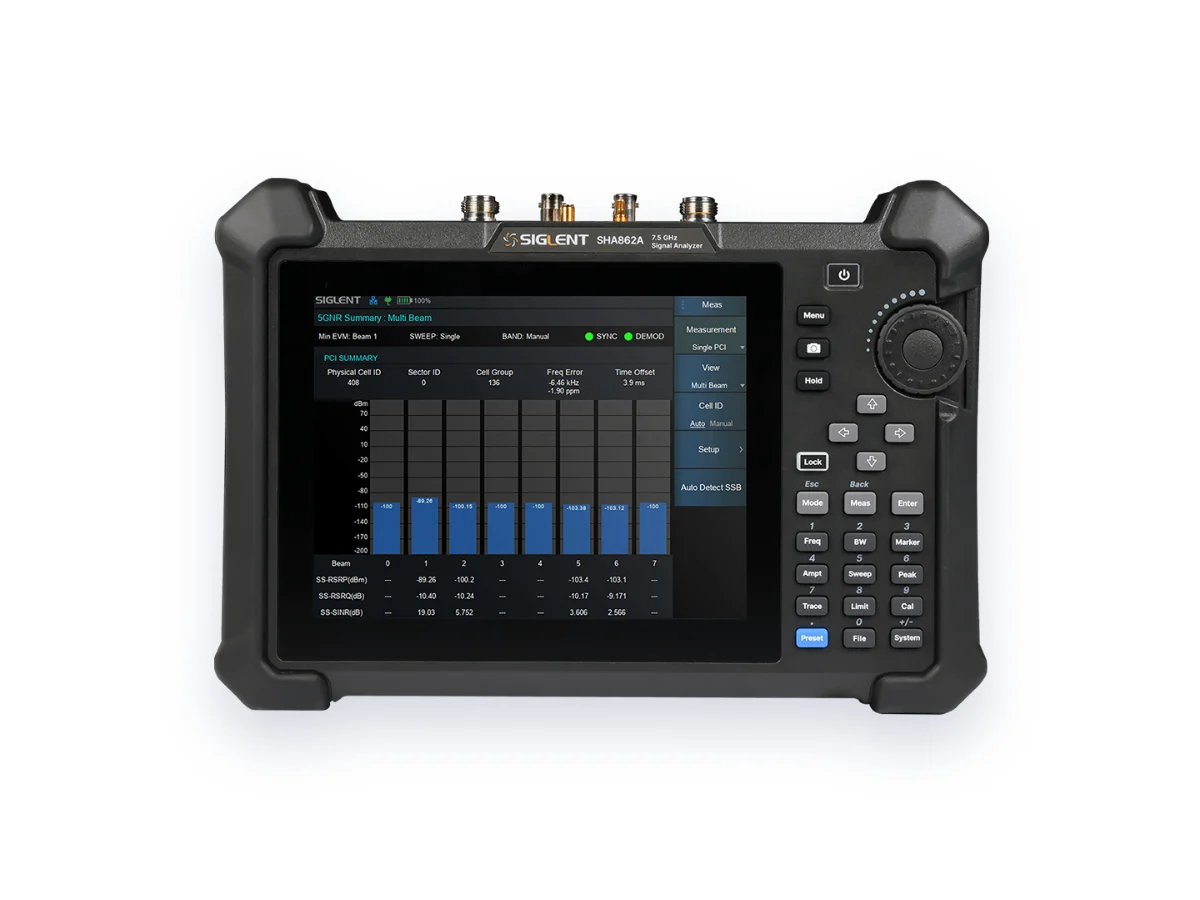
Siglent SHA860A Handheld Signal Analyzer

The Siglent SHA860A is a handheld signal analyzer from 9 kHz to 3.6 GHz or 7.5 GHz with -165 dBm/Hz DANL and an 8.4-inch touch screen. With options it adds 110 MHz analysis bandwidth, real-time spectrum analysis, 5G NR and LTE over-the-air measurement, a 2-port vector network analyzer, cable and antenna test and GNSS coverage mapping. Pertech, an authorized Siglent distributor in Israel, quotes in ILS with local invoicing, handles warranty in Israel and arranges calibration and repair.

SHA860A highlights

  • 9 kHz to 3.6/7.5 GHz (5 kHz usable)
  • DANL -165 dBm/Hz; SSB phase noise -104 dBc/Hz at 1 GHz, 10 kHz offset
  • Analysis bandwidth 40 MHz, or 110 MHz with an option
  • Real-time spectrum analysis in 110 MHz, 300,000 FFT/s, 100% POI 3.51 us (option)
  • 5G NR OTA and LTE FDD/TDD OTA measurement (options)
  • 1-path 2-port VNA (S11/S21), 114 dB S21 dynamic range (option)
  • Cable and antenna test: cable loss, return loss, VSWR, distance to fault (option)
  • Indoor and outdoor coverage mapping with GNSS location (options)
  • 8.4-inch multi-touch screen, 2.5 h battery, 3.2 kg

Models

ModelFrequencyRBWDANL
SHA861A9 kHz to 3.6 GHz1 Hz to 10 MHz-165 dBm/Hz
SHA862A9 kHz to 7.5 GHz1 Hz to 10 MHz-165 dBm/Hz

Where the SHA860A fits

  • 5G/LTE base station deployment and maintenance
  • Interference hunting and spectrum monitoring
  • Coverage mapping, indoor and outdoor
  • Cable and antenna fault finding
  • Field strength (EMF) and EMI measurements

Key Specifications

SpecValue
Frequency range9 kHz to 3.6 GHz or 7.5 GHz (5 kHz usable)
RBW1 Hz to 10 MHz, 1-3-10 sequence
DANL-165 dBm/Hz
Phase noise-104 dBc/Hz at 1 GHz, 10 kHz offset
Total amplitude accuracy+/-0.7 dB
Analysis bandwidth40 MHz standard; 110 MHz option
Real-time300,000 FFT/s, 100% POI 3.51 us (option)
IQ acquisition1 GB RAM, 300 MHz sample rate, 110 MHz bandwidth (option)
SourceIndependent source to 7.5 GHz
Display / battery / weight8.4-inch multi-touch, 2.5 h, 3.2 kg

Siglent SHA860A in Israel

Buy the SHA860A from Pertech, an authorized Siglent distributor in Israel: quotes in ILS and local invoicing, warranty handled in Israel, calibration and repair arranged through Pertech, some models in stock in Israel, and technical support from Pertech engineers.

Frequently asked questions

What is the Siglent SHA860A?

The Siglent SHA860A is a handheld signal analyzer from 9 kHz to 3.6 GHz or 7.5 GHz with -165 dBm/Hz DANL and an 8.4-inch touch screen. With options it adds 110 MHz analysis bandwidth, real-time spectrum analysis, 5G NR and LTE over-the-air measurement, a 2-port vector network analyzer, cable and antenna test and GNSS coverage mapping.

Which SHA860A models are there?

SHA861A (frequency 9 kHz to 3.6 GHz, rbw 1 Hz to 10 MHz, danl -165 dBm/Hz); SHA862A (frequency 9 kHz to 7.5 GHz, rbw 1 Hz to 10 MHz, danl -165 dBm/Hz).

Where can I buy the Siglent SHA860A in Israel?

From Pertech, an authorized Siglent distributor in Israel. Contact Pertech for a quote in ILS, availability and help choosing the model and options.

Who handles warranty and calibration in Israel?

Pertech handles Siglent warranty in Israel: you return the unit to Pertech and Pertech deals with Siglent. Pertech also arranges calibration and repair.

Can Pertech help me set it up?

Yes. Pertech engineers help with setup and application questions for Siglent instruments bought through Pertech.

Related Siglent products at Pertech

Need a quote for the Siglent SHA860A? Contact Pertech.


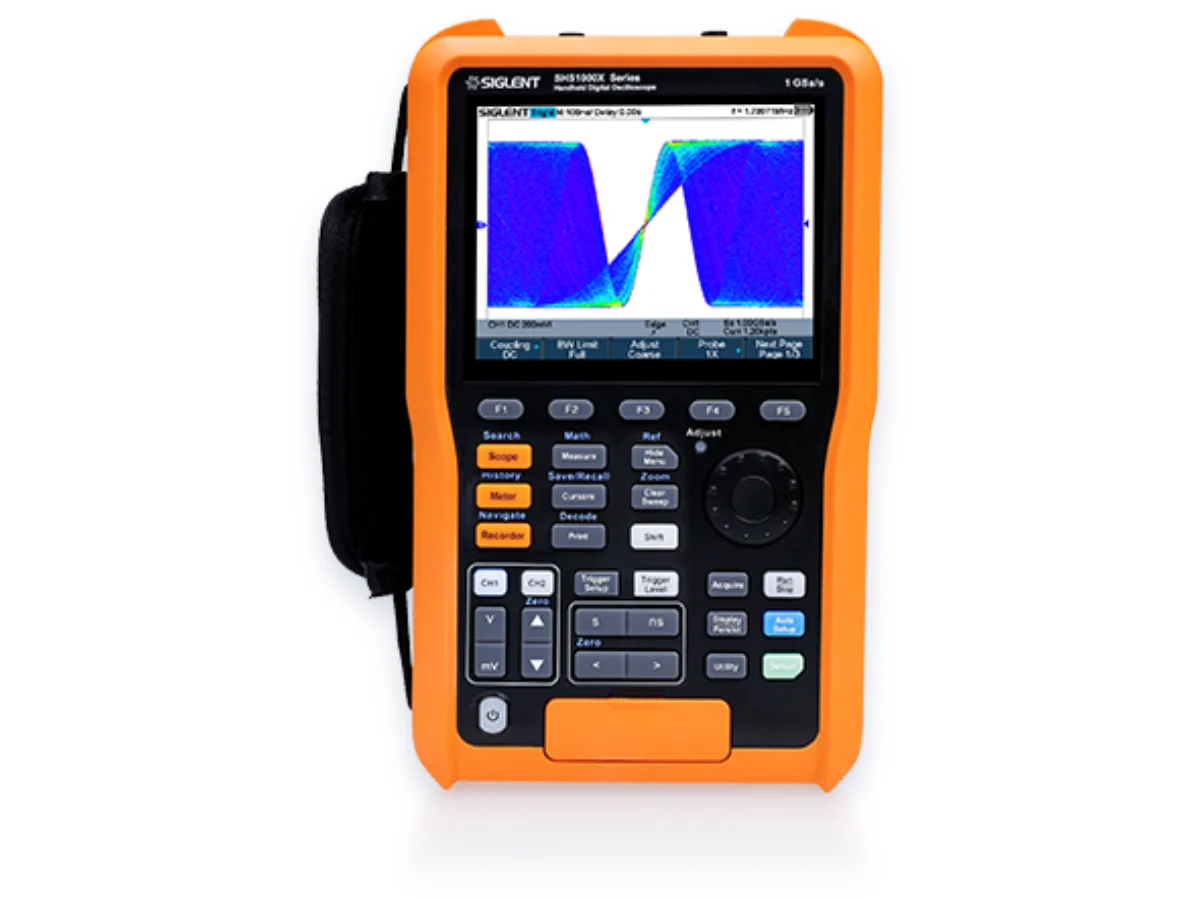
Siglent SHS1000X Isolated Handheld Oscilloscope

The Siglent SHS1000X is a fully isolated handheld oscilloscope: two isolated channels at 100 MHz or 200 MHz (1 GSa/s, 12 Mpts), a true RMS multimeter, and a CAT III 600 Vrms / CAT II 1000 Vrms rating, with standard I2C, SPI, UART, CAN and LIN decoding in an IP51 housing. Pertech, an authorized Siglent distributor in Israel, quotes in ILS with local invoicing, handles warranty in Israel and arranges calibration and repair.

SHS1000X highlights

  • Full isolation between both scope channels, multimeter, power adapter and USB port
  • Isolation rating CAT III 600 Vrms, CAT II 1000 Vrms on scope and multimeter inputs
  • SPO technology: up to 100,000 wfm/s (normal) and 400,000 wfm/s (sequence mode)
  • 1 GSa/s single-channel, 500 MSa/s per channel with two channels; up to 12 Mpts
  • Standard serial trigger and decode: I2C, SPI, UART, CAN, LIN
  • Hardware-based true RMS 6000-count multimeter
  • Up to 4-channel measurement trend graphing storing 3.5 M points
  • 256-level intensity grading and color temperature display
  • IP51 dust and drip-proof housing tested to IEC60529

Models

ModelBandwidthChannelsSample rateMemoryIsolation
SHS1102X100 MHz21 GSa/s12 Mpts1000 V CAT II, 600 V CAT III
SHS1202X200 MHz21 GSa/s12 Mpts1000 V CAT II, 600 V CAT III

Where the SHS1000X fits

  • Floating measurements on power electronics and motor drives
  • On-site decoding of automotive and embedded buses (CAN, LIN, I2C, SPI, UART)
  • Field and lab work where channels must be isolated

Key Specifications

SpecValue
Bandwidth100 MHz or 200 MHz
Channels2 isolated scope channels + 1 multimeter channel
Sample rate1 GSa/s (1 channel), 500 MSa/s (2 channels)
Memory depth12 Mpts (1 channel), 6 Mpts (2 channels)
Waveform capture rate100,000 wfm/s normal, 400,000 wfm/s sequence
IsolationCAT III 600 Vrms, CAT II 1000 Vrms
Multimeter6000 counts (about 3.5 digits), hardware true RMS
TriggersEdge, slope, pulse width, window, runt, interval, timeout, pattern
Serial decodeI2C, SPI, UART, CAN, LIN (standard)
Display5.6-inch TFT-LCD, 640 x 480
Ingress protectionIP51 (IEC60529)

Siglent SHS1000X in Israel

Buy the SHS1000X from Pertech, an authorized Siglent distributor in Israel: quotes in ILS and local invoicing, warranty handled in Israel, calibration and repair arranged through Pertech, some models in stock in Israel, and technical support from Pertech engineers.

Frequently asked questions

What is the Siglent SHS1000X?

The Siglent SHS1000X is a fully isolated handheld oscilloscope: two isolated channels at 100 MHz or 200 MHz (1 GSa/s, 12 Mpts), a true RMS multimeter, and a CAT III 600 Vrms / CAT II 1000 Vrms rating, with standard I2C, SPI, UART, CAN and LIN decoding in an IP51 housing.

Which SHS1000X models are there?

SHS1102X (bandwidth 100 MHz, channels 2, sample rate 1 GSa/s, memory 12 Mpts, isolation 1000 V CAT II, 600 V CAT III); SHS1202X (bandwidth 200 MHz, channels 2, sample rate 1 GSa/s, memory 12 Mpts, isolation 1000 V CAT II, 600 V CAT III).

Where can I buy the Siglent SHS1000X in Israel?

From Pertech, an authorized Siglent distributor in Israel. Contact Pertech for a quote in ILS, availability and help choosing the model and options.

Who handles warranty and calibration in Israel?

Pertech handles Siglent warranty in Israel: you return the unit to Pertech and Pertech deals with Siglent. Pertech also arranges calibration and repair.

Can Pertech help me set it up?

Yes. Pertech engineers help with setup and application questions for Siglent instruments bought through Pertech.

Related Siglent products at Pertech

Need a quote for the Siglent SHS1000X? Contact Pertech.

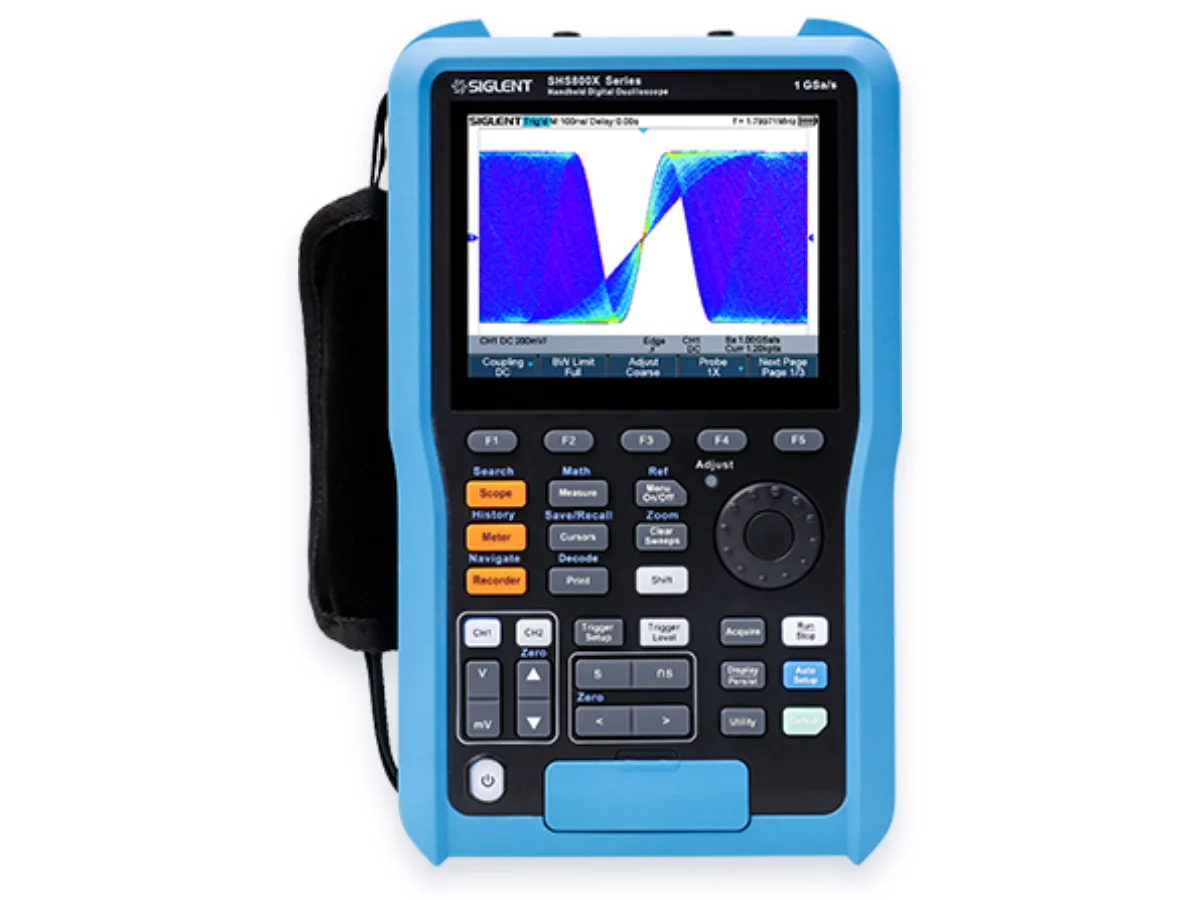
Siglent SHS800X Handheld Oscilloscope and Multimeter

The Siglent SHS800X is a handheld 2-channel oscilloscope at 100 MHz or 200 MHz (1 GSa/s, 12 Mpts) with an isolated 6000-count true RMS multimeter, a recorder and logger, serial trigger and decode and FFT, in an IP51 housing with a battery that lasts up to 5.5 hours. Pertech, an authorized Siglent distributor in Israel, quotes in ILS with local invoicing, handles warranty in Israel and arranges calibration and repair.

SHS800X highlights

  • 2-channel oscilloscope, true RMS multimeter, recorder, sample and measurement logger, serial trigger and decode, FFT
  • 1 GSa/s single-channel, 500 MSa/s per channel with two channels
  • Record length up to 12 Mpts (6 Mpts per channel with two channels)
  • Waveform recording up to 22 hours
  • 6000-count multimeter: DCV, ACV, DCI, ACI, resistance, diode, capacitance, continuity
  • 1 Mpts FFT with peaks and markers
  • Intelligent trigger: edge, slope, pulse width, window, runt, interval, timeout (dropout), pattern
  • IP51 dust and drip-proof housing tested to IEC60529
  • UL2054 certified 6900 mAh lithium battery, up to 5.5 hours without charge

Models

ModelBandwidthChannelsSample rateMemory
SHS810X100 MHz21 GSa/s12 Mpts
SHS820X200 MHz21 GSa/s12 Mpts

Where the SHS800X fits

  • Field service and on-site troubleshooting away from the bench
  • Maintenance work in dusty or damp places (IP51 housing)
  • Long recordings of slow signals, up to 22 hours

Key Specifications

SpecValue
Bandwidth100 MHz or 200 MHz
Channels2 scope channels (non-isolated) + 1 isolated multimeter channel
Sample rate1 GSa/s (1 channel), 500 MSa/s (2 channels)
Memory depth12 Mpts (1 channel), 6 Mpts (2 channels)
Multimeter6000 counts, true RMS
FFT1 Mpts
Display5.6-inch TFT-LCD, 640 x 480
Battery6900 mAh lithium, UL2054 certified, up to 5.5 h
Ingress protectionIP51 (IEC60529)
Dimensions276 x 168 x 68 mm
Weight1.75 kg

Siglent SHS800X in Israel

Buy the SHS800X from Pertech, an authorized Siglent distributor in Israel: quotes in ILS and local invoicing, warranty handled in Israel, calibration and repair arranged through Pertech, some models in stock in Israel, and technical support from Pertech engineers.

Frequently asked questions

What is the Siglent SHS800X?

The Siglent SHS800X is a handheld 2-channel oscilloscope at 100 MHz or 200 MHz (1 GSa/s, 12 Mpts) with an isolated 6000-count true RMS multimeter, a recorder and logger, serial trigger and decode and FFT, in an IP51 housing with a battery that lasts up to 5.5 hours.

Which SHS800X models are there?

SHS810X (bandwidth 100 MHz, channels 2, sample rate 1 GSa/s, memory 12 Mpts); SHS820X (bandwidth 200 MHz, channels 2, sample rate 1 GSa/s, memory 12 Mpts).

Where can I buy the Siglent SHS800X in Israel?

From Pertech, an authorized Siglent distributor in Israel. Contact Pertech for a quote in ILS, availability and help choosing the model and options.

Who handles warranty and calibration in Israel?

Pertech handles Siglent warranty in Israel: you return the unit to Pertech and Pertech deals with Siglent. Pertech also arranges calibration and repair.

Can Pertech help me set it up?

Yes. Pertech engineers help with setup and application questions for Siglent instruments bought through Pertech.

Related Siglent products at Pertech

Need a quote for the Siglent SHS800X? Contact Pertech.

J&D Tech PowerViser – Power Supply and Current Monitor

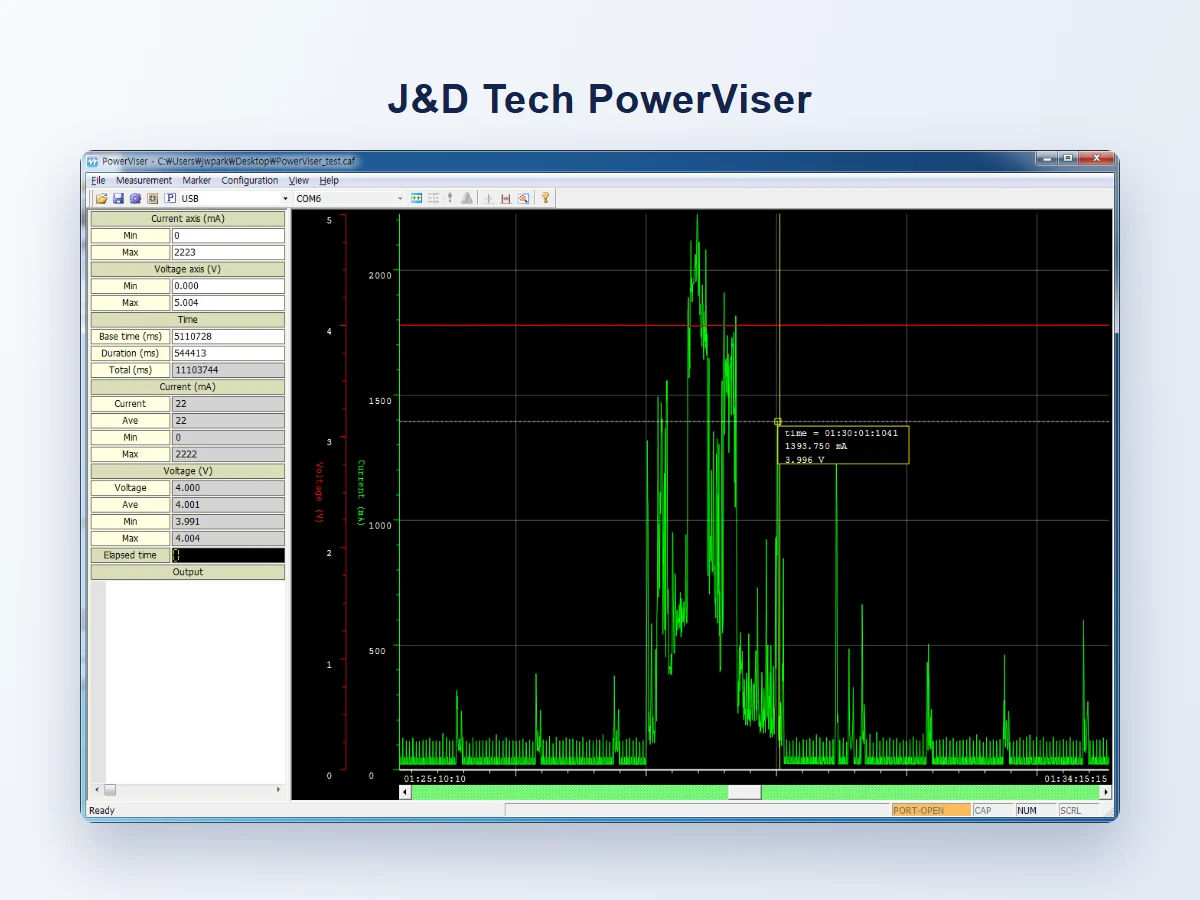
J&D Tech PowerViser is a power supply and voltage/current monitor for developing battery-powered and low-power products. It supplies the target from 2 to 9 V, measures current on a high-current path up to 5.1 A and a low-current path up to 320 mA, and shows live graphs with minimum, maximum and average values on a Windows PC or an Android phone over USB or Bluetooth. Pertech, a J&D Tech representative, sells and ships it worldwide.

PowerViser highlights

  • Programmable supply 2 to 9 V, 1.25 mV resolution
  • High-current path 0 to 5.1 A (156.25 uA resolution); low-current path 0 to 320 mA (10 uA)
  • Voltage and current graphs with min, max and average on one screen
  • Compare two points in time; markers and captures saved to file
  • Capture start and stop conditions and triggers
  • Current limits on the main and USB outputs to protect the target
  • Windows software and a dedicated Android app; USB 2.0 and Bluetooth 2.0 + EDR

Where PowerViser fits

  • Smartphones, tablets, wearables and fitness trackers
  • IoT devices, sensors, Bluetooth products and smart-home devices
  • Any battery product whose firmware must be tuned for current and voltage

Key Specifications

SpecValue
Voltage range2 to 9 V, 1.25 mV resolution
High-current path0 to 5.1 A, 156.25 uA resolution
Low-current path0 to 320 mA, 10 uA resolution
InterfacesUSB 2.0; Bluetooth 2.0 + EDR
SoftwareWindows (98 to 10); Android app
Power adapter12 V / 6 A
Size75 x 125 x 17 mm

Frequently asked questions

What is PowerViser?

PowerViser is J&D Tech’s power supply and voltage/current monitor for development boards. It powers the target and records its voltage and current so you can optimize power consumption.

What current ranges does it measure?

Two paths: high current from 0 to 5.1 A at 156.25 uA resolution, and low current from 0 to 320 mA at 10 uA resolution. Voltage is set and measured from 2 to 9 V at 1.25 mV resolution.

Can I monitor from a phone?

Yes. Besides the Windows software, PowerViser has a dedicated Android app connected over Bluetooth, with the same settings as the PC software.

Can it protect my board?

Yes. You can set current limits on the main and USB outputs to cut power when the current goes out of range.

Where can I buy PowerViser?

Pertech, a J&D Tech representative, sells and ships PowerViser worldwide. Contact Pertech for a quote, a demo or help choosing the right edition.

Related J&D Tech products at Pertech

Optimizing power on a battery product? Contact Pertech for a quote.


J&D Tech CodeViser – JTAG Debugger for Automotive MCUs and Arm

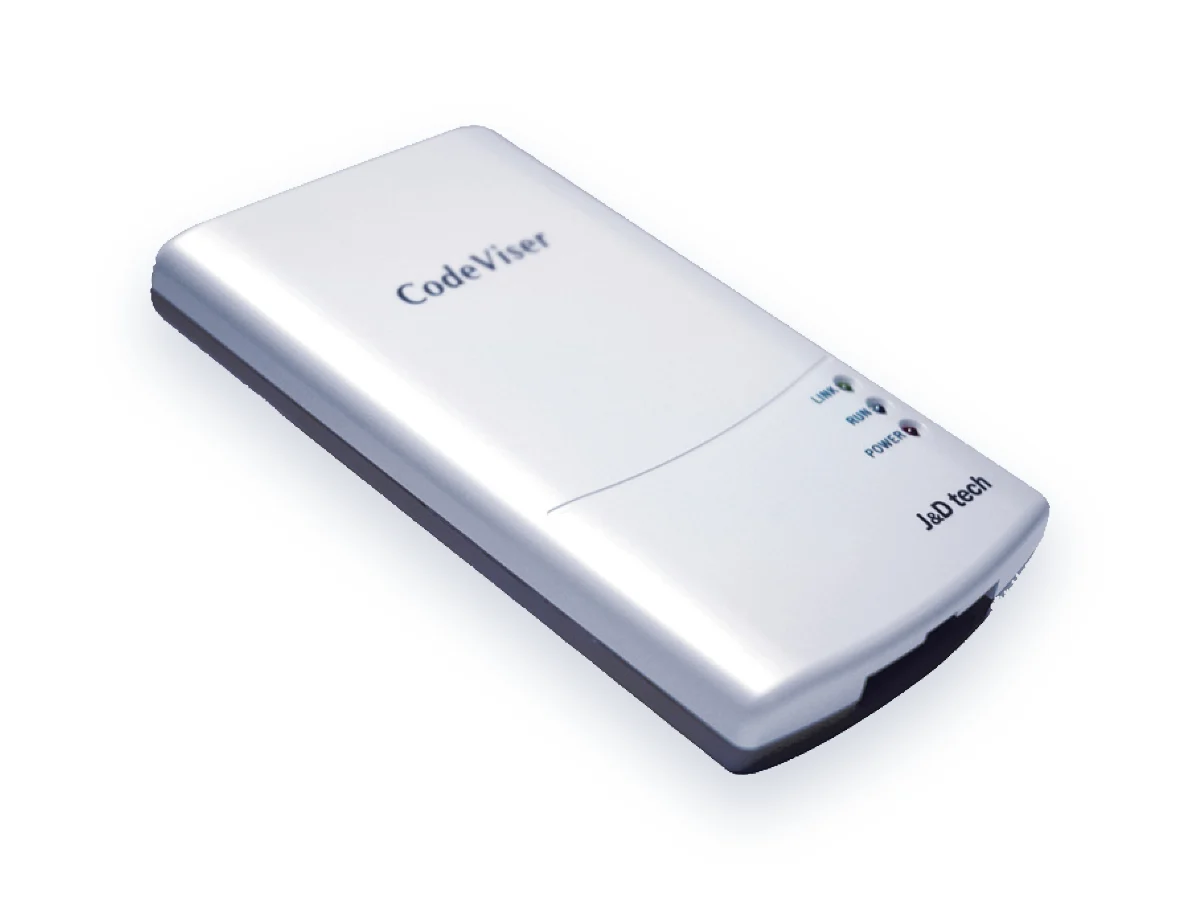
J&D Tech CodeViser is a JTAG emulator for embedded software development on automotive MCUs and Arm processors. With the CVD (CodeViser Debugger) software on a Windows PC it debugs C, C++ and assembly code at source level, controls multi-core SMP, AMP and big.LITTLE targets, programs flash, and is OS aware for Linux, Android and common RTOSs. CVD editions cover 32-bit and 64-bit Arm, Infineon TriCore (AURIX), RISC-V, Andes and Qualcomm QDSP6. Pertech, a J&D Tech representative, sells and ships it worldwide.

CodeViser highlights

  • Arm ARM7/9/11, Cortex-A, Cortex-R and Cortex-M, Armv7 and Armv8 64-bit
  • CVD editions for Infineon TriCore (AURIX), RISC-V, Andes and Qualcomm QDSP6
  • Multi-core SMP, AMP and big.LITTLE debugging with no extra license
  • Linux and Android awareness: kernel, modules, libraries, processes, threads, U-Boot
  • RTOS awareness: FreeRTOS, ThreadX, Nucleus, uC/OS-II, eCos, AMX, L4 and more
  • Hardware, software, conditional and automatic breakpoints; semihosting and DCC
  • Flash programming: NOR, NAND, OneNAND, moviNAND, iNAND and internal flash
  • .csf and .cmm script support; CVD API for your own software; function and symbol profiling
  • JTAG and Serial Wire Debug; JTAG clock 1 kHz to 50 MHz

CVD editions

Editions

EditionProcessors
CVD32-bit Arm (ARM7/9/11, Cortex-A/R/M, XScale, Faraday)
CVD6464-bit Arm (Armv8)
CVD TriCoreInfineon TriCore (AURIX), e.g. TC2xx
CVD Risc-VRISC-V cores
CVD_ANDESAndes cores
CodeViser QDSP6Qualcomm QDSP6 DSP

Where CodeViser fits

  • Automotive ECU software on AURIX TriCore MCUs
  • Board bring-up and BSP work on Arm application processors
  • Linux and Android kernel and driver debugging
  • Flash programming in the lab and on small production runs

Key Specifications

SpecValue
Host interfaceHigh-speed USB 2.0
Target connectorsJTAG 20, 14 and 16-pin; DAP 10, 20 and 26-pin
Debug interfacesJTAG, Serial Wire Debug
Target voltage1.8 to 5 V
JTAG clock1 kHz to 50 MHz
Download speedMore than 700 KB/s
PowerUSB or DC 5 V / 2 A adapter
Size76 x 128 x 18 mm
Image formatsELF, AXF, COFF, DWARF 1/2/3/4, EXE
Host softwareCVD (CodeViser Debugger) for Windows
UpdatesFirmware updated through CVD

Frequently asked questions

What is CodeViser?

CodeViser is J&D Tech’s JTAG emulator. Together with the CVD debugger on a Windows PC it debugs embedded software, controls multi-core targets and programs flash.

Which CVD edition do I need?

Choose by processor: CVD for 32-bit Arm, CVD64 for 64-bit Arm (Armv8), CVD TriCore for Infineon AURIX, CVD Risc-V, CVD_ANDES for Andes cores and CodeViser QDSP6 for Qualcomm DSPs. Pertech will confirm the edition for your chip.

Does it support AURIX automotive MCUs?

Yes, through the CVD TriCore edition. TriCore is the CPU core of Infineon’s AURIX family; J&D Tech’s brochure lists TriCore TC2xx.

Is multi-core debugging an extra cost?

No. J&D Tech states that no additional license is needed for multi-core debugging in CVD.

Can it program flash?

Yes: NOR, NAND, OneNAND, moviNAND, iNAND and the internal flash of many chipsets, with device and script files for each flash. Several CodeVisers can program several boards at once.

Does it run my .cmm scripts?

CVD is compatible with .cmm script files as well as its own .csf scripts.

Where can I buy CodeViser?

Pertech, a J&D Tech representative, sells and ships CodeViser worldwide. Contact Pertech for a quote, a demo or help choosing the right edition.

Related J&D Tech products at Pertech

Debugging an AURIX or Arm target? Contact Pertech for a quote or a demo.


ScanWorks Boundary-Scan Test – JTAG Board Test and Programming

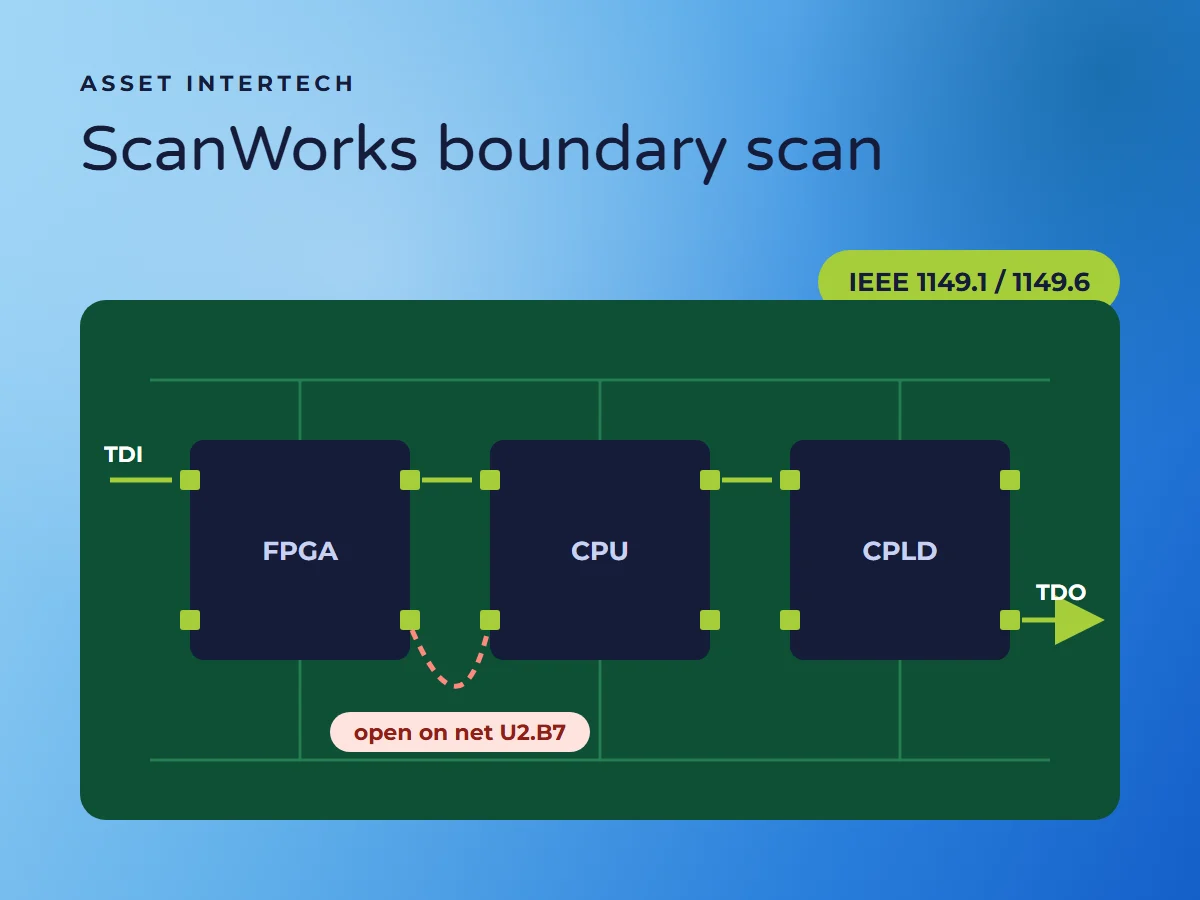
ASSET InterTech ScanWorks Boundary-Scan Test applies IEEE 1149.1 and 1149.6 boundary scan (JTAG) to test, diagnose and program circuit boards in development, manufacturing and repair. Tests are model-based and generated from the board netlist, so interconnect, pull-up and pull-down, memory and cluster tests are ready in minutes, and failures are reported down to the pin and net. The same tests and programming flows move from the lab to the production line and to contract manufacturers without changes. Pertech is an ASSET InterTech distributor.

ScanWorks highlights

  • Model-based, automatic test generation for IEEE 1149.1 and 1149.6 nets
  • Interconnect, pull-up/pull-down, memory (DDR, SRAM and more), cluster and scripted tests
  • Diagnostics to the failing pin and net, with a graphical board view
  • In-system programming of NOR and NAND flash, SPI and I2C PROMs, FPGAs and CPLDs (IEEE 1532, SVF, STAPL)
  • Design browser that imports CAD and schematic data from many vendors
  • Runs from its GUI or from any test executive or language through APIs
  • Controllers on USB, Ethernet, PCIe, PCI and PXI; delay compensation on Ethernet and PCIe
  • IJTAG (IEEE 1687) instrument access and an ICL/PDL validator

Development, production and repair

Engineers build and debug tests with a developer license. Operators run the finished test plans with an operator license: the job folder carries its own library of BSDL files, package definitions and scripts, so a program built in one site runs unchanged at a contract manufacturer. Operator mode lets technicians run the full sequence, a group of tests or a single test, and saving changes requires a developer password. ScanWorks can also share the work with in-circuit, flying-probe and functional testers.

Where ScanWorks fits

  • Structural test of dense boards with few test points
  • Production test and programming lines and contract manufacturers
  • Repair stations diagnosing returned boards
  • SoC and board teams reusing embedded instruments through IJTAG

Key Specifications

SpecValue
StandardsIEEE 1149.1, IEEE 1149.6, IEEE 1687 (IJTAG), IEEE 1532
TestsScan path, interconnect, pull-up/pull-down, memory, cluster, flash, I2C, SPI, scripted
ProgrammingNOR/NAND flash, SPI and I2C PROMs, FPGAs, CPLDs; SVF, STAPL, SREC, HEX
DiagnosticsFailing pins and nets (opens, shorts), graphical board view
ControllersUSB, Ethernet, PCIe, PCI, PXI; TCK up to 50 MHz; I/O 0.8 to 3.3 V (5 V)
IntegrationAPIs for test executives and programming languages; works alongside ICT, MDA, flying-probe and functional testers
LicensesDeveloper and operator; perpetual, with optional annual support and maintenance
HostWindows 32/64-bit

Frequently asked questions

What is ScanWorks Boundary-Scan Test?

It is ASSET InterTech’s boundary-scan (JTAG) software for testing, diagnosing and programming circuit boards, based on IEEE 1149.1 and 1149.6.

Which tests does it run?

Scan path integrity, interconnect, pull-up and pull-down, memory, cluster tests of non-boundary-scan devices, and scripted tests for any device reachable through boundary-scan pins.

How precise are the diagnostics?

ScanWorks reports the failing pins and nets, such as opens and shorts, and shows them on a graphical view of the board.

Can it program devices on the board?

Yes: NOR and NAND flash, SPI and I2C PROMs, FPGAs and CPLDs, using IEEE 1532, SVF, STAPL and other formats.

How is it licensed?

Developer licenses create and edit tests; operator licenses run them in production. Licenses are perpetual, with optional annual support and maintenance for updates.

Where can I buy ScanWorks in Israel?

Pertech is an ASSET InterTech distributor in Israel. Contact Pertech for a quote, a demo or an evaluation, or to check that your platform and debug header are supported.

Related ASSET InterTech products at Pertech

Adding boundary scan to your test line? Contact Pertech for a quote, a demo or an evaluation.


Arium ECM-XDP3e – JTAG Run-Control Probe for Intel

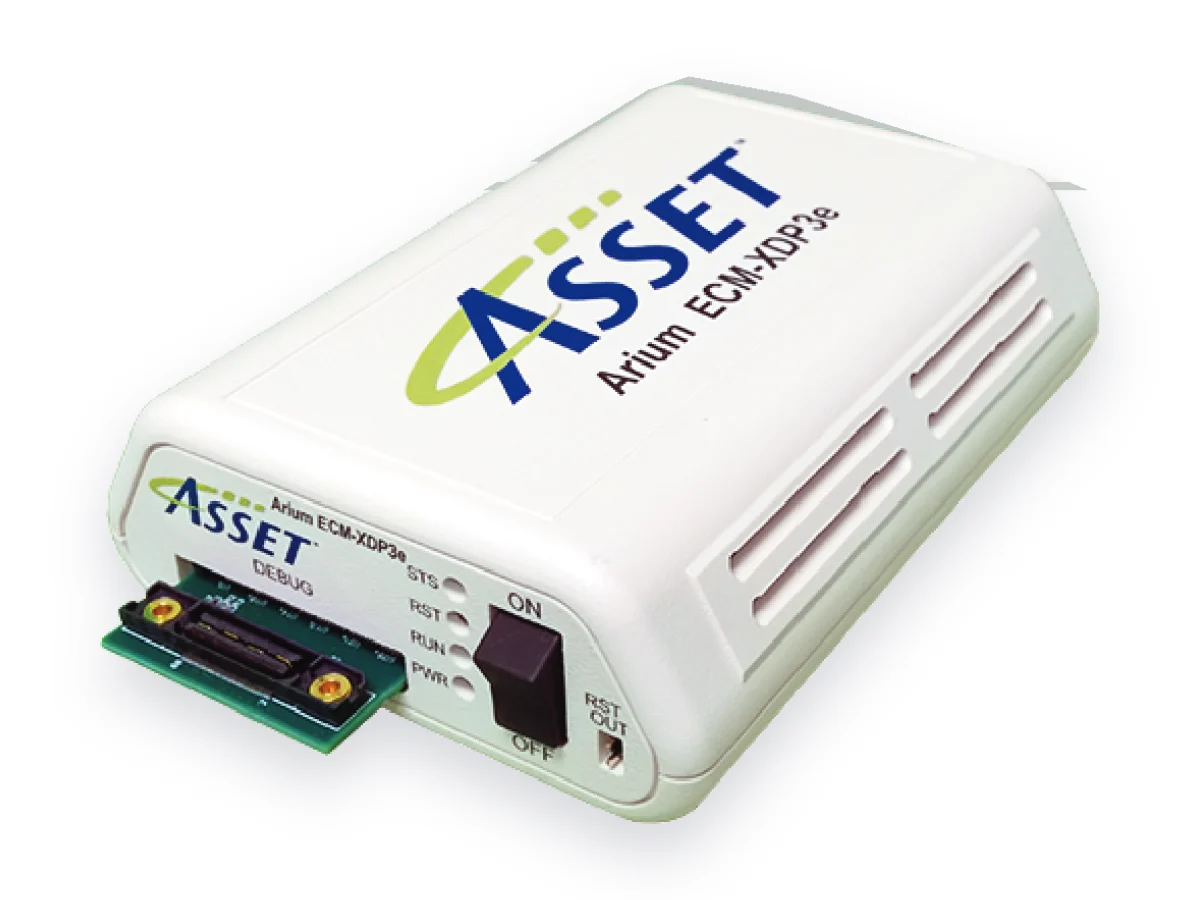
Arium ECM-XDP3e is ASSET InterTech’s JTAG run-control probe for Intel targets with an XDP debug port. Together with SourcePoint for Intel it gives real-time debug straight out of reset for BIOS, UEFI, device drivers, OS kernels and embedded applications on Intel Core, Xeon and Atom platforms. It connects to the host over USB 2.0 or Gigabit Ethernet and covers platforms from Skylake onward; the earlier ECM-XDP3 serves older generations. Pertech is an ASSET InterTech distributor.

the ECM-XDP3e highlights

  • Run control from reset with SourcePoint for Intel
  • 60-pin XDP debug port connector; adapters for MIPI and SFF-26 headers
  • Host connection over USB 2.0 or 10/100/1000BASE-T Ethernet
  • JTAG TCK up to 28 MHz; downloads above 200 KB/s
  • Multi-processor (SMP) support and access to all registers
  • Trigger in and trigger out lines
  • Small form factor and a built-in self-diagnostic test suite

Where the ECM-XDP3e fits

  • BIOS and UEFI bring-up on Intel boards with an XDP header
  • Shared lab setups: several probes on one floating SourcePoint license
  • Remote debug of targets over Ethernet

Key Specifications

SpecValue
ModelArium ECM-XDP3e
Target connector60-pin XDP; MIPI and SFF-26 via adapter
ProcessorsIntel Core, Xeon, Atom; platforms from Skylake onward
Host connectionUSB 2.0; 10/100/1000BASE-T Ethernet
JTAG TCKUp to 28 MHz
Download speedMore than 200 KB/s
Trigger in / out50 ohm, 155 ns / 125 ns maximum delay
Dimensions3.8 x 5.0 x 1.5 in (97 x 127 x 38 mm)
Operating environment0 to 31 °C, up to 85% humidity
SoftwareSourcePoint for Intel

Frequently asked questions

What is the Arium ECM-XDP3e?

It is ASSET InterTech’s JTAG run-control probe that connects SourcePoint for Intel to the XDP debug port of an Intel target.

ECM-XDP3e or ECM-XDP3?

The ECM-XDP3e supports platforms from Skylake onward. The earlier ECM-XDP3 covers older generations.

What if my board has a MIPI or SFF-26 header?

The MIPI debug header has a different pinout from XDP, so it needs the MIPI adapter. Boards with a 26-pin small-form-factor header use the XDP-SFF-26 adapter.

Can several probes share one license?

Yes. A floating SourcePoint license on a license server can be shared between several probes.

Where can I buy the Arium ECM-XDP3e in Israel?

Pertech is an ASSET InterTech distributor in Israel. Contact Pertech for a quote, a demo or an evaluation, or to check that your platform and debug header are supported.

Related ASSET InterTech products at Pertech

Choosing a probe for your Intel board? Contact Pertech for a quote, a demo or an evaluation.


SourcePoint for Arm – JTAG Debug and Trace for Arm SoCs

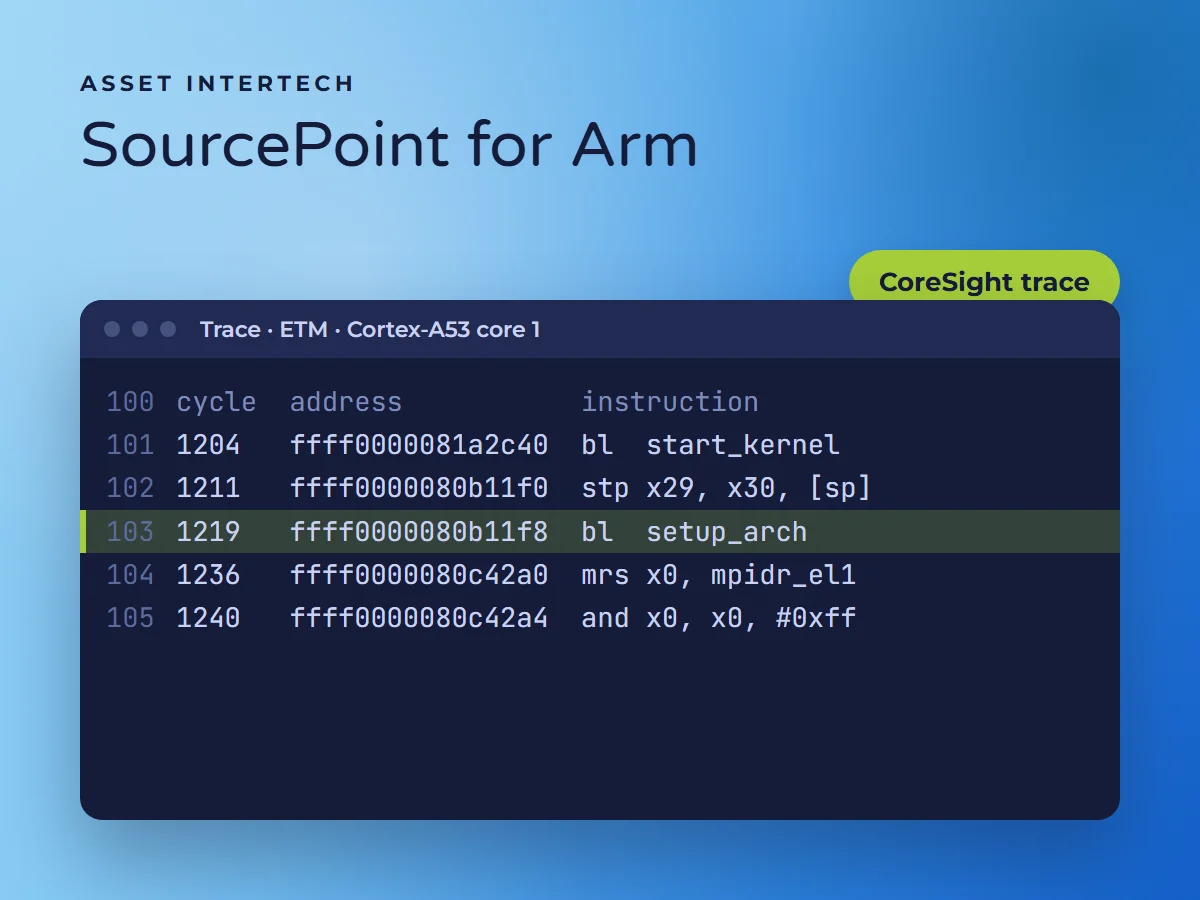
ASSET InterTech SourcePoint for Arm is a JTAG and SWD debugger with integrated trace for multi-core Arm SoCs, from Cortex-M microcontrollers to Cortex-A application processors. It works with the CoreSight trace macrocells (ETM, PTM, ITM, HTM and STM) to show exactly which code ran, with trace statistics, code profiling and call charts, and supports Linux kernel and application debug, including insmod modules and debug from board reset. Pertech is an ASSET InterTech distributor.

SourcePoint for Arm highlights

  • Multi-core and heterogeneous-core debug with independent core control
  • CoreSight trace: multiple ETMs, PTM, ITM, HTM and STM
  • Trace data mining, statistics, code profiling and call charts
  • JTAG and Serial Wire Debug (SWD)
  • Linux kernel, module (insmod), process and shared-library debug
  • ThreadX and Micro-C/OS II awareness; semihosting
  • Advanced breakpoints and multi-level triggers

Where SourcePoint for Arm fits

  • Arm SoC bring-up from board reset
  • Embedded Linux kernel and driver debug
  • Performance analysis with ETM-based profiling
  • RTOS applications on Cortex-M and Cortex-R

Key Specifications

SpecValue
CoresArm11, Arm926, Cortex-M0/M0+/M3/M4, Cortex-R4/R5/R7, Cortex-A5/A7/A8/A9/A15/A53/A57
Devices (examples)NXP i.MX and Kinetis, TI Sitara and OMAP, Xilinx Zynq-7000 and Zynq UltraScale+, Intel (Altera) Cyclone V SoC
InterfacesJTAG, SWD
TraceCoreSight ETM, PTM, ITM, HTM, STM
OS awarenessLinux, ThreadX, Micro-C/OS II
CompilersGNU, Arm, IAR, Green Hills
HostWindows and Linux

Frequently asked questions

What is SourcePoint for Arm?

It is ASSET InterTech’s JTAG/SWD debugger with integrated CoreSight trace for multi-core Arm SoCs.

Which Arm devices are supported?

Cores from Arm11 and Cortex-M0 to Cortex-A57, in devices from NXP, TI, Xilinx, Intel (Altera) and others. Pertech can check your specific SoC.

Can it debug embedded Linux?

Yes: kernel code, dynamically loaded modules, processes and shared libraries, with debug available from board reset.

Where can I buy SourcePoint for Arm in Israel?

Pertech is an ASSET InterTech distributor in Israel. Contact Pertech for a quote, a demo or an evaluation, or to check that your platform and debug header are supported.

Related ASSET InterTech products at Pertech

Debugging an Arm SoC? Contact Pertech for a quote, a demo or an evaluation.


SourcePoint for AMD – JTAG UEFI Debugger for AMD EPYC

ASSET InterTech SourcePoint for AMD brings SourcePoint’s run control and source-level UEFI debug to AMD EPYC server processors. It is built for server board bring-up and platform validation, where low-level firmware problems show up as intermittent, hard-to-reproduce bugs, and supports multi-core targets with non-intrusive, real-time debug. ASSET lists support for the EPYC Rome, Milan and Genoa generations. Pertech is an ASSET InterTech distributor.

SourcePoint for AMD highlights

  • Support for AMD EPYC Rome, Milan and Genoa
  • UEFI source-level debug
  • Non-intrusive, real-time run control
  • Multi-core debug with independent views
  • Advanced breakpoints and high-speed downloads
  • Automatic target acquisition

Where SourcePoint for AMD fits

  • Server and data-center board bring-up on AMD EPYC
  • UEFI and BIOS development for AMD platforms
  • Platform validation and intermittent firmware failures

Key Specifications

SpecValue
ProcessorsAMD EPYC: Rome, Milan, Genoa
DebugRun control, source-level UEFI debug, advanced breakpoints
TargetsMulti-core, multiprocessor
HostWindows

Frequently asked questions

What is SourcePoint for AMD?

It is ASSET InterTech’s JTAG debugger for AMD EPYC server processors, with run control and source-level UEFI debug.

Which AMD processors are supported?

ASSET lists the EPYC Rome, Milan and Genoa generations. Ask Pertech about newer EPYC parts.

Where can I buy SourcePoint for AMD in Israel?

Pertech is an ASSET InterTech distributor in Israel. Contact Pertech for a quote, a demo or an evaluation, or to check that your platform and debug header are supported.

Related ASSET InterTech products at Pertech

Bringing up an AMD EPYC server? Contact Pertech for a quote, a demo or an evaluation.


SourcePoint WinDbg – JTAG Debug with Windows OS Awareness

ASSET InterTech SourcePoint WinDbg joins SourcePoint’s JTAG hardware debug with Microsoft’s WinDbg, so engineers get Windows OS awareness on top of run control that reaches below the operating system. It brings SourcePoint’s SMM and VMM breakpoints, Intel Processor Trace, Architectural Event Trace and a VMCS viewer and editor to Windows kernel, hypervisor and security research, including work on features such as VBS enclaves, HLAT and System Guard. A lower-cost Home edition is available for individual researchers. Pertech is an ASSET InterTech distributor.

SourcePoint WinDbg highlights

  • Windows OS awareness through integration with Microsoft WinDbg
  • JTAG run control below the OS: SMM and VMM (hypervisor) breakpoints
  • Intel Processor Trace and Architectural Event Trace of the code that actually ran
  • VMCS viewer and editor for hypervisor state
  • Debug from the reset vector through UEFI and into Windows boot
  • Home edition for individual researchers

Where SourcePoint WinDbg fits

  • Windows kernel and driver debug where software debuggers cannot reach
  • Hypervisor and virtualization-based security research
  • Analysing Windows boot, from early boot to the first SMI
  • Security teams verifying platform protections on real hardware

Key Specifications

SpecValue
BaseSourcePoint for Intel with Microsoft WinDbg integration
BreakpointsSMM, VMM, hardware and software
TraceIntel Processor Trace, Architectural Event Trace
HypervisorVMCS viewer and editor
EditionsStandard and Home
ConnectionArium probe or Intel DCI, as SourcePoint for Intel

Frequently asked questions

What is SourcePoint WinDbg?

SourcePoint WinDbg adds Windows OS awareness to SourcePoint’s JTAG debugger through integration with Microsoft WinDbg.

Why use JTAG to debug Windows?

A JTAG debugger controls the processor from outside the operating system, so it can stop in SMM or in the hypervisor and see state that an in-OS debugger cannot, without changing the system under test.

Is there a version for individual researchers?

Yes. ASSET offers a lower-cost Home edition of SourcePoint WinDbg.

Where can I buy SourcePoint WinDbg in Israel?

Pertech is an ASSET InterTech distributor in Israel. Contact Pertech for a quote, a demo or an evaluation, or to check that your platform and debug header are supported.

Related ASSET InterTech products at Pertech

Researching Windows or hypervisor internals? Contact Pertech for a quote, a demo or an evaluation.


SourcePoint for Intel – JTAG UEFI and BIOS Debugger

ASSET InterTech SourcePoint for Intel is a JTAG-based, source-level debugger for UEFI, BIOS, boot loaders, drivers and operating-system kernels on Intel Core, Xeon and Atom platforms. It takes run control of the processor from the reset vector, before any firmware has run, and lets engineers step through PEI and DXE code, set hardware breakpoints, break on System Management Mode entry and exit, and record execution with Intel Processor Trace and the Intel Trace Hub. SourcePoint for Intel 7.14.0 (October 2026) adds Intel Nova Lake-S client silicon. Pertech is an ASSET InterTech distributor.

SourcePoint for Intel highlights

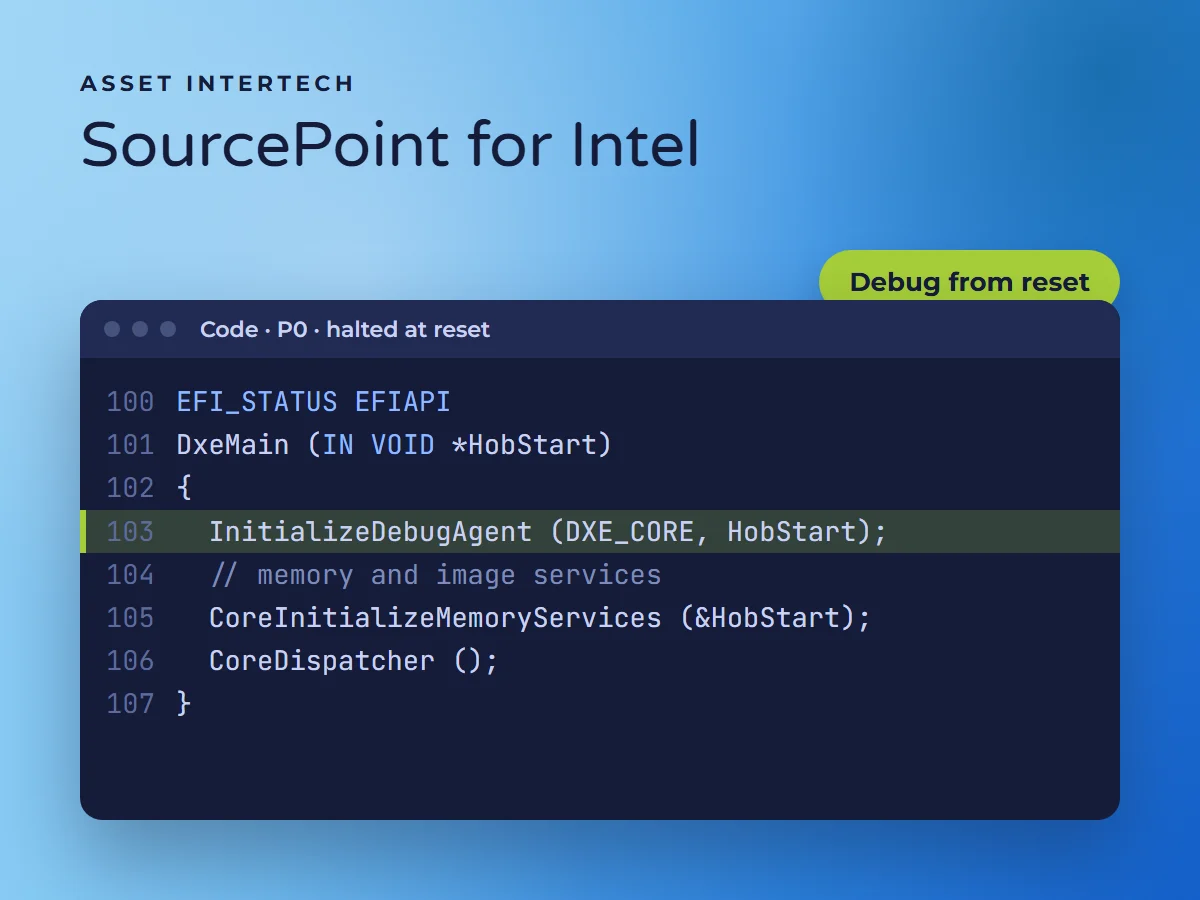
  • Run control from reset: halt at the reset vector and debug before memory is initialized
  • Source-level UEFI debug through PEI, DXE and later phases, with UEFI-aware navigation and macros
  • Hardware breakpoints (up to the debug registers of the processor) and unlimited software breakpoints
  • SMM entry and exit, reset, interrupt and other special-transition breaks; complex multi-level events
  • Intel Processor Trace, Architectural Event Trace and Intel Trace Hub, with a trace search call tree
  • Linux OS awareness with kernel and insmod module debug; multi-processor and multi-cluster targets
  • C-like command language and Python; Intel CScripts run from the Python command line
  • Code, Symbols, Registers, Memory, PCI Devices and Watch windows; .elf, .hex, .sym, .bin and PE (.exe, .dll, .efi) images

Connecting to the target

SourcePoint for Intel works with Arium run-control probes. The ECM-XDP3e connects to the 60-pin XDP debug header on platforms from Skylake onward; the earlier ECM-XDP3 covers older generations. Targets with a MIPI or SFF-26 debug header use an adapter. On Intel targets that support Direct Connect Interface (DCI), SourcePoint can connect over a single USB cable with no probe.

Where SourcePoint for Intel fits

  • BIOS and UEFI bring-up on new boards and new silicon
  • Board support package and low-level driver debug
  • Firmware security research: secure boot chain, SMM handlers, debug-port lock-down
  • Intermittent hangs and performance problems traced with Intel PT

Key Specifications

SpecValue
ProcessorsIntel Core, Xeon and Atom, including Nova Lake-S (7.14.0)
ConnectionArium ECM-XDP3e or ECM-XDP3 probe (XDP), MIPI and SFF-26 via adapter, Intel DCI over USB
UEFI debugSource level from reset through PEI and DXE; SMM breakpoints
TraceIntel Processor Trace, Architectural Event Trace, Intel Trace Hub
ScriptingC-like command language, Python, Intel CScripts
OS awarenessLinux kernel and modules
Image formatsELF, HEX, SYM, BIN, PE32/PE32+ (.exe, .dll, .efi)
HostWindows and Linux
LicensingNode-locked or floating (network) license

Frequently asked questions

What is SourcePoint for Intel?

It is ASSET InterTech’s JTAG debugger for firmware and low-level software on Intel processors, with run control from reset, source-level UEFI debug and execution trace.

Can it debug before memory is initialized?

Yes. SourcePoint halts the processor at the reset vector over JTAG, so code can be debugged before memory, BIOS or an operating system is up.

Which probe do I need?

The Arium ECM-XDP3e for XDP debug headers on Skylake and later platforms, the ECM-XDP3 for earlier ones, and an adapter for MIPI or SFF-26 headers. On targets with Intel DCI, a USB cable can replace the probe.

What do Intel CScripts add?

CScripts are Intel-provided Python scripts for platform debug, error analysis and error injection. SourcePoint runs them from its own Python command line, alongside UEFI source-level debug, and ASSET verifies new CScript releases against SourcePoint.

How is it licensed?

Node-locked to one PC, or floating on a license server so a team can share it between several probes.

Where can I buy SourcePoint for Intel in Israel?

Pertech is an ASSET InterTech distributor in Israel. Contact Pertech for a quote, a demo or an evaluation, or to check that your platform and debug header are supported.

Related ASSET InterTech products at Pertech

Bringing up an Intel platform? Contact Pertech for a quote, a demo or an evaluation.


Algocraft Write!Before – Socket Gang Programmer

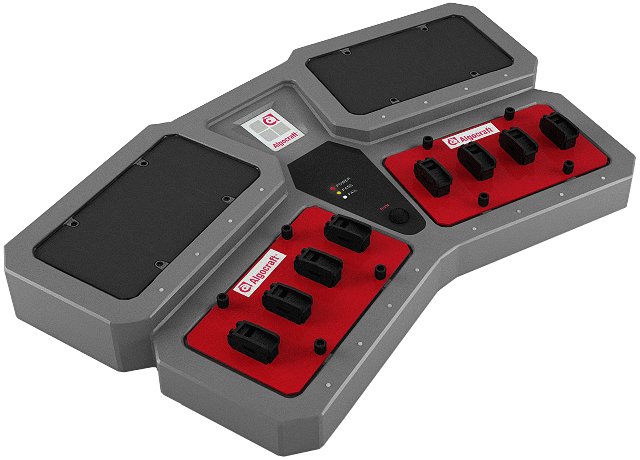
Algocraft Write!Before is a socket gang programmer that programs up to eight serial memories or flash microcontrollers at once, before they are assembled on the board. A universal base unit, built on Algocraft WriteNow! technology, takes device-specific socket adapters for DIP, SDIP, SOIC, QFP, BGA and other packages, and runs standalone or connected to a PC. Pertech is an Algocraft distributor.

Write!Before highlights

  • Programs up to eight devices concurrently
  • Serial memories and flash microcontrollers
  • Universal, upgradable base unit with device-specific socket adapters
  • DIP, SDIP, SOIC, PLCC, QFP and BGA packages through adapters
  • Standalone with START button and PASS/FAIL LEDs, or host controlled over RS-232, USB or LAN
  • Programmable I/O voltage 1.6 to 5.5 V; projects stored on a built-in memory card
  • Project Wizard, File Merge and File Manager software

Socket adapter examples

Socket adapters

AdapterDescription
SA-WSON8-00-MEMSPI-004 sockets, SPI serial memories, WSON8 6 x 8 mm
SA-SO16-00-MEMSPI-004 sockets, SPI serial memories, SO16 300 mil
SA-QFP32-00-STM32-004 sockets, STM32, QFP32
SA-DIP18-00-PIC16-004 sockets, PIC16, DIP18
SA-DIP28-00-PIC16-004 sockets, PIC16, DIP28

Where Write!Before fits

  • Pre-programming memories and MCUs before they go to the assembly house
  • Boards without in-system programming access
  • Batch programming of spare parts and service stock
  • Teams already using WriteNow! projects and software

Frequently asked questions

What is Write!Before?

Write!Before is an Algocraft off-board gang programmer for serial memories and flash microcontrollers. Devices sit in sockets and up to eight are programmed at once, before they are assembled on the board.

When should I program devices before assembly instead of in-system?

When the board has no programming access, when the devices go to an outside assembler already programmed, or when a large batch of memories or microcontrollers must be programmed ahead of production. In-system programming with WriteNow! suits boards that are programmed during test.

What are socket adapters?

Socket adapters are boards that connect the programming sites to the Write!Before base unit. Each adapter carries the right socket (DIP, SDIP, SOIC, QFP, BGA and others) and wiring for a specific device. Examples: SA-WSON8-00-MEMSPI-00 and SA-SO16-00-MEMSPI-00 for SPI memories, SA-QFP32-00-STM32-00 for STM32, SA-DIP18-00-PIC16-00 and SA-DIP28-00-PIC16-00 for PIC16.

Does Write!Before need a PC?

No. It runs standalone with a START button and PASS/FAIL LEDs, or connected to a PC over RS-232, USB or LAN. Software utilities include a Project Wizard, File Merge and a File Manager.

Where can I buy the Algocraft Write!Before in Israel?

Pertech is an Algocraft distributor in Israel. Contact Pertech for a quote, a check that your devices are supported, or help planning the programming station.

Related Algocraft products at Pertech

Programming devices before assembly? Contact Pertech for a quote and the socket adapter for your package.


Algocraft MicroISP UISP1 – Single-Site In-System Programmer

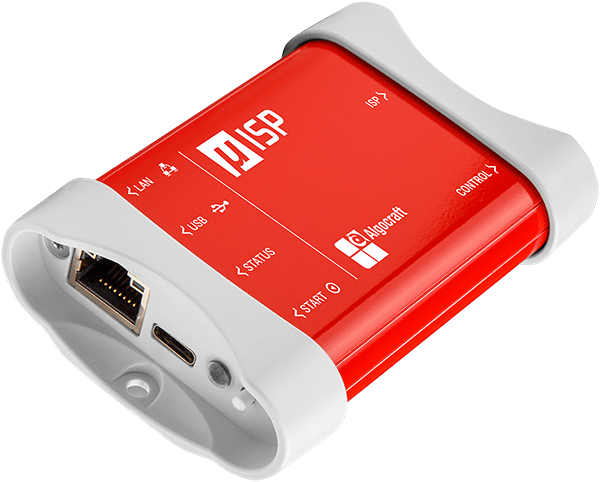
Algocraft µISP is a compact, single-site in-system programmer built on the same WriteNow! technology as Algocraft’s multi-site production programmers. It programs microcontrollers, serial memories and other devices on the board through JTAG, SWD, SPI, I2C, UART and many more protocols, in the lab, on the line or in the field, and moves to WriteNow! multi-site models with the same projects when volume grows. Pertech is an Algocraft distributor.

µISP highlights

  • Single-site in-system programmer, 90 x 61 x 23 mm, 50 g
  • Universal edition or editions for one silicon vendor
  • Standalone with the START button or TTL control lines (START, BUSY, OK/ERR)
  • Host control over LAN, USB or RS-232; SDK and ASCII command protocol
  • Powered from USB-C or an external 5 V adapter: works as a handheld field programmer
  • Programmable power supply 1.5 to 12.5 V (200 mA) and programmable Vpp port
  • ISP lines 1.2 to 5.5 V with 6 bidirectional lines
  • Built-in 16 GB SD card; variable data such as serial numbers and MAC addresses
  • Protection mode and data encryption for firmware IP

µISP editions

Models

ModelDevices supported
UISP1-UNIVERSALAll devices supported by Algocraft
UISP1-ARMArm CPUs (STM32, LPC, Kinetis, ATSAM, PSoC4, TLE98x, S32K, XMC, ADuCM, CC26xx, nRF51)
UISP1-MEMORYSPI, I2C and Microwire serial memories
UISP1-MICROCHIPMicrochip and Atmel devices
UISP1-NXPNXP devices
UISP1-STMSTMicroelectronics devices
UISP1-INFINEONInfineon and Cypress devices
UISP1-TITexas Instruments devices
UISP1-RENESASRenesas devices
UISP1-SILICONLABSSilicon Labs devices

Where µISP fits

  • R&D labs moving a programming flow toward production
  • Small production lines and rework stations
  • In-field firmware updates, powered from a laptop USB port
  • Parallel stations built from several units on a USB hub or LAN switch

Key Specifications

SpecValue
Programming sites1
Power supplyUSB-C powered or external 5 V
Programmable power supply1.5 to 12.5 V, 200 mA
ISP lines1.2 to 5.5 V, 6 bidirectional lines
Programming protocolsJTAG, SWD, UART, SPI/QSPI, BDM, SWIM, I2C, DAP, cJTAG, C2, ICSP, PDI, UPDI, FINE, MUST/MICE, MON08, ISSP, ICC, MDI, OUT, PSI5, SBW and custom
Low-level interfaceSTART, BUSY, OK/ERR (5 V compatible)
Host interfacesLAN, USB, RS-232
StorageBuilt-in 16 GB SD card
ISP connectorBox header 8×2, 2 mm pitch
Dimensions90.0 x 60.9 x 23.4 mm with enclosure; 74 x 47.5 x 11 mm without
Weight50 g
ComplianceCE, FCC, RoHS
Package contentsµISP1 unit, 5 V AC adapter, USB/LAN cables, test board, DIN41612 48-way adapter

Frequently asked questions

What is the Algocraft µISP?

µISP is a compact single-site in-system programmer built on Algocraft WriteNow! technology. It programs microcontrollers, serial memories and other devices on the board, standalone with a START button or under the control of a PC or an ATE.

Which µISP edition should I choose?

UISP1-UNIVERSAL supports every device in the Algocraft list. The vendor editions (Arm, serial memories, Microchip, NXP, ST, Infineon, TI, Renesas, Silicon Labs) cover one manufacturer, whatever the family or protocol. Pertech will match the edition to your parts.

Can µISP work without a PC?

Yes. The project, binaries and programming flow are stored on its 16 GB SD card. Press START, or drive the START line from a fixture, and the BUSY/PASS/FAIL LED shows the result. Powered from USB-C, it also works as a handheld programmer in the field.

Can I program several boards in parallel with µISP?

Yes. Several µISP units connected through a USB hub or a LAN switch form a parallel programming system. For one compact multi-site unit, the WriteNow! 2, 4 and 8 run the same projects.

Does it support older devices that need a Vpp voltage?

Yes. µISP has a programmable Vpp port for devices that need a high voltage to enter programming mode, and a programmable power supply output of 1.5 to 12.5 V (200 mA).

Where can I buy the Algocraft µISP in Israel?

Pertech is an Algocraft distributor in Israel. Contact Pertech for a quote, a check that your devices are supported, or help planning the programming station.

Related Algocraft products at Pertech

Need one programmer for the lab and the line? Contact Pertech for a quote or a device support check.


Starter Kit i.MX7 – i.MX7-MB Base Board and i.MX7-CM SoM

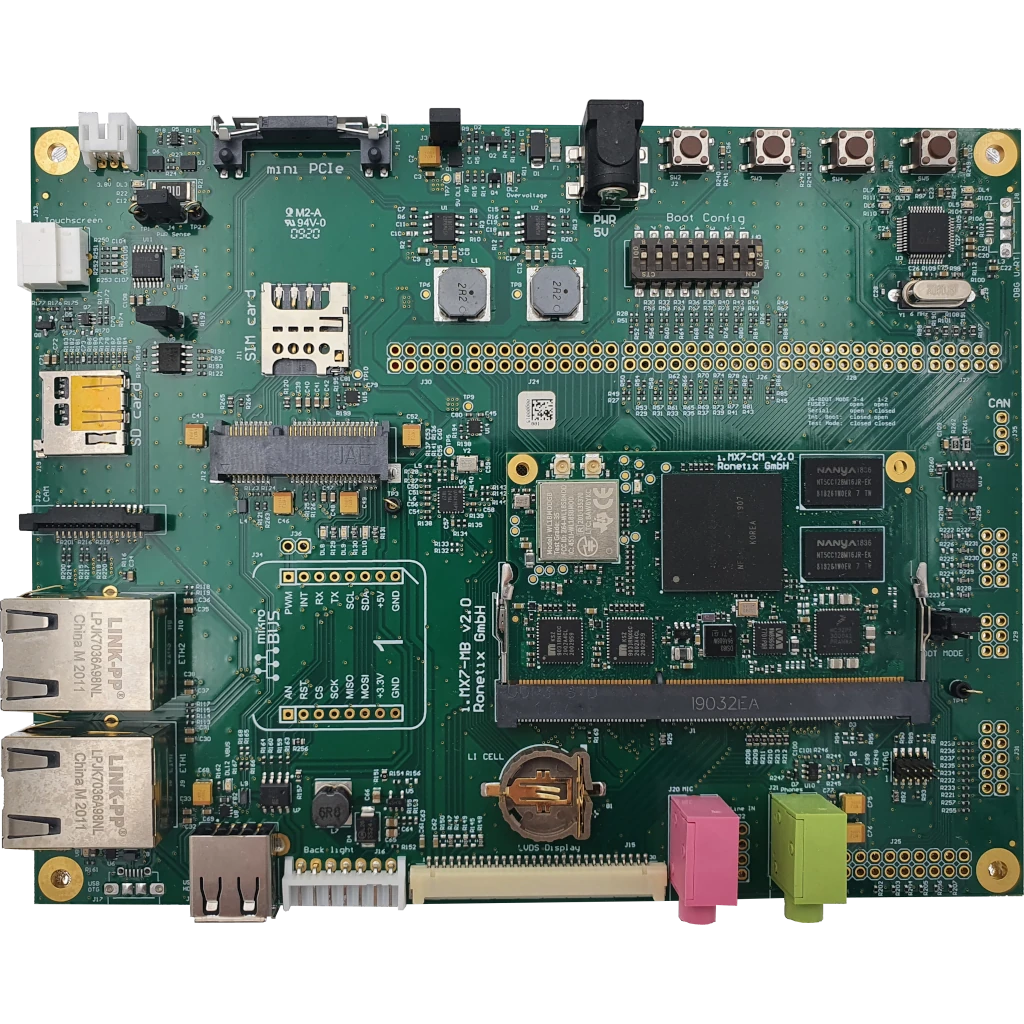
Ronetix Starter Kit i.MX7 is a ready-to-run development kit for the Ronetix iMX7-CM System-on-Module with NXP i.MX7 Dual. It contains the i.MX7-MB base board, the module, a power supply and an SD card with Yocto pre-installed. The base board brings out two Gigabit Ethernet ports, CAN, a MikroBUS socket, Mini PCIe, LVDS with touch and a MIPI-CSI camera input, and Ronetix publishes its datasheet, schematics and the U-Boot, Linux kernel and Yocto sources. Pertech is a Ronetix distributor.

i.MX7 starter kit highlights

  • Base board i.MX7-MB
  • CPU module (System-on-Module)
  • Power supply
  • SD card with Yocto pre-installed: boots out of the box
  • Base board: 2x Gigabit Ethernet, USB 2.0 host and OTG, USB debug UART, micro-SD, Mini PCIe
  • LVDS display with touch-panel interface, MIPI-CSI camera for the OV5640
  • CAN bus header, MikroBUS connector, GPIO headers, audio jacks
  • Base-board schematics published by Ronetix

Where the i.MX7 starter kit fits

  • Evaluating the iMX7-CM for industrial gateways
  • CAN and dual-Ethernet application development
  • Adding sensors through MikroBUS click boards
  • A schematic reference for your own i.MX7 carrier

Key Specifications

SpecValue
Contentsi.MX7-MB, i.MX7-CM, power supply, SD card with Yocto
ModuleNXP i.MX7D, 2x Cortex-A7 1 GHz, SO-DIMM 204
Ethernet2x 10/100/1000BASE-T, RJ45
USBUSB 2.0 host Type A, USB 2.0 OTG micro AB, USB debug UART1 and UART2
Storage and expansionmicro-SD, Mini PCIe, MikroBUS
DisplayLVDS, touch-panel interface
CameraMIPI-CSI for OV5640
OtherCAN bus header, GPIO headers, 3.5 mm headphone and microphone jacks
Software and filesU-Boot, Linux kernel, Yocto; datasheet and schematics

Frequently asked questions

What is in the Starter Kit i.MX7?

The i.MX7-MB base board, the i.MX7-CM System-on-Module, a power supply and an SD card with Yocto pre-installed.

Are the base-board schematics available?

Yes. Ronetix publishes the i.MX7-MB datasheet and schematics.

Can I debug and program it with PEEDI?

Ronetix lists PEEDI as a development tool for the i.MX7-CM, for JTAG debugging and standalone flash programming.

Where can I buy the Starter Kit i.MX7 in Israel?

Pertech is a Ronetix distributor in Israel. Contact Pertech for a quote, lead time, memory and temperature options, or help choosing a module and carrier board.

Related Ronetix products at Pertech

Starting an i.MX7 industrial design? Contact Pertech for a quote, availability or help choosing the right module.


Starter Kit i.MX8M – i.MX8M-MB Base Board and i.MX8M-CM SoM

Ronetix Starter Kit i.MX8M is a ready-to-run development kit for the Ronetix SO-DIMM System-on-Modules. It contains the i.MX8M-MB base board, the iMX8M-CM module with NXP i.MX8M, a power supply and an SD card with Yocto pre-installed. The base board brings out HDMI and LVDS displays with touch, USB 3.0, M.2 PCIe, a MIPI-CSI camera input and audio, and Ronetix publishes its datasheet and the U-Boot, Linux kernel and Yocto sources. Pertech is a Ronetix distributor.

i.MX8M starter kit highlights

  • Base board i.MX8M-MB
  • CPU module (System-on-Module)
  • Power supply
  • SD card with Yocto pre-installed: boots out of the box
  • Base board: Gigabit Ethernet, USB 3.0 host Type A and Type C, USB debug UART, micro-SD, M.2 PCIe
  • HDMI and LVDS displays with touch-panel interface
  • MIPI-CSI camera for the OV5640, audio jacks and 1 W speakers

Where the i.MX8M starter kit fits

  • Evaluating the iMX8M-CM and other Ronetix SO-DIMM modules
  • HDMI and touch-display application development
  • Camera bring-up
  • Software work before custom hardware is ready

Key Specifications

SpecValue
Contentsi.MX8M-MB, i.MX8M-CM, power supply, SD card with Yocto
ModuleNXP i.MX8M, 4x Cortex-A53 1.5 GHz, SO-DIMM 204
Ethernet10/100/1000BASE-T, RJ45
USBUSB 3.0 host Type A, USB 3.0 Type C, USB debug UART1 and UART2
Storage and expansionmicro-SD, M.2 PCIe
DisplayHDMI, LVDS, touch-panel interface
CameraMIPI-CSI for OV5640
Audio3.5 mm headphone and microphone jacks, 1 W speakers
SoftwareU-Boot, Linux kernel, Yocto

Frequently asked questions

What is in the Starter Kit i.MX8M?

The i.MX8M-MB base board, the i.MX8M-CM System-on-Module, a power supply and an SD card with Yocto pre-installed.

Can I use the iMX8M-MINI-CM or iMX8M-NANO-CM on this base board?

Ronetix names this starter kit for the iMX8M-MINI-CM and iMX8M-NANO-CM modules as well. Ask Pertech to confirm the combination you need.

Is software included?

Yes. Yocto is pre-installed on the SD card, and Ronetix publishes U-Boot, Linux kernel and Yocto for the kit.

Where can I buy the Starter Kit i.MX8M in Israel?

Pertech is a Ronetix distributor in Israel. Contact Pertech for a quote, lead time, memory and temperature options, or help choosing a module and carrier board.

Related Ronetix products at Pertech

Want to start on i.MX8M today? Contact Pertech for a quote, availability or help choosing the right module.


Starter Kit i.MX8MM-COMPACT – Base Board and Compact SoM

Ronetix Starter Kit i.MX8MM-COMPACT is a ready-to-run development kit for the Ronetix 40 x 30 mm compact System-on-Modules. It contains the i.MX8MM-COMPACT-MB base board, the i.MX8MM-COMPACT-CM module with NXP i.MX8M Mini, a power supply and an SD card with Yocto pre-installed, so the board boots Linux on the first power-up. Pertech is a Ronetix distributor.

i.MX8MM-COMPACT starter kit highlights

  • Base board i.MX8MM-COMPACT-MB
  • CPU module (System-on-Module)
  • Power supply
  • SD card with Yocto pre-installed: boots out of the box
  • Base board: Gigabit Ethernet, USB 2.0 host and micro AB, USB debug UART, micro-SD, M.2 PCIe
  • LVDS display, MIPI-CSI camera for the OV5640, audio jacks and 1 W speakers
  • Two Hirose DF40 connectors for the compact module

Where the i.MX8MM-COMPACT starter kit fits

  • Evaluating the compact i.MX8M modules
  • Starting Linux and application development on day one
  • Display and camera bring-up
  • A reference before designing your own carrier

Key Specifications

SpecValue
Contentsi.MX8MM-COMPACT-MB, i.MX8MM-COMPACT-CM, power supply, SD card with Yocto
ModuleNXP i.MX8M Mini, 4x Cortex-A53 1.8 GHz, 40 x 30 mm
Ethernet10/100/1000BASE-T, RJ45
USBUSB 2.0 host Type A, USB 2.0 micro AB, USB debug UART2 and UART4
Storage and expansionmicro-SD, M.2 PCIe
DisplayLVDS
CameraMIPI-CSI for OV5640
Audio3.5 mm headphone and microphone jacks, 1 W speakers
SoftwareYocto, Linux kernel, U-Boot

Frequently asked questions

What is in the Starter Kit i.MX8MM-COMPACT?

The i.MX8MM-COMPACT-MB base board, the i.MX8MM-COMPACT-CM System-on-Module, a power supply and an SD card with Yocto pre-installed.

Does it work out of the box?

Yes. The SD card is pre-installed with Yocto, so the kit boots Linux on first power-up.

Can I use other compact modules on this base board?

The base board uses Hirose DF40 connectors compatible with the i.MX8MM-COMPACT-CM. Ask Pertech about using the iMX8MN-COMPACT-CM.

Where can I buy the Starter Kit i.MX8MM-COMPACT in Israel?

Pertech is a Ronetix distributor in Israel. Contact Pertech for a quote, lead time, memory and temperature options, or help choosing a module and carrier board.

Related Ronetix products at Pertech

Want to start on i.MX8M Mini today? Contact Pertech for a quote, availability or help choosing the right module.


RNX-OSM-CARRIER – Carrier Board for OSM Modules

Ronetix RNX-OSM-CARRIER is a development carrier board for Open Standard Module (OSM) System-on-Modules of all sizes. The OSM module is soldered onto a small RNX-OSM-ADAPTER board, which plugs into the carrier through four 100-pin Hirose DF40 connectors, so modules can be replaced easily. The carrier brings out Ethernet, USB, HDMI, LVDS, RGB, MIPI, M.2 PCIe, audio, CAN and PMOD. Ronetix publishes the adapter schematics, stencil Gerbers and a 3D model, and offers the Altium project on request. Pertech is a Ronetix distributor.

RNX-OSM-CARRIER highlights

  • Development board for OSM modules of all sizes
  • RNX-OSM-ADAPTER board on 4x 100-pin Hirose DF40 connectors for easy module replacement
  • 2x Gigabit Ethernet, USB 2.0 and 3.0, USB debug UART
  • HDMI, LVDS, MIPI-DSI, RGB parallel display and MIPI-CSI
  • M.2 PCIe, micro-SD, audio jack and 1 W speakers
  • 2x CAN, 3x PMOD, GPIO headers
  • Adapter schematics, stencil Gerbers, 3D model; Altium project on request

Where the RNX-OSM-CARRIER fits

  • Evaluating the RNX-iMX93-OSM or RNX-RZG2UL-OSM
  • Software development on OSM modules
  • A reference for your own OSM carrier design
  • Display and camera bring-up

Key Specifications

SpecValue
ModelRNX-OSM-CARRIER
ModuleOSM, all sizes, via RNX-OSM-ADAPTER
Module connection4x Hirose DF40 100-pin connectors
Ethernet2x 10/100/1000BASE-T, RJ45
USBUSB 2.0 OTG (micro AB), USB 2.0 host (Type A), USB 3.0 (Type C), USB 3.0 host (Type A), USB debug UART
Storage and expansionmicro-SD, M.2 PCIe
DisplayHDMI, LVDS, MIPI-DSI, RGB parallel
CameraMIPI-CSI
Audio3.5 mm headphone and microphone jack, 1 W speakers
Other2x CAN, 3x PMOD, GPIO headers
Design filesDatasheet, adapter schematics, stencil Gerbers, 3D STEP model; Altium project on request

Frequently asked questions

What is the RNX-OSM-CARRIER?

It is a Ronetix development carrier board for OSM System-on-Modules of all sizes, using an adapter board that carries the soldered module.

Should I choose this board or the v2.0?

Choose v2.0 if you swap modules often or test modules in production: its LGA662 socket needs no soldering. This board suits development on modules of all sizes and comes with published adapter design files.

Which modules does it support?

Ronetix lists the RNX-iMX93-OSM and RNX-RZG2UL-OSM as mating products.

Where can I buy the RNX-OSM-CARRIER in Israel?

Pertech is a Ronetix distributor in Israel. Contact Pertech for a quote, lead time, memory and temperature options, or help choosing a module and carrier board.

Related Ronetix products at Pertech

Evaluating an OSM module? Contact Pertech for a quote, availability or help choosing the right module.


RNX-SMARC-CARRIER – Carrier Board for SMARC Modules

Ronetix RNX-SMARC-CARRIER is a 170 x 170 mm development carrier board for System-on-Modules in the SMARC (Smart Mobility Architecture) format. It brings out the module’s interfaces to standard connectors: two Gigabit Ethernet ports, USB 2.0 and 3.0, HDMI, LVDS, MIPI-DSI and MIPI-CSI, M.2 PCIe, audio, CAN and three PMOD connectors, so you can evaluate a module and start software work before your own carrier exists. Ronetix makes the complete Altium project available on request. Pertech is a Ronetix distributor.

RNX-SMARC-CARRIER highlights

  • Development board for SMARC modules, 170 x 170 mm
  • 2x Gigabit Ethernet RJ45
  • USB 2.0 OTG, USB 2.0 host, USB 3.0 host Type A and USB 3.0 Type C
  • HDMI, LVDS, MIPI-DSI and MIPI-CSI connectors
  • M.2 PCIe, micro-SD, audio jack and 1 W speakers
  • 2x CAN connectors, 3x PMOD, GPIO headers
  • Complete Altium project available on request from Ronetix

Where the RNX-SMARC-CARRIER fits

  • Evaluating the RNX-iMX93-SMARC, RNX-iMX95-SMARC or RNX-RZV2N-SMARC
  • Software development before custom hardware is ready
  • A reference design for your own SMARC carrier
  • Display and camera bring-up

Key Specifications

SpecValue
ModelRNX-SMARC-CARRIER
ModuleSMARC (Smart Mobility Architecture)
Board size170 x 170 mm
Ethernet2x 10/100/1000BASE-T, RJ45
USBUSB 2.0 OTG (micro AB), USB 2.0 host (Type A), USB 3.0 host (Type A), USB 3.0 (Type C), USB debug UART
Storage and expansionmicro-SD, M.2 PCIe
DisplayHDMI, LVDS, MIPI-DSI
CameraMIPI-CSI
Audio3.5 mm headphone and microphone jack, 1 W speakers
Other2x CAN, 3x PMOD, GPIO headers
Design filesDatasheet; complete Altium project on request

Frequently asked questions

What is the RNX-SMARC-CARRIER?

It is a Ronetix development carrier board for SMARC System-on-Modules that brings out their interfaces to standard connectors.

Which modules does it support?

SMARC-format modules. Ronetix lists the RNX-iMX93-SMARC as a mating product, and it is the carrier Ronetix names for the RNX-iMX95-SMARC and RNX-RZV2N-SMARC.

Can I use it as a reference for my own carrier?

Yes. Ronetix offers the complete Altium project for this board on request.

Where can I buy the RNX-SMARC-CARRIER in Israel?

Pertech is a Ronetix distributor in Israel. Contact Pertech for a quote, lead time, memory and temperature options, or help choosing a module and carrier board.

Related Ronetix products at Pertech

Evaluating a SMARC module? Contact Pertech for a quote, availability or help choosing the right module.


RNX-OSM-CARRIER v2.0 – OSM Carrier Board with LGA662 Socket

Ronetix RNX-OSM-CARRIER v2.0 is a carrier board for development and mass-production test of Open Standard Module (OSM) v1.2 modules in sizes S, M and L. The module is clamped in an LGA662 socket, so it can be exchanged in seconds without soldering. Most module signals can be checked with loopback jumpers on the pin headers, and the USB debug console is powered from the USB cable, so the test log is captured from power-up. Pertech is a Ronetix distributor.

RNX-OSM-CARRIER v2.0 highlights

  • LGA662 socket for OSM v1.2 modules, sizes S, M and L
  • Swap modules in seconds, no soldering
  • Built for development and mass-production testing
  • Loopback test of UART, SPI, GPIO, CAN and ADC via jumpers on 2.54 mm headers
  • USB-powered debug console captures the log from power-up
  • JTAG/SWD 10-pin 1.27 mm connector for a debugger such as PEEDI

How the production test works

Insert an OSM module in the socket, close the clamp and power the board. Loopback jumpers on the 2.54 mm headers connect the module’s UART, SPI, GPIO, CAN and ADC pins back to themselves, so a test script on the module can check each interface. The USB debug console runs from USB power, so the whole boot log is recorded. Open the clamp and insert the next module: no soldering, no rework.

Where the RNX-OSM-CARRIER v2.0 fits

  • Developing on OSM modules before committing to a soldered design
  • Production test of OSM modules before they are soldered onto your board
  • Comparing i.MX93, RZ/G2UL and RZ/V2N modules on one board
  • Camera and display bring-up with Raspberry Pi CM4-style MIPI connectors

Key Specifications

SpecValue
ModelRNX-OSM-CARRIER v2.0
ModuleOSM v1.2, sizes S, M and L, LGA662 socket
Power12 V via 2.1 mm DC jack or 4-pin Molex Mini-Fit; power switch
Ethernet2x 10/100/1000BASE-T, RJ45
USBUSB 2.0 OTG (micro AB), USB 2.0 host (Type A), 2x USB 3.0 host (stacked Type A), USB debug UART (micro AB)
Storage and expansionmicro-SD, M.2 Key E (PCIe, optional USB 2.0)
DisplayHDMI, dual-channel LVDS, 4-lane MIPI-DSI (Raspberry Pi CM4 pinout), RGB parallel headers
Camera2x 4-lane MIPI-CSI (Raspberry Pi CM4 pinout)
AudioPMOD Type 7 (I2S)
DebugJTAG/SWD, 10-pin 1.27 mm
HeadersUART, SPI/QSPI, I2C, PWM, GPIO, CAN, ADC; boot-mode jumpers; RTC coin cell
Mating modulesRNX-iMX93-OSM, RNX-RZG2UL-OSM, RNX-RZV2N-OSM

Frequently asked questions

What is the RNX-OSM-CARRIER v2.0?

It is a Ronetix carrier board with an LGA662 socket for OSM v1.2 modules, built for development and for production testing of modules.

What is the difference from the original RNX-OSM-CARRIER?

The original board uses an adapter board that the module is soldered onto. Version 2.0 uses a clamp socket, so modules are exchanged without soldering, and it adds production-test features such as loopback headers.

Which modules does it accept?

OSM v1.2 modules in sizes S, M and L, including the Ronetix RNX-iMX93-OSM, RNX-RZG2UL-OSM and RNX-RZV2N-OSM.

Can I debug the module over JTAG?

Yes. The board has a 10-pin 1.27 mm JTAG/SWD connector, which fits a debugger such as the Ronetix PEEDI.

Where can I buy the RNX-OSM-CARRIER v2.0 in Israel?

Pertech is a Ronetix distributor in Israel. Contact Pertech for a quote, lead time, memory and temperature options, or help choosing a module and carrier board.

Related Ronetix products at Pertech

Testing OSM modules in production? Contact Pertech for a quote, availability or help choosing the right module.


iMX7-CM – SO-DIMM SoM with NXP i.MX7D

Ronetix iMX7-CM is a System-on-Module on a standard SO-DIMM 204 card (67.6 x 40 mm) built on the NXP i.MX7 Dual: two Arm Cortex-A7 cores at 1 GHz with a 200 MHz Cortex-M4 co-processor. It is an industrial workhorse with two Gigabit Ethernet ports, up to seven UARTs, two CAN buses, eight ADC channels, tamper inputs and up to 96 GPIOs, for control and communication products where interfaces matter more than graphics. Pertech is a Ronetix distributor.

iMX7-CM highlights

  • NXP i.MX7D: 2x Arm Cortex-A7 at 1 GHz plus Cortex-M4 at 200 MHz
  • 2x Gigabit Ethernet, up to 2x CAN, up to 7x UART
  • 8 ADC channels, 4 tamper inputs, up to 96 GPIO
  • LVDS up to 1400 x 1050 and 24-bit parallel display up to 1920 x 1080
  • 512 MiB DDR3L (up to 2 GiB), 4 GiB eMMC (up to 32 GiB)
  • WM8960 audio codec; optional Wi-Fi and Bluetooth 4.2
  • Ronetix provides standalone U-Boot, Linux kernel and Yocto

Where the iMX7-CM fits

  • Industrial gateways with two Ethernet ports and CAN
  • Protocol converters and data concentrators
  • Control units that need many UARTs and GPIOs
  • Security-sensitive devices using the tamper inputs

Key Specifications

SpecValue
ModeliMX7-CM
Form factorSO-DIMM 204 (JEDEC MO-274), 67.6 x 40 mm
ProcessorNXP i.MX7D: 2x Cortex-A7 1 GHz, Cortex-M4 200 MHz
Memory512 MiB DDR3L (up to 2 GiB); 4 GiB eMMC (up to 32 GiB); 64 KiB I2C EEPROM and 64 MiB QSPI NOR optional
DisplayLVDS up to 1400 x 1050 at 60 Hz; 24-bit parallel up to 1920 x 1080 at 60 Hz
CameraMIPI-CSI, 2 lanes
Network2x Gigabit Ethernet; Wi-Fi 802.11b/g/n and Bluetooth 4.2 optional
AudioWM8960 codec: stereo headphone, 1 W class D speaker, microphone
I/OPCIe x1 Gen 2.1, USB 2.0 OTG, up to 7x UART, up to 2x CAN, SD/SDIO, up to 3x SPI, up to 3x I2C, up to 4x PWM, 8x ADC, 4x tamper, up to 96 GPIO
Supply3.5 to 4.5 V
SoftwareStandalone U-Boot, Linux kernel, Yocto
Operating temperature0 to +70 °C; -40 to +85 °C optional
Relative humidity10% to 90%
MTTFMore than 200,000 hours

Frequently asked questions

What is the iMX7-CM?

It is a Ronetix System-on-Module on an SO-DIMM 204 card with the NXP i.MX7 Dual processor and a rich set of industrial interfaces.

Is there a starter kit?

Yes. The Starter Kit i.MX7 combines this module with the i.MX7-MB base board, a power supply and an SD card with Yocto pre-installed.

Can I program its flash in production with PEEDI?

Ronetix lists the PEEDI JTAG emulator and flash programmer as a development tool for this module; PEEDI can program NOR, NAND and DataFlash devices in standalone mode.

Where can I buy the iMX7-CM in Israel?

Pertech is a Ronetix distributor in Israel. Contact Pertech for a quote, lead time, memory and temperature options, or help choosing a module and carrier board.

Related Ronetix products at Pertech

Need a proven industrial i.MX7 module? Contact Pertech for a quote, availability or help choosing the right module.


iMX8M-CM – SO-DIMM SoM with NXP i.MX8M

Ronetix iMX8M-CM is a System-on-Module on a standard SO-DIMM 204 card (67.6 x 40 mm) built on the NXP i.MX8M (Quad): four Arm Cortex-A53 cores at 1.5 GHz, a 266 MHz Cortex-M4 co-processor and 3D graphics. It is the multimedia module of the SO-DIMM range, with HDMI, two MIPI-CSI cameras, two PCIe lanes and two USB 3.0 ports. Ronetix sells it alone or with the i.MX8M-MB base board as a starter kit. Pertech is a Ronetix distributor.

iMX8M-CM highlights

  • NXP i.MX8M: 4x Arm Cortex-A53 at 1.5 GHz plus Cortex-M4 at 266 MHz
  • 3D graphics; NEON SIMD and VFPv4
  • HDMI, LVDS up to 1400 x 1050 at 60 Hz and MIPI-DSI
  • 2x MIPI-CSI 4-lane cameras
  • 2x PCIe x1 Gen 2.1 and 2x USB 3.0/2.0 OTG
  • 1 GiB LPDDR4 (up to 4 GiB), 4 GiB eMMC (up to 64 GiB)
  • WM8960 audio codec; optional 2×2 MIMO Wi-Fi 802.11ac and Bluetooth 5.0

Where the iMX8M-CM fits

  • Multimedia and HDMI display products
  • Dual-camera devices
  • Gateways that need PCIe and USB 3.0 expansion
  • Teams starting from the i.MX8M starter kit

Key Specifications

SpecValue
ModeliMX8M-CM
Form factorSO-DIMM 204 (JEDEC MO-274), 67.6 x 40 mm
ProcessorNXP i.MX8M: 4x Cortex-A53 1.5 GHz, Cortex-M4 266 MHz
Memory1 GiB LPDDR4 (up to 4 GiB); 4 GiB eMMC (up to 64 GiB); 64 KiB I2C EEPROM and 64 MiB QSPI NOR optional
DisplayHDMI, LVDS up to 1400 x 1050 at 60 Hz, MIPI-DSI
Camera2x MIPI-CSI, 4 lanes
NetworkGigabit Ethernet; Wi-Fi 802.11ac 2×2 MIMO and Bluetooth 5.0 optional
AudioWM8960 codec: stereo headphone, 1 W class D speaker, microphone
I/O2x PCIe x1 Gen 2.1, 2x USB 3.0/2.0 OTG, up to 4x UART, SD/SDIO, up to 3x SPI, up to 3x I2C, up to 4x PWM, GPIO
Supply3.5 to 4.5 V
Operating temperature0 to +70 °C; -40 to +85 °C optional
Relative humidity10% to 90%
MTTFMore than 200,000 hours

Frequently asked questions

What is the iMX8M-CM?

It is a Ronetix System-on-Module on an SO-DIMM 204 card with the NXP i.MX8M processor, HDMI and two MIPI-CSI cameras.

Is there a starter kit?

Yes. The Starter Kit i.MX8M combines this module with the i.MX8M-MB base board, a power supply and an SD card with Yocto pre-installed.

What supply voltage does it need?

Ronetix specifies 3.5 to 4.5 V for this module.

Where can I buy the iMX8M-CM in Israel?

Pertech is a Ronetix distributor in Israel. Contact Pertech for a quote, lead time, memory and temperature options, or help choosing a module and carrier board.

Related Ronetix products at Pertech

Building an HDMI or dual-camera device? Contact Pertech for a quote, availability or help choosing the right module.


iMX8M-MINI-CM – SO-DIMM SoM with NXP i.MX8M Mini

Ronetix iMX8M-MINI-CM is a System-on-Module on a standard SO-DIMM 204 card (67.6 x 40 mm) built on the NXP i.MX8M Mini: four Arm Cortex-A53 cores at 1.8 GHz, a 400 MHz Cortex-M4 co-processor, a video processing unit and a GPU. It adds PCIe and two USB OTG ports to the SO-DIMM range, with an on-module audio codec and optional Wi-Fi and Bluetooth 5.0. Pertech is a Ronetix distributor.

iMX8M-MINI-CM highlights

  • NXP i.MX8M Mini: 4x Arm Cortex-A53 at 1.8 GHz plus Cortex-M4 at 400 MHz
  • Video processing unit and GPU; NEON SIMD and VFPv4
  • LVDS up to 1400 x 1050 at 60 Hz, MIPI-DSI, 4-lane MIPI-CSI
  • PCIe x1 Gen 2.1 and 2x USB 2.0 OTG
  • 1 GiB LPDDR4 (up to 4 GiB), 4 GiB eMMC (up to 64 GiB); optional EEPROM and 64 MiB QSPI NOR
  • WM8960 audio codec; optional Wi-Fi 802.11ac and Bluetooth 5.0
  • Ronetix supplies Yocto, a Linux kernel and U-Boot for this module.

Where the iMX8M-MINI-CM fits

  • Industrial HMI and control panels
  • Gateways and data concentrators
  • Medical and instrumentation devices that need long availability
  • Upgrading a design within the same SO-DIMM footprint

Key Specifications

SpecValue
ModeliMX8M-MINI-CM
Form factorSO-DIMM 204 (JEDEC MO-274), 67.6 x 40 mm
ProcessorNXP i.MX8M Mini: 4x Cortex-A53 1.8 GHz, Cortex-M4 400 MHz
Memory1 GiB LPDDR4 (up to 4 GiB); 4 GiB eMMC (up to 64 GiB); 64 KiB I2C EEPROM and 64 MiB QSPI NOR optional
DisplayLVDS up to 1400 x 1050 at 60 Hz, MIPI-DSI
CameraMIPI-CSI, 4 lanes
NetworkGigabit Ethernet; Wi-Fi 802.11ac and Bluetooth 5.0 optional
AudioWM8960 codec: stereo headphone, 1 W class D speaker, microphone
I/OPCIe x1 Gen 2.1, 2x USB 2.0 OTG, up to 4x UART, SD/SDIO, up to 3x SPI, up to 4x I2C, up to 4x PWM, GPIO
Supply3.85 to 5.0 V
SoftwareYocto, Linux kernel, U-Boot
Operating temperature0 to +70 °C; -40 to +85 °C optional
Relative humidity10% to 90%
MTTFMore than 200,000 hours

Frequently asked questions

What is the iMX8M-MINI-CM?

It is a Ronetix System-on-Module on an SO-DIMM 204 card with the NXP i.MX8M Mini processor.

What clock speed does it run at?

Ronetix specifies the quad Cortex-A53 at 1.8 GHz in the module description.

Which base board can I use for development?

Ronetix lists the Starter Kit i.MX8M-CM and i.MX8M-MB for this module family.

Where can I buy the iMX8M-MINI-CM in Israel?

Pertech is a Ronetix distributor in Israel. Contact Pertech for a quote, lead time, memory and temperature options, or help choosing a module and carrier board.

Related Ronetix products at Pertech

Using an SO-DIMM module in your design? Contact Pertech for a quote, availability or help choosing the right module.


iMX8M-NANO-CM – SO-DIMM SoM with NXP i.MX8M Nano

Ronetix iMX8M-NANO-CM is a System-on-Module on a standard SO-DIMM 204 card (67.6 x 40 mm) built on the NXP i.MX8M Nano: four Arm Cortex-A53 cores at 1.5 GHz, a 750 MHz Cortex-M7 co-processor and a two-shader GPU. The module carries an audio codec and has optional EEPROM, QSPI NOR, Wi-Fi and Bluetooth, and it shares its footprint with the other Ronetix i.MX8M SO-DIMM modules and the i.MX8M-MB base board. Pertech is a Ronetix distributor.

iMX8M-NANO-CM highlights

  • NXP i.MX8M Nano: 4x Arm Cortex-A53 at 1.5 GHz plus Cortex-M7 at 750 MHz
  • GPU with 2 shaders; NEON SIMD and VFPv4
  • LVDS up to 1400 x 1050 at 60 Hz, MIPI-DSI, 4-lane MIPI-CSI
  • 1 GiB LPDDR4 (up to 4 GiB), 4 GiB eMMC (up to 64 GiB); optional 64 KiB EEPROM and 64 MiB QSPI NOR
  • WM8960 audio codec on the module
  • Gigabit Ethernet; optional Wi-Fi 802.11ac and Bluetooth 5.0
  • Ronetix supplies Yocto, a Linux kernel and U-Boot for this module.

Where the iMX8M-NANO-CM fits

  • Industrial HMI and control panels
  • Gateways and data concentrators
  • Medical and instrumentation devices that need long availability
  • Upgrading a design within the same SO-DIMM footprint

Key Specifications

SpecValue
ModeliMX8M-NANO-CM
Form factorSO-DIMM 204 (JEDEC MO-274), 67.6 x 40 mm
ProcessorNXP i.MX8M Nano: 4x Cortex-A53 1.5 GHz, Cortex-M7 750 MHz
Memory1 GiB LPDDR4 (up to 4 GiB); 4 GiB eMMC (up to 64 GiB); 64 KiB I2C EEPROM and 64 MiB QSPI NOR optional
DisplayLVDS up to 1400 x 1050 at 60 Hz, MIPI-DSI
CameraMIPI-CSI, 4 lanes
NetworkGigabit Ethernet; Wi-Fi 802.11ac and Bluetooth 5.0 optional
AudioWM8960 codec: stereo headphone, 1 W class D speaker, microphone
I/OUSB 2.0 OTG, up to 4x UART, SD/SDIO, up to 3x SPI, up to 4x I2C, up to 4x PWM, GPIO
Supply3.85 to 5.0 V
SoftwareYocto, Linux kernel, U-Boot
Operating temperature0 to +70 °C; -40 to +85 °C optional
Relative humidity10% to 90%
MTTFMore than 200,000 hours

Frequently asked questions

What is the iMX8M-NANO-CM?

It is a Ronetix System-on-Module on an SO-DIMM 204 card with the NXP i.MX8M Nano processor.

Which base board can I use for development?

Ronetix lists the Starter Kit i.MX8M-CM and i.MX8M-MB for this module family.

Can I move to a faster module later?

Ronetix builds the iMX8M-MINI-CM and iMX8M-CM in the same SO-DIMM 204 format; check pin compatibility for your carrier with Pertech before you switch.
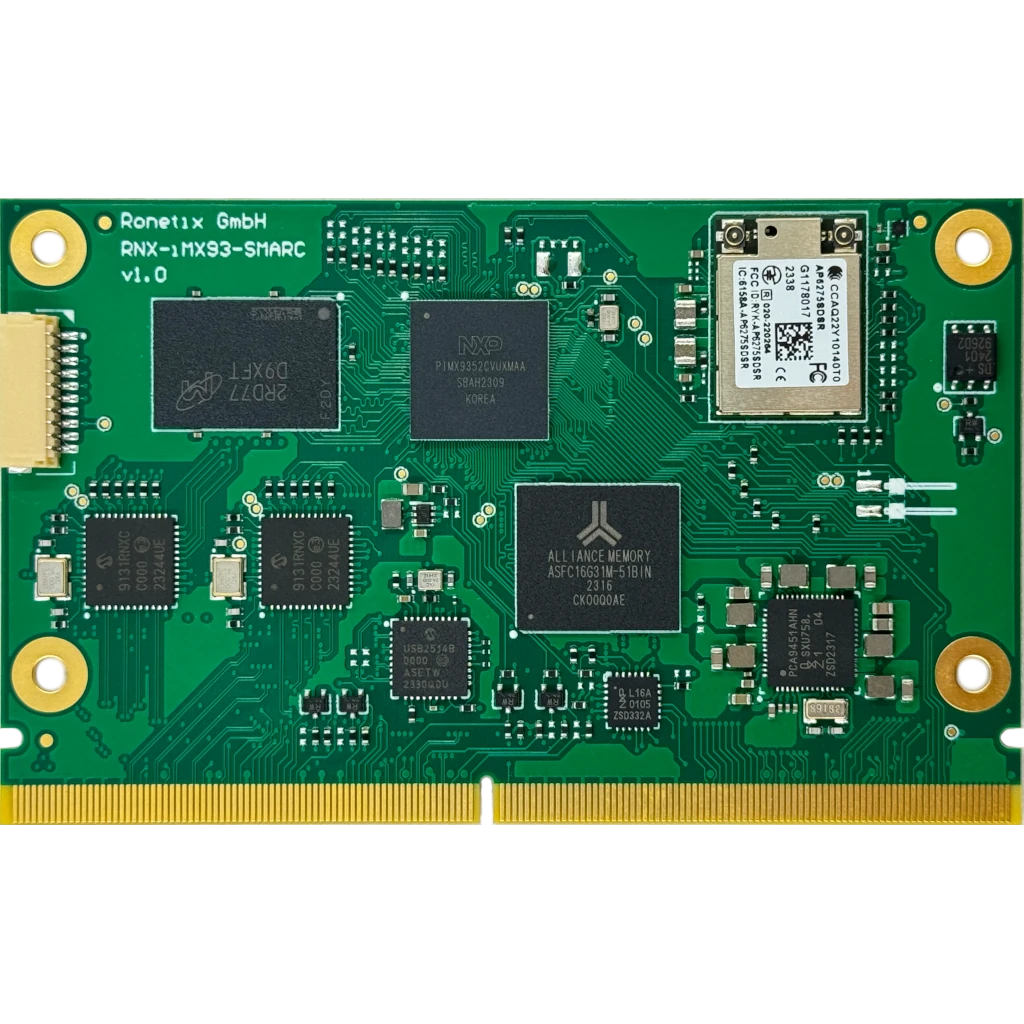
Where can I buy the iMX8M-NANO-CM in Israel?

Pertech is a Ronetix distributor in Israel. Contact Pertech for a quote, lead time, memory and temperature options, or help choosing a module and carrier board.
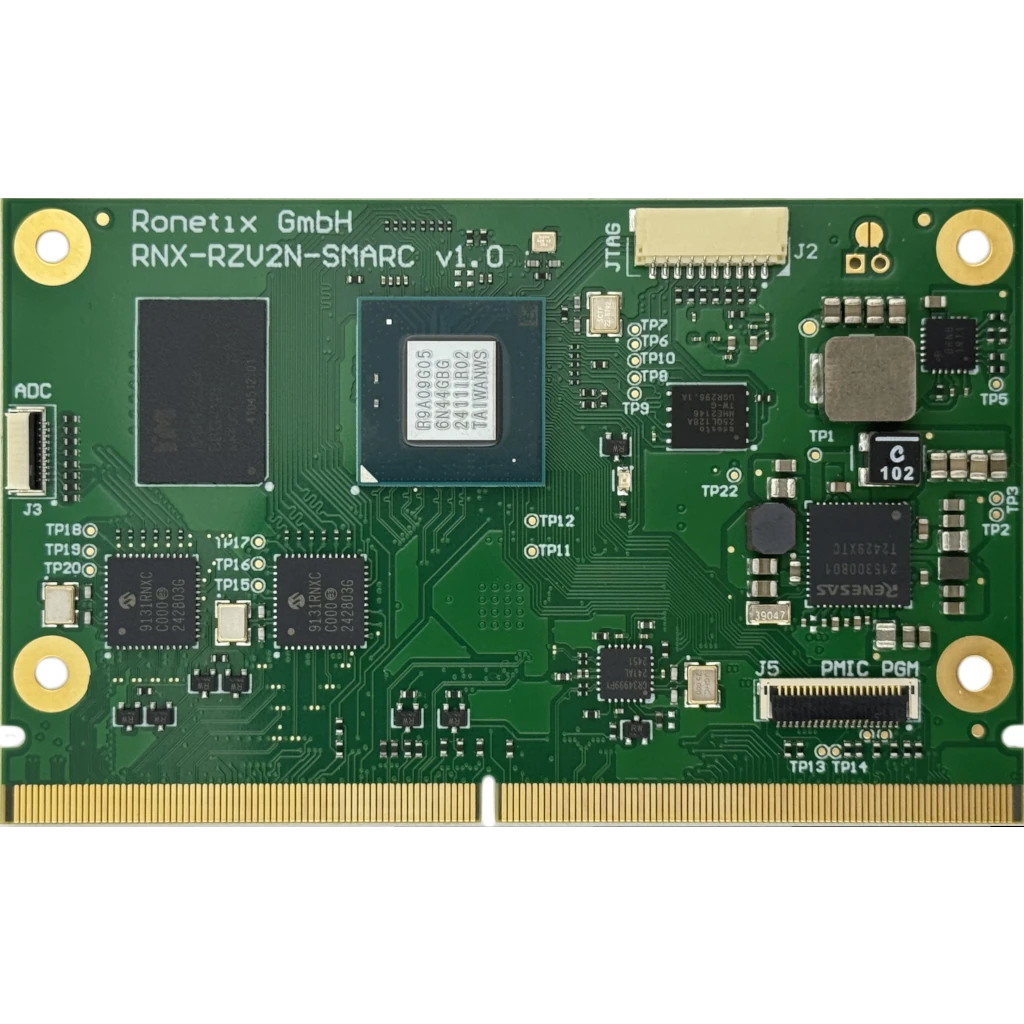
Related Ronetix products at Pertech

Using an SO-DIMM module in your design? Contact Pertech for a quote, availability or help choosing the right module.


iMX8MM-COMPACT-CM – Compact SoM with NXP i.MX8M Mini

Ronetix iMX8MM-COMPACT-CM is a 40 x 30 mm System-on-Module built on the NXP i.MX8M Mini: four Arm Cortex-A53 cores at 1.8 GHz with a 400 MHz Cortex-M4 co-processor, a video processing unit and a GPU. It brings PCIe and two USB OTG ports to a very small footprint, for compact multimedia and connected devices. Ronetix sells it with the i.MX8MM-COMPACT-MB base board as a starter kit. Pertech is a Ronetix distributor.

iMX8MM-COMPACT-CM highlights

  • NXP i.MX8M Mini: 4x Arm Cortex-A53 at 1.8 GHz plus Cortex-M4 at 400 MHz
  • Video processing unit and GPU; NEON SIMD and VFPv4
  • LVDS up to 1400 x 1050 at 60 Hz, MIPI-DSI, 4-lane MIPI-CSI
  • PCIe x1 Gen 2.1 and 2x USB 2.0 OTG
  • 1 GiB LPDDR4 (up to 4 GiB), 4 GiB eMMC (up to 64 GiB)
  • Gigabit Ethernet; optional Wi-Fi 802.11ac and Bluetooth 4.2
  • Ronetix supplies Yocto, a Linux kernel and U-Boot for this module.

Where the iMX8MM-COMPACT-CM fits

  • Compact handheld and battery-powered devices
  • HMI panels with LVDS or MIPI-DSI displays
  • Industrial controllers with real-time tasks on the Cortex-M core
  • Products moving from a starter kit to a custom carrier

Key Specifications

SpecValue
ModeliMX8MM-COMPACT-CM
Size40 x 30 mm
ProcessorNXP i.MX8M Mini: 4x Cortex-A53 1.8 GHz, Cortex-M4 400 MHz
Graphics and videoGPU, VPU; NEON SIMD and VFPv4
Memory1 GiB LPDDR4 (up to 4 GiB); 4 GiB eMMC (up to 64 GiB)
DisplayLVDS up to 1400 x 1050 at 60 Hz, MIPI-DSI
CameraMIPI-CSI, 4 lanes
NetworkGigabit Ethernet; Wi-Fi 802.11ac and Bluetooth 4.2 optional
I/OPCIe x1 Gen 2.1, 2x USB 2.0 OTG, up to 4x UART, SD/SDIO, up to 3x SPI, up to 4x I2C, up to 4x PWM, GPIO
Supply3.85 to 5.0 V
SoftwareYocto, Linux kernel, U-Boot
Operating temperature0 to +70 °C; -40 to +85 °C optional
Relative humidity10% to 90%
MTTFMore than 200,000 hours

Frequently asked questions

What is the iMX8MM-COMPACT-CM?

It is a Ronetix 40 x 30 mm System-on-Module with the NXP i.MX8M Mini processor.

Is there a starter kit for it?

Yes. The Starter Kit i.MX8MM-COMPACT combines this module with the i.MX8MM-COMPACT-MB base board, a power supply and an SD card with Yocto pre-installed.

Compact module or the 67 x 40 mm iMX8M-MINI-CM?

Same processor family. The compact module is 40 x 30 mm on Hirose connectors; the iMX8M-MINI-CM is an SO-DIMM 204 module with an on-board audio codec and optional EEPROM and QSPI NOR.

Where can I buy the iMX8MM-COMPACT-CM in Israel?

Pertech is a Ronetix distributor in Israel. Contact Pertech for a quote, lead time, memory and temperature options, or help choosing a module and carrier board.

Related Ronetix products at Pertech

Need a small i.MX8M Mini module? Contact Pertech for a quote, availability or help choosing the right module.


iMX8MN-COMPACT-CM – Compact SoM with NXP i.MX8M Nano

Ronetix iMX8MN-COMPACT-CM is a 40 x 30 mm System-on-Module built on the NXP i.MX8M Nano: four Arm Cortex-A53 cores at 1.5 GHz with a 750 MHz Cortex-M7 real-time co-processor and a GPU. It is the entry point to the i.MX 8M family in Ronetix’s compact range, for small Linux devices with a display that need to stay low in cost and power. Pertech is a Ronetix distributor.

iMX8MN-COMPACT-CM highlights

  • NXP i.MX8M Nano: 4x Arm Cortex-A53 at 1.5 GHz plus Cortex-M7 at 750 MHz
  • NEON SIMD, VFPv4 and a GPU
  • LVDS up to 1400 x 1050 at 60 Hz and MIPI-DSI
  • 4-lane MIPI-CSI camera input
  • 1 GiB LPDDR4 (up to 4 GiB), 4 GiB eMMC (up to 64 GiB)
  • Gigabit Ethernet; optional Wi-Fi 802.11ac and Bluetooth 4.2
  • Ronetix supplies Yocto, a Linux kernel and U-Boot for this module.

Where the iMX8MN-COMPACT-CM fits

  • Compact handheld and battery-powered devices
  • HMI panels with LVDS or MIPI-DSI displays
  • Industrial controllers with real-time tasks on the Cortex-M core
  • Products moving from a starter kit to a custom carrier

Key Specifications

SpecValue
ModeliMX8MN-COMPACT-CM
Size40 x 30 mm
ProcessorNXP i.MX8M Nano: 4x Cortex-A53 1.5 GHz, Cortex-M7 750 MHz
GraphicsGPU; NEON SIMD and VFPv4
Memory1 GiB LPDDR4 (up to 4 GiB); 4 GiB eMMC (up to 64 GiB)
DisplayLVDS up to 1400 x 1050 at 60 Hz, MIPI-DSI
CameraMIPI-CSI, 4 lanes
NetworkGigabit Ethernet; Wi-Fi 802.11ac and Bluetooth 4.2 optional
I/OUSB 2.0 OTG, up to 4x UART, SD/SDIO, up to 3x SPI, up to 4x I2C, up to 4x PWM, GPIO
Supply3.85 to 5.0 V
SoftwareYocto, Linux kernel, U-Boot
Operating temperature0 to +70 °C; -40 to +85 °C optional
Relative humidity10% to 90%
MTTFMore than 200,000 hours

Frequently asked questions

What is the iMX8MN-COMPACT-CM?

It is a Ronetix 40 x 30 mm System-on-Module with the NXP i.MX8M Nano processor.

Nano or Mini compact module?

The i.MX8M Nano module runs at 1.5 GHz with a Cortex-M7. The iMX8MM-COMPACT-CM (i.MX8M Mini) runs at 1.8 GHz with a Cortex-M4 and adds a video processing unit, PCIe and a second USB OTG port.

Is there a starter kit?

Ronetix offers a compact base board, the i.MX8MM-COMPACT-MB, sold as a starter kit with a compact module, power supply and an SD card with Yocto.

Where can I buy the iMX8MN-COMPACT-CM in Israel?

Pertech is a Ronetix distributor in Israel. Contact Pertech for a quote, lead time, memory and temperature options, or help choosing a module and carrier board.

Related Ronetix products at Pertech

Looking for a small, low-cost Linux module? Contact Pertech for a quote, availability or help choosing the right module.


iMX8MP-COMPACT-CM – Compact SoM with NXP i.MX8M Plus

Ronetix iMX8MP-COMPACT-CM is a 50 x 30 mm System-on-Module built on the NXP i.MX8M Plus. Four Arm Cortex-A53 cores at 1.8 GHz, a 2.3 TOP/s NPU, a 375 Mpixel/s HDR image signal processor and an 800 MHz Cortex-M7 for real-time control fit on a module smaller than a credit card, connected through three 100-pin Hirose DF40C connectors. It suits vision, AI and multimedia devices where board space is tight. Pertech is a Ronetix distributor.

iMX8MP-COMPACT-CM highlights

  • NXP i.MX8M Plus: 4x Arm Cortex-A53 at 1.8 GHz plus Cortex-M7 at 800 MHz
  • NPU, 2.3 TOP/s for machine-learning inference
  • HDR ISP, 375 Mpixel/s; 2x MIPI-CSI 4-lane cameras
  • GC7000UL GPU with OpenCL and Vulkan; video processing unit
  • HDMI up to 3840 x 2160 at 30 Hz, 2x LVDS, MIPI-DSI
  • 1 GiB LPDDR4 (up to 4 GiB), 4 GiB eMMC (up to 64 GiB)
  • On-module WM8962 audio codec; optional Wi-Fi and Bluetooth

Where the iMX8MP-COMPACT-CM fits

  • Smart cameras and vision devices with on-board AI
  • Multimedia and HMI products with HDMI or dual LVDS
  • Space-constrained designs that need i.MX8M Plus performance
  • Industrial edge devices with real-time tasks on the Cortex-M7

Key Specifications

SpecValue
ModeliMX8MP-COMPACT-CM
Size and connectors50 x 30 mm; 3x 100-pin Hirose DF40C
ProcessorNXP i.MX8M Plus: 4x Cortex-A53 1.8 GHz, Cortex-M7 800 MHz
AINPU, 2.3 TOP/s
Graphics and videoGC7000UL GPU (OpenCL, Vulkan), VPU, HDR ISP 375 Mpixel/s
Memory1 GiB LPDDR4 (up to 4 GiB); 4 GiB eMMC (up to 64 GiB); QSPI NOR optional
DisplayHDMI up to 3840 x 2160 at 30 Hz, 2x LVDS, MIPI-DSI
Camera2x MIPI-CSI, 4 lanes
NetworkGigabit Ethernet; Wi-Fi 802.11ac and Bluetooth 4.2 optional
I/O2x USB 3.0/2.0, PCIe 2.0 x1, up to 4x UART, SD/SDIO, up to 3x SPI, up to 4x I2C, up to 4x PWM, GPIO
AudioWM8962 codec: stereo headphone, 1 W class D speaker, microphone
Supply3.85 to 5.0 V
Operating temperature0 to +70 °C; -40 to +85 °C optional
Relative humidity10% to 90%
MTTFMore than 200,000 hours

Frequently asked questions

What is the iMX8MP-COMPACT-CM?

It is a Ronetix 50 x 30 mm System-on-Module with the NXP i.MX8M Plus processor, its 2.3 TOP/s NPU and an HDR ISP.

How does it connect to the carrier?

Through three 100-pin Hirose DF40C board-to-board connectors.

How does it compare with the other compact modules?

The iMX8MN-COMPACT-CM and iMX8MM-COMPACT-CM are 40 x 30 mm and have no NPU. The i.MX8M Plus adds the NPU, the ISP, HDMI, dual LVDS and USB 3.0.

Where can I buy the iMX8MP-COMPACT-CM in Israel?

Pertech is a Ronetix distributor in Israel. Contact Pertech for a quote, lead time, memory and temperature options, or help choosing a module and carrier board.

Related Ronetix products at Pertech

Need i.MX8M Plus AI in a tiny footprint? Contact Pertech for a quote, availability or help choosing the right module.


RNX-RZG2UL-OSM – OSM SoM with Renesas RZ/G2UL, RZ/A3UL or RZ/Five

Ronetix RNX-RZG2UL-OSM is a solderable System-on-Module in the OSM Size-L format, 45 x 45 mm, for the Renesas RZ family of 64-bit MPUs. One footprint, three processor choices: RZ/G2UL (Arm Cortex-A55 at 1 GHz plus a Cortex-M33 at 200 MHz), RZ/A3UL (Cortex-A55 at 1 GHz) or RZ/Five (RISC-V AX45MP at 1 GHz). That lets one carrier design serve Arm and RISC-V variants of a product. Pertech is a Ronetix distributor.

RNX-RZG2UL-OSM highlights

  • Three SoC options on one module: RZ/G2UL, RZ/A3UL or RZ/Five (RISC-V)
  • RZ/G2UL: Cortex-A55 1 GHz plus Cortex-M33 200 MHz
  • 1 GiB DDR4, 4 GiB eMMC (up to 64 GiB), optional QSPI NOR
  • Parallel LCD and 4-lane MIPI-CSI (G2UL and A3UL)
  • Gigabit Ethernet, 4x USB 2.0, 2x 12-bit ADC, I2S, up to 2x CAN
  • OSM Size-L LGA 662, solderable
  • Ronetix supplies Yocto, a Linux kernel and U-Boot for this module.

Where the RNX-RZG2UL-OSM fits

  • Cost-optimized industrial controllers and gateways
  • Evaluating RISC-V (RZ/Five) against Arm on the same carrier
  • Entry-level HMI with a parallel LCD
  • Data loggers and sensor hubs with ADC and CAN

Key Specifications

SpecValue
ModelRNX-RZG2UL-OSM
Form factorOSM Size-L, 45 x 45 mm, LGA 662, solderable
Processor optionsRZ/G2UL: Cortex-A55 1 GHz + Cortex-M33 200 MHz; RZ/A3UL: Cortex-A55 1 GHz; RZ/Five: RISC-V AX45MP 1 GHz
Memory1 GiB DDR4; 4 GiB eMMC (up to 64 GiB); QSPI NOR optional
DisplayParallel LCD (G2UL and A3UL)
CameraMIPI-CSI, 4 data lanes (G2UL and A3UL)
NetworkRGMII 10/100/1000
I/O3x USB 2.0 host, 1x USB 2.0 OTG, 4x UART, SD/SDIO, 2x SPI, 2x I2C, up to 3x PWM, up to 2x CAN, 2x 12-bit ADC, I2S, GPIO
Supply5.0 V
SoftwareYocto, Linux kernel, U-Boot
Carrier boardRNX-OSM-CARRIER
Operating temperature0 to +70 °C; -40 to +85 °C optional
Relative humidity10% to 90%
MTTFMore than 200,000 hours

Frequently asked questions

What is the RNX-RZG2UL-OSM?

It is a Ronetix solderable OSM Size-L System-on-Module for Renesas RZ processors, offered with RZ/G2UL, RZ/A3UL or RZ/Five.

Which version is RISC-V?

The RZ/Five variant, with a single RISC-V AX45MP core at 1 GHz. The RZ/Five variant has no parallel LCD or MIPI-CSI.

Which carrier board do I use?

The RNX-OSM-CARRIER board, or the RNX-OSM-CARRIER v2.0 with an LGA662 socket for swapping modules without soldering.

Is the RNX-RZG2UL-OSM available now?

Ronetix lists the RNX-RZG2UL-OSM as coming soon. Contact Pertech for the current availability and for early samples.

Where can I buy the RNX-RZG2UL-OSM in Israel?

Pertech is a Ronetix distributor in Israel. Contact Pertech for a quote, lead time, memory and temperature options, or help choosing a module and carrier board.

Related Ronetix products at Pertech

Comparing Arm and RISC-V for your next product? Contact Pertech for a quote, availability or help choosing the right module.


RNX-iMX93-OSM – OSM SoM with NXP i.MX93

Ronetix RNX-iMX93-OSM is a solderable System-on-Module in the Open Standard Module (OSM) Size-L format, 45 x 45 mm, built on the NXP i.MX93. Two Arm Cortex-A55 cores at 1.7 GHz, an Arm Ethos-U65 microNPU (0.5 TOP/s), a Cortex-M33 at 250 MHz and the EdgeLock secure enclave sit on an LGA 662 package that is soldered straight onto your board, with no connectors to loosen under vibration. Pertech is a Ronetix distributor.

RNX-iMX93-OSM highlights

  • NXP i.MX93: dual Arm Cortex-A55 at 1.7 GHz plus Arm Cortex-M33 at 250 MHz
  • Arm Ethos-U65 microNPU, 0.5 TOP/s
  • EdgeLock secure enclave for security functions
  • 1 GiB LPDDR4X (up to 2 GiB), 4 GiB eMMC (up to 64 GiB)
  • 1080p60 MIPI-DSI, 720p60 LVDS and 1080p60 MIPI-CSI
  • Optional Wi-Fi 6 and Bluetooth 5.0
  • Ronetix supplies Yocto, a Linux kernel and U-Boot for this module.
  • OSM Size-L LGA 662: soldered like a large chip, no board-to-board connectors

Where the RNX-iMX93-OSM fits

  • Compact, vibration-resistant industrial devices
  • Cost-sensitive volume products that want a standard module
  • Secure IoT nodes with on-device ML
  • HMI and control units with LVDS or MIPI-DSI displays

Key Specifications

SpecValue
ModelRNX-iMX93-OSM
Form factorOSM Size-L, 45 x 45 mm, LGA 662, solderable
ProcessorNXP i.MX93: 2x Cortex-A55 1.7 GHz, Cortex-M33 250 MHz
AIArm Ethos-U65 microNPU, 0.5 TOP/s
SecurityEdgeLock secure enclave
Memory1 GiB LPDDR4X (up to 2 GiB); 4 GiB eMMC (up to 64 GiB)
Display1080p60 MIPI-DSI (4-lane), 720p60 LVDS (4-lane)
Camera1080p60 MIPI-CSI (2-lane)
Network2x RGMII 10/100/1000; Wi-Fi 6 and Bluetooth 5.0 optional
I/O6x USB 2.0 (4 via hub), up to 5x UART, SD/SDIO, 2x SPI, 2x I2C, 2x CAN, up to 4x PWM, GPIO
Supply5.0 V
SoftwareYocto, Linux kernel, U-Boot
Carrier boardRNX-OSM-CARRIER
Operating temperature0 to +70 °C; -40 to +85 °C optional
Relative humidity10% to 90%
MTTFMore than 200,000 hours

Frequently asked questions

What is the RNX-iMX93-OSM?

It is a Ronetix solderable System-on-Module in the OSM Size-L format with the NXP i.MX93 processor.

What is OSM?

Open Standard Module is a standard for small solderable modules. The module is an LGA package that is soldered onto the carrier like a large chip, so no board-to-board connectors are needed.

How do I develop with an OSM module before soldering it?

Use the RNX-OSM-CARRIER v2.0 board: the module is clamped in an LGA662 socket, so it can be exchanged in seconds without soldering.

How does it differ from the RNX-iMX93-SMARC?

Same processor and memory. The OSM version is 45 x 45 mm and soldered; it brings out up to five UARTs and four PWM signals. The SMARC version is 82 x 50 mm and pluggable, with Ethernet PHYs on the module.

Where can I buy the RNX-iMX93-OSM in Israel?

Pertech is a Ronetix distributor in Israel. Contact Pertech for a quote, lead time, memory and temperature options, or help choosing a module and carrier board.

Related Ronetix products at Pertech

Designing a compact i.MX93 product? Contact Pertech for a quote, availability or help choosing the right module.


RNX-iMX93-SMARC – SMARC SoM with NXP i.MX93

Ronetix RNX-iMX93-SMARC is a SMARC System-on-Module, 82 x 50 mm, built on the NXP i.MX93. Two Arm Cortex-A55 cores at 1.7 GHz run Linux, an Arm Ethos-U65 microNPU (0.5 TOP/s) speeds up machine-learning inference, and a Cortex-M33 at 250 MHz handles real-time control, with the EdgeLock secure enclave for security. It suits power-conscious industrial, IoT and HMI products. Pertech is a Ronetix distributor.

RNX-iMX93-SMARC highlights

  • NXP i.MX93: dual Arm Cortex-A55 at 1.7 GHz plus Arm Cortex-M33 at 250 MHz
  • Arm Ethos-U65 microNPU, 0.5 TOP/s
  • EdgeLock secure enclave for security functions
  • 1 GiB LPDDR4X (up to 2 GiB), 4 GiB eMMC (up to 64 GiB)
  • 1080p60 MIPI-DSI, 720p60 LVDS and 1080p60 MIPI-CSI
  • Optional Wi-Fi 6 and Bluetooth 5.0
  • Ronetix supplies Yocto, a Linux kernel and U-Boot for this module.
  • Two Gigabit Ethernet PHYs on the module

Where the RNX-iMX93-SMARC fits

  • Industrial controllers and gateways
  • HMI panels with LVDS or MIPI-DSI displays
  • Secure IoT devices that need on-device ML
  • Designs that want a pluggable SMARC module

Key Specifications

SpecValue
ModelRNX-iMX93-SMARC
Form factorSMARC, 82 x 50 mm
ProcessorNXP i.MX93: 2x Cortex-A55 1.7 GHz, Cortex-M33 250 MHz
AIArm Ethos-U65 microNPU, 0.5 TOP/s
SecurityEdgeLock secure enclave
Memory1 GiB LPDDR4X (up to 2 GiB); 4 GiB eMMC (up to 64 GiB)
Display1080p60 MIPI-DSI (4-lane), 720p60 LVDS (4-lane)
Camera1080p60 MIPI-CSI (2-lane)
Network2x Gigabit Ethernet PHY; Wi-Fi 6 and Bluetooth 5.0 optional
I/O6x USB 2.0 (4 via hub), 4x UART, SD/SDIO, 2x SPI, 2x I2C, 2x CAN, GPIO
Supply5.0 V
SoftwareYocto, Linux kernel, U-Boot
Carrier boardRNX-SMARC-CARRIER
Operating temperature0 to +70 °C; -40 to +85 °C optional
Relative humidity10% to 90%
MTTFMore than 200,000 hours

Frequently asked questions

What is the RNX-iMX93-SMARC?

It is a Ronetix SMARC System-on-Module with the NXP i.MX93: two Cortex-A55 cores, an Ethos-U65 microNPU and a Cortex-M33.

Why is RAM limited to 2 GiB?

Ronetix notes that 2 GiB is the maximum because of a limitation of the i.MX93 processor.

SMARC or OSM version?

Same processor. Choose SMARC for a pluggable module on a standard connector, or the RNX-iMX93-OSM for a 45 x 45 mm module soldered onto your board.

Which carrier board do I use?

The RNX-SMARC-CARRIER board.

Where can I buy the RNX-iMX93-SMARC in Israel?

Pertech is a Ronetix distributor in Israel. Contact Pertech for a quote, lead time, memory and temperature options, or help choosing a module and carrier board.

Related Ronetix products at Pertech

Starting an i.MX93 design? Contact Pertech for a quote, availability or help choosing the right module.


RNX-iMX95-SMARC – SMARC SoM with NXP i.MX 95 for Edge AI

Ronetix RNX-iMX95-SMARC is a SMARC System-on-Module, 82 x 50 mm, built on the NXP i.MX 95. It combines six Arm Cortex-A55 cores at 2.0 GHz with the NXP eIQ Neutron NPU (2.0 TOP/s), an Arm Cortex-M7 at 800 MHz and a Cortex-M33 at 333 MHz, plus 10 Gigabit Ethernet and a Mali-G310 GPU. It is the most powerful module in the Ronetix range, aimed at edge AI, industrial automation, vision and automotive designs. Pertech is a Ronetix distributor.

RNX-iMX95-SMARC highlights

  • NXP i.MX 95: 6x Arm Cortex-A55 at 2.0 GHz
  • NXP eIQ Neutron NPU, 2.0 TOP/s for machine-learning inference
  • Real-time cores: Arm Cortex-M7 at 800 MHz and Cortex-M33 at 333 MHz
  • Arm Mali-G310 3D GPU and a 2D GPU; SafeAssure framework with hardware safety checkers
  • 4 GiB LPDDR5 (up to 16 GiB), 16 GiB eMMC (up to 256 GiB), 16 MiB octal-SPI NOR
  • 2x Gigabit Ethernet plus 1x 10GbE, 2x PCIe; optional Wi-Fi 6 and Bluetooth 5.0
  • Ronetix supplies Yocto, a Linux kernel and U-Boot for this module.

Where the RNX-iMX95-SMARC fits

  • Edge AI gateways and industrial PCs
  • Machine vision with high-resolution displays
  • Automotive and safety-aware designs
  • Upgrading from i.MX 8M or i.MX93 when more CPU, AI and networking are needed

Key Specifications

SpecValue
ModelRNX-iMX95-SMARC
Form factorSMARC, 82 x 50 mm
ProcessorNXP i.MX 95: 6x Cortex-A55 2.0 GHz, Cortex-M7 800 MHz, Cortex-M33 333 MHz
AINXP eIQ Neutron NPU, 2.0 TOP/s
Memory4 GiB LPDDR5 (up to 16 GiB); 16 GiB eMMC (up to 256 GiB); 16 MiB octal-SPI NOR; I2C EEPROM
DisplayMIPI-DSI 3840 x 1440 at 60 Hz, up to 2x LVDS, HDMI
CameraUp to 2x MIPI-CSI (4-lane and 2-lane, 2.5 Gbps/lane)
Network2x Gigabit Ethernet PHY, 1x 10GbE, 2x PCIe; Wi-Fi 6 and Bluetooth 5.0 optional
I/O6x USB 2.0 (4 via hub), 4x UART, SD/SDIO, 2x SPI, 2x I2C, 2x CAN, GPIO
Supply5.0 V
SoftwareYocto, Linux kernel, U-Boot
Carrier boardRNX-SMARC-CARRIER
Operating temperature0 to +70 °C; -40 to +85 °C optional
Relative humidity10% to 90%
MTTFMore than 200,000 hours

Frequently asked questions

What is the RNX-iMX95-SMARC?

It is a Ronetix SMARC System-on-Module with the NXP i.MX 95 processor: six Cortex-A55 cores, an eIQ Neutron NPU and Cortex-M7 and Cortex-M33 real-time cores.

How does it compare with the RNX-iMX93-SMARC?

Both are SMARC modules. The i.MX 95 has six Cortex-A55 cores at 2.0 GHz instead of two at 1.7 GHz, a 2.0 TOP/s NPU instead of 0.5 TOP/s, up to 16 GiB LPDDR5, a 3D GPU and 10GbE.

Does it support wireless?

Wi-Fi 6 (802.11ax, dual-band) and Bluetooth 5.0 are optional on the module.

Which carrier board do I use?

The RNX-SMARC-CARRIER board.

Where can I buy the RNX-iMX95-SMARC in Israel?

Pertech is a Ronetix distributor in Israel. Contact Pertech for a quote, lead time, memory and temperature options, or help choosing a module and carrier board.

Related Ronetix products at Pertech

Need serious edge AI on a standard module? Contact Pertech for a quote, availability or help choosing the right module.


RNX-RZV2N-SMARC – SMARC SoM with Renesas RZ/V2N for Vision AI

Ronetix RNX-RZV2N-SMARC is a SMARC System-on-Module, 82 x 50 mm, built on the Renesas RZ/V2N vision AI processor. Four Arm Cortex-A55 cores at 1.8 GHz, the DRP-AI accelerator (15 sparse TOPS, 4 dense TOPS), an Arm Mali-C55 ISP and a Cortex-M33 for real-time tasks make it a compact base for smart cameras, robots and industrial vision. Because it follows the SMARC standard, it plugs into a SMARC carrier and can be swapped or upgraded without redesigning the board. Pertech is a Ronetix distributor.

RNX-RZV2N-SMARC highlights

  • Renesas RZ/V2N: 4x Arm Cortex-A55 at 1.8 GHz plus Arm Cortex-M33 at 200 MHz
  • DRP-AI accelerator: 15 sparse TOPS and 4 dense TOPS
  • Arm Mali-C55 ISP; up to 2x MIPI-CSI cameras, 4K RAW12 at 30 fps
  • H.264/H.265 codec, Mali-G31 3D GPU and 2D GPU
  • 4 GiB LPDDR4 (up to 8 GiB), 16 GiB eMMC (up to 256 GiB), 16 MiB SPI NOR
  • Two Gigabit Ethernet PHYs on the module
  • Ronetix supplies Yocto, a Linux kernel and U-Boot for this module.

Where the RNX-RZV2N-SMARC fits

  • Smart cameras and multi-camera vision
  • Machine vision and quality inspection
  • Robotics and autonomous machines
  • Designs that want a pluggable, standard SMARC module

Key Specifications

SpecValue
ModelRNX-RZV2N-SMARC
Form factorSMARC, 82 x 50 mm
ProcessorRenesas RZ/V2N: 4x Cortex-A55 1.8 GHz, Cortex-M33 200 MHz
AIDRP-AI, 15 sparse / 4 dense TOPS
Memory4 GiB LPDDR4 (up to 8 GiB); 16 GiB eMMC (up to 256 GiB); 16 MiB SPI NOR
DisplayMIPI-DSI 1920 x 1200 at 60 Hz
CameraUp to 2x MIPI-CSI (4-lane and 2-lane, 2.1 Gbps/lane), 4K RAW12 30 fps
Network2x Gigabit Ethernet PHY
I/OPCIe 2-lane, 4x USB 2.0 (hub), 1x USB 3.2 host, 4x UART, SD/SDIO, 2x SPI, 5x I2C, 2x CAN, GPIO
Supply5.0 V
SoftwareYocto, Linux kernel, U-Boot
Carrier boardRNX-SMARC-CARRIER
Operating temperature0 to +70 °C; -40 to +85 °C optional
Relative humidity10% to 90%
MTTFMore than 200,000 hours

Frequently asked questions

What is the RNX-RZV2N-SMARC?

It is a Ronetix System-on-Module in the SMARC format with the Renesas RZ/V2N processor and its DRP-AI accelerator, for vision AI at the edge.

What can the RZ/V2N camera path handle?

Ronetix specifies up to two MIPI-CSI cameras (4-lane and 2-lane, 2.1 Gbps per lane) and 4K RAW12 at 30 fps, processed by the Arm Mali-C55 ISP.

SMARC or OSM?

Choose SMARC when you want a pluggable module on a standard edge connector. Choose the RNX-RZV2N-OSM when you want a smaller module soldered directly onto your board.

Which carrier board fits it?

The RNX-SMARC-CARRIER board, which gives you Ethernet, USB, HDMI, LVDS, MIPI-DSI and MIPI-CSI, audio, CAN and PMOD connectors.

Where can I buy the RNX-RZV2N-SMARC in Israel?

Pertech is a Ronetix distributor in Israel. Contact Pertech for a quote, lead time, memory and temperature options, or help choosing a module and carrier board.

Related Ronetix products at Pertech

Building a smart camera or vision system? Contact Pertech for a quote, availability or help choosing the right module.


RNX-RZV2N-OSM – OSM SoM with Renesas RZ/V2N for Vision AI

Ronetix RNX-RZV2N-OSM is a solderable System-on-Module in the Open Standard Module (OSM) Size-L format, 45 x 45 mm, built on the Renesas RZ/V2N vision AI processor. It pairs four Arm Cortex-A55 cores at 1.8 GHz with the DRP-AI accelerator (15 sparse TOPS, 4 dense TOPS) and a Cortex-M33 for real-time control, so one module can run camera pipelines, neural-network inference and control loops for smart cameras, robots and inspection systems. Pertech is a Ronetix distributor.

RNX-RZV2N-OSM highlights

  • Renesas RZ/V2N: 4x Arm Cortex-A55 at 1.8 GHz plus Arm Cortex-M33 at 200 MHz
  • DRP-AI accelerator: 15 sparse TOPS and 4 dense TOPS for edge inference
  • Arm Mali-C55 image signal processor; up to 2x MIPI-CSI cameras, 4K RAW12 at 30 fps
  • H.264/H.265 video codec, Mali-G31 3D GPU and a 2D GPU
  • 4 GiB LPDDR4 (up to 8 GiB), 16 GiB eMMC (up to 256 GiB), 16 MiB SPI NOR
  • OSM Size-L LGA 662, soldered straight onto the carrier, no connectors
  • Ronetix supplies Yocto, a Linux kernel and U-Boot for this module.

Where the RNX-RZV2N-OSM fits

  • Smart cameras and multi-camera vision systems
  • Industrial inspection and machine vision at the edge
  • Robotics that combine inference and real-time motor control
  • Products that need a small, rugged, connector-free module

Key Specifications

SpecValue
ModelRNX-RZV2N-OSM
Form factorOSM Size-L, 45 x 45 mm, LGA 662, solderable
ProcessorRenesas RZ/V2N: 4x Cortex-A55 1.8 GHz, Cortex-M33 200 MHz
AIDRP-AI, 15 sparse / 4 dense TOPS
Memory4 GiB LPDDR4 (up to 8 GiB); 16 GiB eMMC (up to 256 GiB); 16 MiB SPI NOR
DisplayMIPI-DSI 1920 x 1200 at 60 Hz
CameraUp to 2x MIPI-CSI (4-lane and 2-lane, 2.1 Gbps/lane), 4K RAW12 30 fps
Network2x RGMII 10/100/1000
I/OPCIe 2-lane, 4x USB 2.0 (hub), 1x USB 3.2 host, 5x UART, SD/SDIO, 2x SPI, 2x I2C, 2x CAN, 34 GPIO
Supply5.0 V
SoftwareYocto, Linux kernel, U-Boot
Carrier boardRNX-OSM-CARRIER
Operating temperature0 to +70 °C; -40 to +85 °C optional
Relative humidity10% to 90%
MTTFMore than 200,000 hours

Frequently asked questions

What is the RNX-RZV2N-OSM?

It is a Ronetix System-on-Module in the OSM Size-L format with the Renesas RZ/V2N processor, aimed at vision AI and edge computing.

How much AI performance does it have?

The DRP-AI accelerator in the RZ/V2N is rated by Ronetix at 15 sparse TOPS and 4 dense TOPS.

What is the difference between the OSM and SMARC RZ/V2N modules?

Same processor. The OSM module is 45 x 45 mm and is soldered onto the carrier (LGA 662); the SMARC module is 82 x 50 mm and plugs into a SMARC edge connector. The OSM version also brings out a fifth UART and 34 GPIOs.

Which carrier board do I use for development?

Ronetix pairs it with the RNX-OSM-CARRIER board. The RNX-OSM-CARRIER v2.0 uses an LGA662 socket, so modules can be swapped without soldering.

Is the RNX-RZV2N-OSM available now?

Ronetix lists the RNX-RZV2N-OSM as coming soon. Contact Pertech for the current availability and for early samples.

Where can I buy the RNX-RZV2N-OSM in Israel?

Pertech is a Ronetix distributor in Israel. Contact Pertech for a quote, lead time, memory and temperature options, or help choosing a module and carrier board.

Related Ronetix products at Pertech

Planning a vision AI product? Contact Pertech for a quote, availability or help choosing the right module.


STEPg1 Electrical Validation and Protocol Decode Software

Prodigy PGY-STEPg1 is automated electrical validation and protocol decode software for STEPg1, the 12 Gbps serial link Intel uses in its 16th-generation Core processors. STEPg1 encodes data in the width of positive and negative pulses, packing more bits into each cycle at a reduced supply voltage, which makes manual measurement impractical. Running on Tektronix DPO7000DX and SX oscilloscopes, the software identifies every symbol, delimiter and idle in the capture, measures each one across the whole waveform and decodes the data into Basic Transport Units (BTUs). Pertech is the authorized Prodigy distributor.

STEPg1 software highlights

  • Decodes the acquired waveform into BTUs (Basic Transport Units)
  • Automatically identifies Symbols 0, 1, 2, 3 and 6, delimiters and idle, and makes the electrical measurements
  • Color marking of control and data symbols in each BTU
  • Measurements over the entire acquired waveform for more reliable results
  • User-defined limits for every electrical measurement
  • Report saves the waveform images of the minimum and maximum value of each parameter
  • Jitter measurement of repetitive symbols (requires Tektronix DPOJET)
  • Python scripting for automation; CSV and TXT export

Measurements for each symbol

For Symbols 0, 1, 2, 3 and 6, PGY-STEPg1 measures:

  • Symbol time
  • Rise time and fall time
  • Amplitude and peak-to-peak amplitude
  • Common-mode voltage and AC RMS
  • Jitter

Where the STEPg1 software earns its keep

  • Electrical validation of STEPg1 links on new platforms
  • Protocol debug of BTU traffic correlated with the physical layer
  • Automated characterization runs through Python
  • Documenting worst-case measurements with waveform images in the report

Key Specifications

SpecValue
ModelPGY-STEPg1
InterfaceSTEPg1, 12 Gbps
PlatformTektronix DPO7000DX and DPO7000SX
DecodeBTUs; Symbols 0, 1, 2, 3, 6; delimiters; idle
MeasurementsSymbol time, rise, fall, amplitude, peak-to-peak, common voltage, AC RMS, jitter
JitterRequires Tektronix DPOJET
LimitsUser-defined
AutomationPython
ExportCSV and TXT; reports

Frequently asked questions

What is STEPg1?

STEPg1 is a 12 Gbps high-speed serial link in Intel 16th-generation Core processors. It uses pulse width modulation of positive and negative pulses to carry more bits per cycle at a reduced supply voltage.

Which oscilloscopes does PGY-STEPg1 run on?

It integrates with Tektronix DPO7000DX and DPO7000SX series oscilloscopes. Jitter measurements also require Tektronix DPOJET.

What does the software measure?

For each symbol type it measures symbol time, rise and fall time, amplitude, peak-to-peak amplitude, common voltage, AC RMS and jitter, across the whole acquired waveform.

Can STEPg1 validation be automated?

Yes. The software supports Python scripting, user-defined limits and automatic reports that include the waveform images of the minimum and maximum value of each parameter.

Where can I buy Prodigy STEPg1 software in Israel?

Pertech is the authorized Prodigy distributor. Prodigy offers free online technical support and free software updates. Contact Pertech for a quote, a demo or help checking that your oscilloscope is supported.

Related Prodigy products at Pertech

Validating a STEPg1 link? Contact Pertech for a quote, a demo or help choosing the right tool.


MIPI UniPro, LLI and UFS Protocol Decode Software

Prodigy PGY-UPRO/LLI/UFS is protocol decode software for MIPI M-PHY based UniPro, LLI and UFS links that runs on Tektronix DPO, DSA and MSO70000 oscilloscopes. It decodes up to four lanes at once, identifies the signaling scheme and gear automatically, checks CRC on every packet and links each frame to its waveform. With the oscilloscope’s ST6G serial trigger option, it adds real-time hardware triggers on UniPro and UFS protocol events for PWM, NRZ and 8b/10b data. Pertech is the authorized Prodigy distributor.

UniPro/LLI/UFS software highlights

  • Decodes UniPro 1.6, LLI 1.0 and UFS 2.0
  • NRZ and PWM signaling, with automatic detection of signaling scheme and gear
  • Four-lane simultaneous decode to correlate events lane to lane
  • Protocol-aware hardware triggers for PWM, NRZ and 8b/10b data (oscilloscope option ST6G)
  • Automated CRC computation to flag CRC errors
  • Frame listing and detailed frame description per the UniPro and LLI specifications
  • Markers to measure time between messages on different lanes
  • Live channels or Tektronix .wfm files; reports and TXT/CSV export

Where the UniPro/LLI/UFS software earns its keep

  • Debugging UFS storage links at the M-PHY and UniPro layers
  • LLI chip-to-chip interconnect validation
  • Correlating lane-to-lane events on multi-lane links
  • Teams with a high-bandwidth Tektronix oscilloscope who need protocol decode alongside signal analysis

Key Specifications

SpecValue
ModelPGY-UPRO/LLI/UFS
PlatformTektronix DPO/DSA/MSO70000
ProtocolsUniPro 1.6, LLI 1.0, UFS 2.0
SignalingNRZ, PWM; gear detected automatically
LanesUp to four, decoded simultaneously
TriggersHardware, protocol aware, with oscilloscope option ST6G (PWM, NRZ, 8b/10b)
Error checkCRC
InputLive channels, .wfm files
ExportTXT and CSV; reports

Frequently asked questions

Which protocol versions does it support?

It conforms to UniPro 1.6, LLI 1.0 and UFS 2.0, over NRZ and PWM signaling.

Which oscilloscopes does it run on?

It runs on Tektronix DPO, DSA and MSO70000 series oscilloscopes. Protocol-aware hardware triggering uses the oscilloscope ST6G serial trigger option.

Can it decode several lanes at once?

Yes. It decodes up to four lanes simultaneously, and markers measure the time between messages on different lanes.

Software or a dedicated UFS protocol analyzer?

The software decodes what a high-bandwidth oscilloscope captures, with the physical layer in view. For long captures and current UFS generations, use a dedicated analyzer such as the UFS 4.0/4.1 or UFS 5.0 Protocol Exerciser and Analyzer.

Where can I buy Prodigy UniPro, LLI and UFS decode software in Israel?

Pertech is the authorized Prodigy distributor. Prodigy offers free online technical support and free software updates. Contact Pertech for a quote, a demo or help checking that your oscilloscope is supported.

Related Prodigy products at Pertech

Debugging a UFS or LLI link? Contact Pertech for a quote, a demo or help choosing the right tool.


I2S Electrical Validation, Audio and Protocol Decode Software

Prodigy PGY-I2S is electrical validation, audio and protocol decode software for I2S that runs inside a Tektronix oscilloscope. One tool covers three layers: automated timing measurements against the I2S standard, protocol decode, and the audio itself, which you can play back, view as a spectrogram and export as a WAV file. A five-panel view cross-links the spectrogram, audio waveform, protocol data, analog signal and eye diagram, so a glitch you hear can be traced to the bit and the edge that caused it. Pertech is the authorized Prodigy distributor.

I2S software highlights

  • One tool for physical, protocol and audio analysis
  • Penta monitor: spectrogram, audio, protocol, signal and eye diagram monitors, cross-linked in one window
  • Supports I2S, left justified and right justified formats
  • Automated timing measurements against the I2S standard
  • Protocol and timing based I2S triggering
  • Oscilloscope setup assistant for accurate, repeatable measurements
  • Play and store the uncompressed audio; search across thousands of protocol events
  • Export to WAV, MATLAB, CSV and text; customizable reports

Where the I2S software earns its keep

  • Validating audio codecs, DACs and ADCs on I2S links
  • Tracing audible glitches to protocol or timing errors
  • Compliance checks of I2S timing before production
  • Audio teams that need to hear and see the same capture

Key Specifications

SpecValue
ModelPGY-I2S
PlatformSoftware running inside Tektronix oscilloscopes
FormatsI2S, left justified, right justified
AnalysisElectrical timing, protocol decode, audio (spectrogram, playback)
ViewsSpectrogram, audio, protocol, signal and eye diagram monitors
TriggersProtocol and timing based
ExportWAV, MATLAB, CSV, TXT; reports

Frequently asked questions

What makes PGY-I2S different from a plain I2S decoder?

It analyzes three layers in one tool: electrical timing against the I2S standard, protocol decode and the audio content, with a spectrogram, playback and eye diagram all linked to the same capture.

Which I2S formats are supported?

Standard I2S, left justified and right justified.

Can I listen to the captured audio?

Yes. The software plays and stores the uncompressed audio and exports it as a WAV file, as well as to MATLAB, CSV and text.

Which oscilloscopes does it run on?

It runs inside Tektronix oscilloscopes, and its setup assistant configures the oscilloscope automatically for accurate measurements.

Where can I buy Prodigy I2S software in Israel?

Pertech is the authorized Prodigy distributor. Prodigy offers free online technical support and free software updates. Contact Pertech for a quote, a demo or help checking that your oscilloscope is supported.

Related Prodigy products at Pertech

Validating an audio interface? Contact Pertech for a quote, a demo or help choosing the right tool.


FlexRay Protocol Decode and SI Analysis Software

Prodigy PGY-FlexRay is protocol decode and signal integrity analysis software for FlexRay that runs inside Windows-based Tektronix DPO5000, DPO7000 and DPO70000 oscilloscopes. It decodes thousands of FlexRay messages, shows the waveform and decoded data side by side, and adds signal integrity tools: eye diagrams for selected messages, time interval error per frame to reveal oscillator stability, sync frame timing and average bit time. Pertech is the authorized Prodigy distributor.

FlexRay software highlights

  • Converts time-domain waveforms into FlexRay messages, shown in hex or decimal
  • Waveform and decoded data in one window, with any frame, data or address linked to its waveform
  • Bit-level 1 and 0 annotations in a zoomed waveform window
  • Software triggers on frame content, null frames, sync frames and CRC errors
  • Search across thousands of messages and timestamps relative to the trigger
  • Offline analysis from reference waveforms, WFM and CSV files; decoded messages saved as CSV

Signal integrity analysis

Beyond decode, PGY-FlexRay measures what the bus is doing electrically:

  • Eye diagram for selected messages across the full acquisition
  • Time interval error for each frame, showing how oscillator stability affects each FlexRay node
  • Time between sync frames
  • Average bit time

Where the FlexRay software earns its keep

  • Validating FlexRay nodes and networks in automotive ECUs
  • Tracing intermittent frame errors to signal integrity problems
  • Checking clock and oscillator behavior across nodes
  • Analyzing saved captures offline

Key Specifications

SpecValue
ModelPGY-FlexRay
PlatformWindows-based Tektronix DPO5000, DPO7000, DPO70000
DecodeFlexRay messages; hex or decimal
Triggers (software)Frame content, null frame, sync frame, CRC error
Signal integrityEye diagram, time interval error, sync timing, average bit time
Offline filesReference waveforms, WFM, CSV
ExportCSV

Frequently asked questions

What does the signal integrity analysis add?

Besides decoding, it shows eye diagrams for selected messages, measures time interval error for each frame to reveal oscillator stability in each node, and measures sync frame timing and average bit time.

Which oscilloscopes does PGY-FlexRay run on?

It runs on Windows-based Tektronix DPO5000, DPO7000 and DPO70000 oscilloscopes.

Can it trigger on FlexRay errors?

Yes. Software triggers fire on frame content, null frames, sync frames and CRC errors.

Can I analyze captures later?

Yes. It decodes from reference waveforms, WFM files and CSV files, and saves decoded messages in CSV format.

Where can I buy Prodigy FlexRay software in Israel?

Pertech is the authorized Prodigy distributor. Prodigy offers free online technical support and free software updates. Contact Pertech for a quote, a demo or help checking that your oscilloscope is supported.

Related Prodigy products at Pertech

Validating a FlexRay network? Contact Pertech for a quote, a demo or help choosing the right tool.


100BaseT1 Automotive Ethernet Protocol Decode Software

Prodigy PGY-100BASE-T1 is automotive Ethernet protocol decode software that runs inside a Tektronix oscilloscope. Feed the output of a directional coupler to the oscilloscope and it decodes the PAM3 encoded 100BASE-T1 signal, shows master and slave packets separately and checks the FCS of each one, so protocol problems between two ECUs can be traced straight to the physical layer. Pertech is the authorized Prodigy distributor.

100BASE-T1 software highlights

  • Decodes PAM3 encoded 100BASE-T1 signals
  • Decodes Send_N mode packets without any training sequence
  • Master and slave packets displayed separately
  • FCS validation, with error packets shown in red
  • Timestamp, packet type, source and destination IP address, and payload decode
  • Detail view correlates decoded packets with the waveform in a bus diagram
  • CSV and TXT export and report generation

Where the 100BASE-T1 software earns its keep

  • Debugging the link between two automotive Ethernet ECUs
  • Correlating protocol errors with signal problems on the physical layer
  • Checking traffic in each direction separately using a directional coupler
  • Labs with a Tektronix oscilloscope that need occasional 100BASE-T1 decode

Key Specifications

SpecValue
ModelPGY-100BASE-T1
PlatformSoftware running inside Tektronix oscilloscopes
Signal100BASE-T1, PAM3
SetupDirectional coupler output to the oscilloscope
DecodeSend_N mode without training sequence; master and slave packets separately
Error checkFCS validation, errors highlighted
ExportCSV and TXT; reports

Frequently asked questions

How is the 100BASE-T1 signal captured?

The output of a directional coupler is fed to the Tektronix oscilloscope, and PGY-100BASE-T1 decodes the PAM3 encoded signal in the time domain.

Can it separate master and slave traffic?

Yes. Master and slave packets are displayed separately, which makes it easy to follow the conversation between two ECUs.

Decode software or a dedicated 100BASE-T1 analyzer?

The software is the right choice for debugging the physical layer and short captures on an oscilloscope you already have. For long, passive captures with Layer 2 to Layer 7 decode, SOME/IP and multi-level triggers, choose the 100Base-T1 Automotive Ethernet Protocol Analyzer.

Does it detect errors?

Yes. It validates the FCS of every packet and shows error packets in red, linked to their waveforms.

Where can I buy Prodigy 100BASE-T1 decode software in Israel?

Pertech is the authorized Prodigy distributor. Prodigy offers free online technical support and free software updates. Contact Pertech for a quote, a demo or help checking that your oscilloscope is supported.

Related Prodigy products at Pertech

Debugging an automotive Ethernet link? Contact Pertech for a quote, a demo or help choosing the right tool.


10BaseT1S Protocol Decode Software

Prodigy PGY-10BaseT1S is 10BASE-T1S protocol decode software that runs inside a Windows-based Tektronix oscilloscope. 10BASE-T1S is the multidrop automotive Ethernet bus that connects sensors to ECUs; its data is differential Manchester encoded and scrambled on a single twisted pair, which makes decoding by hand slow and error-prone. PGY-10BaseT1S decodes the captured waveform automatically, checks the FCS of every packet and links each packet to its waveform. Pertech is the authorized Prodigy distributor.

10BASE-T1S software highlights

  • Decodes scrambled, differential Manchester encoded 10BASE-T1S signals
  • FCS validation, with error packets shown in red
  • Timestamp, packet type, source and destination IP address, and payload decode for each packet
  • Detail view correlates each decoded packet with its waveform in a bus diagram
  • Zoom and pan for close inspection of the physical layer
  • CSV and TXT export and report generation

Where the 10BASE-T1S software earns its keep

  • Bringing up 10BASE-T1S sensor networks in vehicles
  • Correlating packet errors with the physical-layer waveform
  • Checking FCS errors on a multidrop bus during integration
  • Teams with a Tektronix oscilloscope who need 10BASE-T1S decode without a separate analyzer

Key Specifications

SpecValue
ModelPGY-10BaseT1S
PlatformSoftware running inside Windows-based Tektronix oscilloscopes
Signal10BASE-T1S, differential Manchester encoded, scrambled
DecodeTimestamp, packet type, IP source and destination, payload
Error checkFCS validation, errors highlighted
ViewsPacket list, detail view with bus diagram
ExportCSV and TXT; reports

Frequently asked questions

What is 10BASE-T1S?

10BASE-T1S is an automotive Ethernet interface for connecting sensors to ECUs over a multidrop bus on a single twisted pair, using differential Manchester encoding with scrambled data.

Why use decode software for 10BASE-T1S?

Because the data is both differential Manchester encoded and scrambled, decoding it by hand from a waveform is complex and slow. PGY-10BaseT1S decodes it automatically and validates each packet.

Which oscilloscopes does it run on?

It runs inside Tektronix oscilloscopes that have a Windows operating system.

Does it detect errors?

Yes. It validates the FCS of every packet and shows error packets in red, linked to their waveforms.

Where can I buy Prodigy 10BASE-T1S decode software in Israel?

Pertech is the authorized Prodigy distributor. Prodigy offers free online technical support and free software updates. Contact Pertech for a quote, a demo or help checking that your oscilloscope is supported.

Related Prodigy products at Pertech

Bringing up an automotive Ethernet network? Contact Pertech for a quote, a demo or help choosing the right tool.


JTAG (IEEE 1149.1) Protocol Decode Software

Prodigy PGY-JTAG is IEEE 1149.1 JTAG protocol decode software that runs inside a Tektronix oscilloscope. It decodes JTAG activity into TAP states, shows the IR opcode and DR name for each transaction, and links every decoded packet to its waveform. Because it can decode from the digital channels of an MSO, the analog channels stay free to probe other test points and correlate them with JTAG activity. Pertech is the authorized Prodigy distributor.

JTAG decode software highlights

  • JTAG protocol analysis from live analog and digital channels or saved files
  • Decoded data shown in JTAG state format, with IR opcode and DR name
  • User-defined symbols for IR and DR values
  • Decoding on digital channels leaves analog channels free for other test points
  • Detail view of decoded data together with the waveforms
  • Search and filter by state across hundreds of packets
  • CSV and TXT export and report generation

Where the JTAG decode software earns its keep

  • Debugging JTAG chains and TAP controllers on new boards
  • Correlating JTAG activity with power rails or reset signals on the analog channels
  • Checking what a debugger or programmer actually sends over JTAG
  • Labs with a Tektronix MSO that need JTAG decode without another instrument

Key Specifications

SpecValue
ModelPGY-JTAG
StandardIEEE 1149.1 JTAG
PlatformSoftware running inside Tektronix oscilloscopes
InputLive analog and digital channels, saved files
DecodeJTAG states, IR opcode, DR name; user symbols
Search and filterBy state
ExportCSV and TXT; reports

Frequently asked questions

What does the JTAG decode software show?

It decodes JTAG activity into TAP states and shows the IR opcode and DR name for each transaction, with your own symbols for IR and DR values, linked to the waveforms.

Which oscilloscopes does PGY-JTAG run on?

It runs inside Windows-based Tektronix oscilloscopes, and uses the digital channels of an MSO for decoding where available.

Why decode JTAG on the digital channels?

Decoding from the MSO digital channels leaves the analog channels free, so you can probe other test points, such as power or reset, and see them in time with the JTAG activity.

Do I also need a JTAG exerciser?

The software analyzes what the oscilloscope captures; it does not drive the bus. To emulate a JTAG device, generate traffic or inject errors, pair it with Prodigy’s JTAG Protocol Exerciser and Analyzer.

Where can I buy Prodigy JTAG decode software in Israel?

Pertech is the authorized Prodigy distributor. Prodigy offers free online technical support and free software updates. Contact Pertech for a quote, a demo or help checking that your oscilloscope is supported.

Related Prodigy products at Pertech

Debugging a JTAG chain? Contact Pertech for a quote, a demo or help choosing the right tool.


SPMI Electrical Validation and Protocol Analysis Software

Prodigy PGY-SPMI is electrical validation and protocol decode software for SPMI, the MIPI power management bus between a SoC and its PMICs. Running inside a Tektronix oscilloscope, it measures SCLK and SDATA levels and timing against the SPMI specification, decodes SPMI frames with parity checks on command and data, and links every result to its waveform. Reference levels and limits are customizable, and long captures can be decoded to cover more transactions. Pertech is the authorized Prodigy distributor.

SPMI software highlights

  • Electrical measurements for compliance with the SPMI specification
  • Works from live oscilloscope channels or saved signals (WFM by default; H5 and TRC as an option)
  • Decoded data in SPMI frame format, with parity checks on command and data
  • Slave ID shown as a symbol or hex value; data in hex, binary, decimal or octal
  • Detail view: select a row to zoom the matching waveform and see all its measurements
  • Long-duration decode, search and filter
  • CSV and TXT export, PDF reports and a Python API
  • Customizable reference levels and limits

Electrical measurements

PGY-SPMI measures the electrical parameters in the SPMI specification, including:

  • Input high, low and threshold voltage on SDATA and SCLK (VIH, VIL, VHYS), and output high and low (VOH, VOL)
  • SCLK frequency, high and low time, and SCLK output transition time
  • SDATA output valid time from the SCLK rising edge, output transition, setup time, rise and fall time

Where the SPMI software earns its keep

  • PMIC and SoC power controller compliance testing
  • Correlating SPMI protocol errors with signal integrity problems
  • Automated SPMI validation runs through the Python API
  • Labs pairing protocol decode with a Tektronix oscilloscope they already own

Key Specifications

SpecValue
ModelPGY-SPMI
PlatformTektronix DPO5000, TDS7000, DPO/DSA/MSO7000, MSO5/6 (Windows 7 or later)
InputLive channels; WFM files, H5 and TRC optional
DecodeSPMI frames, command and data parity checks
Display formatsHex, binary, decimal, octal; Slave ID as symbol or hex
ReportsPDF
ExportCSV and TXT
APIPython

Frequently asked questions

What does SPMI electrical validation check?

It measures SCLK and SDATA voltage levels and timing, such as VIH, VIL, clock frequency, high and low time, setup time and rise and fall time, and compares them with the SPMI specification.

Which oscilloscopes does PGY-SPMI run on?

It runs inside Windows-based Tektronix oscilloscopes (Windows 7 or later), including the DPO5000, TDS7000, DPO/DSA/MSO7000 and MSO5/6 series.

Can SPMI validation be automated?

Yes. PGY-SPMI has a Python API, and it can decode long captures to cover more SPMI transactions in one run.

Do I also need an SPMI exerciser?

The software analyzes what the oscilloscope captures; it does not drive the bus. To emulate an SPMI device, generate traffic or inject errors, pair it with Prodigy’s SPMI Protocol Analyzer and Exerciser.

Where can I buy Prodigy SPMI software in Israel?

Pertech is the authorized Prodigy distributor. Prodigy offers free online technical support and free software updates. Contact Pertech for a quote, a demo or help checking that your oscilloscope is supported.

Related Prodigy products at Pertech

Validating a PMIC interface? Contact Pertech for a quote, a demo or help choosing the right tool.


SMBus Electrical Validation and Protocol Decode Software

Prodigy PGY-SMBus is electrical validation and protocol decode software that runs inside a Tektronix oscilloscope. It measures SMBCLK and SMBDAT timing and voltage levels against version 3.2 of the SMBus specification at 100 kHz, 400 kHz and 1 MHz, with limit comparison, and decodes the bus traffic, linking every packet to its waveform. Saved captures from Tektronix, LeCroy and Keysight oscilloscopes can be analyzed offline. Pertech is the authorized Prodigy distributor.

SMBus software highlights

  • Automated electrical measurements per SMBus specification version 3.2
  • 100 kHz, 400 kHz and 1 MHz bus speeds, with limit comparison
  • Protocol data overlaid on the waveform, color-coded by SMBCLK, SMBDAT, address, data and ACK
  • Decoded packets linked to the electrical waveform, with a zoomed detail view of any selected frame
  • Data shown in hexadecimal, decimal, binary, octal or ASCII
  • Search to find a specific event among thousands of packets
  • PDF reports with configuration, measurements, images and protocol listing; CSV and TXT export
  • Offline analysis of .wfm (Tektronix), .trc (LeCroy) and .h5 (Keysight) files

Electrical measurements

PGY-SMBus covers timing and voltage parameters, including:

  • SMBCLK frequency, high and low period
  • Rise and fall time of SMBCLK and SMBDAT, and SMBDAT input and output rise, fall, setup and hold times
  • Setup and hold time of (repeated) START, setup time for STOP, data valid time and bus free time
  • Input low and high voltage (VIL, VIH), output low voltage (VOL), overshoot and undershoot

Where the SMBus software earns its keep

  • Validating platform management buses on server and PC motherboards
  • Smart battery and power management device compliance checks
  • Comparing SMBus captures from different oscilloscope brands in one tool
  • Documenting compliance with PDF reports for design reviews

Key Specifications

SpecValue
ModelPGY-SMBus
PlatformSoftware running inside Tektronix oscilloscopes
SpecificationSMBus 3.2
Bus speeds100 kHz, 400 kHz, 1 MHz
Decode formatsHex, octal, binary, decimal, ASCII
SearchData and address
ReportsCustomizable PDF
ExportCSV and TXT
Offline files.wfm (Tektronix), .trc (LeCroy), .h5 (Keysight)

Frequently asked questions

Which SMBus speeds does the software validate?

It measures and decodes SMBus at 100 kHz, 400 kHz and 1 MHz, comparing each measurement against the limits in SMBus specification version 3.2.

Which oscilloscopes does PGY-SMBus run on?

It runs inside Windows-based Tektronix oscilloscopes, and uses the digital channels of an MSO for decoding where available.

Can it analyze captures from other oscilloscope brands?

Yes, offline: besides Tektronix .wfm files it reads LeCroy .trc and Keysight .h5 files.

Do I also need an SMBus exerciser?

The software analyzes what the oscilloscope captures; it does not drive the bus. To emulate an SMBus device, generate traffic or inject errors, pair it with Prodigy’s SMBus Protocol Exerciser and Analyzer.

Where can I buy Prodigy SMBus software in Israel?

Pertech is the authorized Prodigy distributor. Prodigy offers free online technical support and free software updates. Contact Pertech for a quote, a demo or help checking that your oscilloscope is supported.

Related Prodigy products at Pertech

Validating SMBus compliance? Contact Pertech for a quote, a demo or help choosing the right tool.


UART/RS232C Protocol Decode Software

Prodigy PGY-UART is UART and RS232C protocol decode software that runs inside a Tektronix oscilloscope. It turns the captured waveform into UART/RS232C messages, shows the waveform and the decoded data in one window, and overlays the ones and zeros on the signal for any selected frame. Start and stop bits, bits per byte and MSB or LSB order are all configurable, so it adapts to non-standard serial formats as well. Pertech is the authorized Prodigy distributor.

UART software highlights

  • Converts time-domain waveforms into UART/RS232C messages
  • Waveform and decoded data in a single window, with any frame linked to its waveform
  • Detail view overlays the binary data on the waveform of the selected frame
  • Configurable start and stop bits, bits per data byte and MSB or LSB first
  • Data shown in hex, binary, decimal or ASCII, with search across thousands of messages
  • Timestamps relative to the trigger position
  • Offline analysis from reference waveforms, WFM and CSV files
  • Decoded messages saved in CSV format

Where the UART software earns its keep

  • Debugging console, bootloader and sensor UART links
  • RS232C interfaces on industrial and legacy equipment
  • Checking serial communication alongside high-speed signals on the same high-bandwidth oscilloscope
  • Non-standard UART framing that generic decoders do not handle

Key Specifications

SpecValue
ModelPGY-UART
PlatformSoftware running inside Tektronix oscilloscopes, including DPO/DSA70000
ProtocolsUART, RS232C
FramingConfigurable start/stop bits, bits per byte, MSB/LSB order
Decode formatsHex, binary, decimal, ASCII
TimestampsRelative to trigger position
Offline filesReference waveforms, WFM, CSV
ExportCSV

Frequently asked questions

Can it decode non-standard UART formats?

Yes. You can set the number of start and stop bits, the number of bits per data byte, and whether bytes are sent MSB or LSB first.

Which oscilloscopes does PGY-UART run on?

It runs inside Windows-based Tektronix oscilloscopes, including the DPO/DSA70000 series, and uses the digital channels of an MSO for decoding where available.

Can I decode signals I captured earlier?

Yes. It decodes from the oscilloscope reference waveforms, from WFM files and from CSV files, and plots the waveform alongside the decoded data.

Do I also need a UART exerciser?

The software analyzes what the oscilloscope captures; it does not drive the bus. To emulate a UART device, generate traffic or inject errors, pair it with Prodigy’s UART Protocol Exerciser and Analyzer.

Where can I buy Prodigy UART software in Israel?

Pertech is the authorized Prodigy distributor. Prodigy offers free online technical support and free software updates. Contact Pertech for a quote, a demo or help checking that your oscilloscope is supported.

Related Prodigy products at Pertech

Debugging a serial link? Contact Pertech for a quote, a demo or help choosing the right tool.


SPI Electrical Validation and Protocol Decode Software

Prodigy PGY-SPI is electrical validation and protocol decode software that runs inside a Tektronix oscilloscope. It measures SPI clock, data and chip-select timing automatically, at any bus speed the oscilloscope can capture, against limits you set, and decodes MOSI and MISO traffic. Customizable reference levels and pass/fail limits make it easy to characterize SPI signals across devices and data rates. Pertech is the authorized Prodigy distributor.

SPI software highlights

  • Automated SPI electrical measurements, independent of bus speed
  • Customizable reference levels and measurement limits for pass/fail validation at different data rates
  • Decodes MOSI and MISO, with protocol data overlaid on the analog waveform
  • Decoded packets linked to the electrical waveform, with a zoomed detail view of any selected frame
  • Data shown in hexadecimal, decimal, binary, octal or ASCII
  • Search to find a specific event among thousands of packets
  • CSV and TXT export and HTML reports; WFM and ISF files for offline work

Electrical measurements

PGY-SPI measures clock, data and chip-select timing, including:

  • Clock frequency, cycle time, high and low time, rise and fall time
  • Data-in setup and hold time on MOSI and MISO
  • Output hold time and output disable time
  • Chip select setup, hold and deselect time

Where the SPI software earns its keep

  • Characterizing SPI flash, sensor and peripheral interfaces at their rated clock
  • Validating timing margins when moving to a faster SPI clock
  • Debugging intermittent read errors by linking bad frames to their waveforms
  • Pass/fail checks with limits taken from a device datasheet

Key Specifications

SpecValue
ModelPGY-SPI
PlatformSoftware running inside Tektronix oscilloscopes (DPO5000, TDS7000, DPO/DSA/MSO7000)
Bus speedCustom; limited by oscilloscope bandwidth
Signals decodedMOSI, MISO
LimitsUser-defined reference levels and pass/fail limits
Decode formatsHex, octal, binary, decimal, ASCII
ReportsHTML
ExportCSV and TXT
Offline filesWFM, ISF

Frequently asked questions

What SPI speeds can it measure?

There is no fixed SPI speed: measurements are independent of bus speed and limited only by the bandwidth of the oscilloscope.

Which oscilloscopes does PGY-SPI run on?

It runs inside Windows-based Tektronix oscilloscopes, including the DPO5000, TDS7000 and DPO/DSA/MSO7000 series, and uses the digital channels of an MSO for decoding where available.

Can I set my own pass/fail limits?

Yes. Reference levels and measurement limits are customizable, so you can validate against the timing in your device datasheet at any data rate.

Do I also need an SPI exerciser?

The software analyzes what the oscilloscope captures; it does not drive the bus. To emulate an SPI device, generate traffic or inject errors, pair it with Prodigy’s I2C/SPI Exerciser and Protocol Analyzer.

Where can I buy Prodigy SPI software in Israel?

Pertech is the authorized Prodigy distributor. Prodigy offers free online technical support and free software updates. Contact Pertech for a quote, a demo or help checking that your oscilloscope is supported.

Related Prodigy products at Pertech

Characterizing an SPI interface? Contact Pertech for a quote, a demo or help choosing the right tool.


I2C Electrical Validation and Protocol Decode Software

Prodigy PGY-I2C is electrical validation and protocol decode software that runs inside a Tektronix oscilloscope. At the click of a button it measures I2C timing and electrical parameters against the I2C bus specification (Rev 3, June 2007), and decodes the traffic between master and slave in standard, fast, fast plus and high-speed modes. Every decoded packet links back to its waveform, so a compliance failure and the frame that caused it sit on the same screen. Pertech is the authorized Prodigy distributor.

I2C software highlights

  • Automated electrical measurements per the I2C bus specification, Rev 3 (June 2007)
  • Standard, fast, fast plus and high-speed modes, for both measurement and decode
  • Protocol data overlaid on the analog waveform in a bus diagram, color-coded for quick reading
  • Decoded packets linked to the electrical waveform, with a zoomed detail view of any selected frame
  • Data shown in hexadecimal, decimal, binary, octal or ASCII
  • Search to find a specific event among thousands of packets
  • CSV and TXT export and HTML reports; WFM and ISF files for offline work

Electrical measurements

PGY-I2C measures the parameters the I2C specification defines, including:

  • SCL clock frequency, SCL high and low period
  • Rise and fall time
  • Data setup, hold and valid time, and data valid acknowledge time
  • Setup and hold time of the repeated START condition, and setup time for STOP
  • Bus free time between STOP and START

Where the I2C software earns its keep

  • I2C compliance checks on new boards before sign-off
  • Debugging timing violations between a controller and its peripherals
  • Verifying fast plus and high-speed I2C links at their speed limit
  • Labs that already own a Tektronix oscilloscope and want I2C answers from it

Key Specifications

SpecValue
ModelPGY-I2C
PlatformSoftware running inside Tektronix oscilloscopes
SpecificationI2C bus specification Rev 3 (June 2007)
Bus speedsStandard, fast, fast plus, high speed
Decode formatsHex, octal, binary, decimal, ASCII
SearchData and address
ReportsCustomizable HTML
ExportCSV and TXT
Offline filesWFM, ISF

Frequently asked questions

What is I2C electrical validation?

It checks that the I2C signals meet the electrical and timing limits of the I2C specification, such as rise and fall times, setup and hold times and clock periods, so marginal designs are caught before they fail in the field.

Which oscilloscopes does PGY-I2C run on?

It runs inside Windows-based Tektronix oscilloscopes, and uses the digital channels of an MSO for decoding where available.

Can it trigger on I2C packets?

Yes, through the oscilloscope: I2C protocol triggers are set up with the built-in I2C trigger of the Tektronix oscilloscope, and PGY-I2C then measures and decodes the captured signals.

Do I also need an I2C exerciser?

The software analyzes what the oscilloscope captures; it does not drive the bus. To emulate an I2C device, generate traffic or inject errors, pair it with Prodigy’s I2C/SPI Exerciser and Protocol Analyzer.

Where can I buy Prodigy I2C software in Israel?

Pertech is the authorized Prodigy distributor. Prodigy offers free online technical support and free software updates. Contact Pertech for a quote, a demo or help checking that your oscilloscope is supported.

Related Prodigy products at Pertech

Checking I2C compliance? Contact Pertech for a quote, a demo or help choosing the right tool.


100G Ethernet BERT and Analyzer

The Prodigy 100G 802.3-2015 BERT and Analyzer (PGY-100G-802.3_2015) tests the bit error rate of 100G Ethernet interfaces. It generates IEEE 802.3bm-2015 compliant traffic with programmable error injection and runs Reed-Solomon forward error correction in real time, so the performance of the whole interface, from PCS to FEC, can be measured and stressed. Pertech is the authorized Prodigy distributor.

100G BERT highlights

  • Fully compliant with IEEE 802.3bm-2015
  • Fixed, PRBS31, PRBS15 and incremental payload patterns
  • Reed-Solomon encoder and decoder per the standard, with the option to bypass scrambling and the RS encoder
  • Random and burst error injection at a programmable error rate, in the RS layer or the PCS after the RS encoder
  • Transmit and receive statistics, including RMON and detailed error counts
  • Real-time transmit and receive throughput display with a programmable frame rate
  • Fixed frame sizes from 64 to 9600 bytes, or random sizes
  • Two CFP ports, upgradable to four

Where the 100G BERT earns its keep

  • Bit error rate testing of 100G Ethernet line cards, modules and links
  • Measuring how well RS-FEC corrects random and burst errors
  • Stress testing interfaces across frame sizes and traffic patterns

Key Specifications

SpecValue
ModelPGY-100G-802.3_2015
StandardIEEE 802.3bm-2015
PatternsFixed; PRBS31, PRBS15, incremental
FECReed-Solomon encoder and decoder; bypass option
Error injectionRandom and burst, programmable rate; RS layer or PCS
StatisticsRMON, error counts, real-time throughput
Frame size64 to 9600 bytes, or random
InterfaceTwo CFP ports, upgradable to four

Frequently asked questions

What is a BERT used for?

A bit error rate tester sends known traffic through an interface and counts the errors that come back, so engineers can measure link quality and how it behaves under stress.

Which standard does the Prodigy 100G BERT follow?

It is fully compliant with IEEE 802.3bm-2015 for 100G Ethernet.

Can it test forward error correction?

Yes. It includes a Reed-Solomon encoder and decoder, and injects random or burst errors at a programmable rate in the RS layer or in the PCS after the RS encoder, to measure how well FEC corrects them.

Which test patterns are available?

Fixed data patterns and variable PRBS31, PRBS15 and incremental patterns, with frame sizes from 64 to 9600 bytes or random sizes.

Where can I buy the Prodigy 100G BERT in Israel?

Pertech is the authorized Prodigy distributor. Prodigy offers evaluation units, free online technical support and free software updates. Contact Pertech for a quote or a demo.

Related Prodigy products at Pertech

Testing a 100G Ethernet interface? Contact Pertech for a quote, a demo or help choosing the right tool.


Serial RapidIO Protocol Analyzer

The Prodigy Serial RapidIO Protocol Analyzer (PGY-SRIO-PA) captures and decodes Serial RapidIO (SRIO) traffic for protocol verification, debug and system validation. It supports RapidIO Gen1 and Gen2 signaling at up to 10 Gbaud per lane on 1-lane and 4-lane links, decodes full RapidIO 4.1 packet formats and control symbols in real time, and records both link directions at once into a buffer of up to 64 GB. The compact unit works on the bench and in the field. Pertech is the authorized Prodigy distributor.

Serial RapidIO analyzer highlights

  • RapidIO Gen1 and Gen2, 1.25, 2.5, 3.125, 5.0, 6.25 and 10 Gbaud per lane
  • 4-lane links on QSFP+ and 1-lane links through an SFP+ adapter, optical or copper
  • Dual QSFP+ ports capture Link A and Link B at the same time, with a time-correlated dual trace view
  • Decodes RapidIO 4.1 Class 1 and Class 2 packets, including maintenance, messaging, doorbell, NWRITE and NREAD
  • Full control symbol decode, including SOP, EOP, REPLAY and link requests, plus symbol-level raw view after 8b/10b
  • Hardware triggers on packet fields, control symbols or an external input, with up to 8-level if-then-else state machines
  • Hardware filters, and up to 64 GB circular buffer with adjustable pre-trigger depth
  • Trigger in and out (LVTTL), Windows and Linux software, USB 3.0 Type-C, CSV and TXT export

Where the Serial RapidIO analyzer earns its keep

  • Protocol compliance verification of SRIO endpoints and switches
  • Debugging host and device interactions on both directions of a link at once
  • System validation in the lab and field debugging on deployed equipment
  • Catching rare link events with deep buffers and multi-level triggers

Key Specifications

SpecValue
ModelPGY-SRIO-PA
ProtocolRapidIO 4.1, Class 1 and Class 2 (Gen1, Gen2)
Baud rates1.25 / 2.5 / 3.125 / 5.0 / 6.25 / 10.0 Gbaud
Link width1-lane (SFP+ adapter), 4-lane (QSFP+)
Connectors2 x QSFP+ (Link A, Link B); trigger in/out SMB (LVTTL)
Capture bufferUp to 64 GB circular; 1 GB default, pre-trigger in 125 MB steps
TriggersManual, protocol, external, if-then-else up to 8 levels
FiltersHardware packet and control symbol filter; software search and filter
Host interfaceUSB 3.0 Gen 1, Type-C
SoftwareWindows 10/11 64-bit, Ubuntu 22.04 LTS
Power12 V DC, 6 A (adapter included)

Frequently asked questions

Which Serial RapidIO versions and speeds are supported?

RapidIO Gen1 and Gen2 signaling at 1.25, 2.5, 3.125, 5.0, 6.25 and 10 Gbaud per lane, with full decode of RapidIO 4.1 Class 1 and Class 2 packets.

Can it capture both directions of a link?

Yes. Two QSFP+ ports capture Link A and Link B at the same time, and a time-correlated dual trace view shows both directions side by side.

How much data can it store?

It has a circular buffer of up to 64 GB, 1 GB by default, with pre-trigger depth adjustable in 125 MB steps, and hardware filters to keep irrelevant packets out.

Does the software run on Linux?

Yes. The software runs on Windows 10 and 11 (64-bit) and on Ubuntu 22.04 LTS.

Where can I buy the Prodigy Serial RapidIO analyzer in Israel?

Pertech is the authorized Prodigy distributor. Prodigy offers evaluation units, free online technical support and free software updates. Contact Pertech for a quote or a demo.

Related Prodigy products at Pertech

Debugging a Serial RapidIO link? Contact Pertech for a quote, a demo or help choosing the right tool.


PCIe Low Power Side Band Signal Analyzer

The Prodigy PCIe Low Power Side Band Signal Analyzer (PGY-PCIeLP-SBA) measures the timing of the PCIe sideband signals on an M.2 interface (PWR, PERST#, CLKREQ# and REFCLK) against the PCIe and M.2 specifications, and reports every failure during power-on, restart and low-power entry and exit to and from L0. It runs for hours, streaming continuously to the host, and can trigger in hardware on a timing failure, which makes it a fit for long, automated M.2 SSD test runs. Pertech is the authorized Prodigy distributor.

Sideband analyzer highlights

  • Plots PWR, CLKREQ#, PERST# and REFCLK, with REFCLK shown as active (100 MHz) or off
  • Covers power-on, restart, power cycling and low-power entry and exit to and from L0
  • Measures TCRH OFF, TCRL ON, TPVGL, TPERST#-CLK and TPERST against the specifications
  • Hardware trigger on any timing parameter failure, with pre- and post-trigger data
  • Continuous streaming to the host for captures lasting hours, or manual stop
  • Summary statistics and detail per measurement; sort by pass or fail and jump from a result to its waveform with markers
  • Latency Tolerance Report support, with the option to overwrite the T-CRON parameter
  • M.2 extender board with access to all sideband signals; Windows software and report generation

Where the sideband analyzer earns its keep

  • M.2 SSD validation across power states and operating conditions
  • Debugging failures on low-power entry and exit to and from L0
  • Long-duration automated test environments that need to be alerted to a timing failure
  • Checking power-on and reset sequencing of PCIe endpoints

Timing parameters measured

  • TCRH OFF: CLKREQ# de-asserted high to clock parked
  • TCRL ON: CLKREQ# asserted low to clock active
  • TPVGL: power valid to PERST# input active
  • TPERST#-CLK: REFCLK stable before PERST# de-assertion
  • TPERST: PERST# assertion time

Key Specifications

SpecValue
ModelPGY-PCIeLP-SBA
SignalsPWR, CLKREQ#, PERST#, REFCLK
InterfaceM.2 (extender board included)
States coveredPower-on, restart, low-power entry and exit to/from L0
MeasurementsTCRH OFF, TCRL ON, TPVGL, TPERST#-CLK, TPERST
TriggerHardware trigger on timing parameter failure
CaptureContinuous streaming to host; duration set by user
ReportsSummary statistics, detail, Latency Tolerance Report
SoftwareWindows PC

Frequently asked questions

What does a PCIe sideband signal analyzer measure?

It measures the timing of the PCIe sideband signals, PWR, PERST#, CLKREQ# and REFCLK, especially during power-on, restart and low-power entry and exit, and checks each measurement against the PCIe and M.2 specifications.

Why do sideband signals matter in low-power transitions?

When a device enters or leaves a low-power state, its sideband signals must meet the required timing. A violation can affect how the device behaves, so measuring them shows engineers where the failure starts.

Can it be used to debug M.2 SSDs?

Yes. It connects through an M.2 extender board and is designed to test and debug M.2 SSD devices under different operating conditions.

Why run sideband analysis for a long time?

Some timing failures appear only after many power-state transitions. Continuous streaming lets the analyzer run for hours and trigger on the first failure in an automated test.

Where can I buy the Prodigy PCIe sideband analyzer in Israel?

Pertech is the authorized Prodigy distributor. Prodigy offers evaluation units, free online technical support and free software updates. Contact Pertech for a quote or a demo.

Related Prodigy products at Pertech

Testing M.2 SSD power states? Contact Pertech for a quote, a demo or help choosing the right tool.


100Base-T1 Automotive Ethernet Protocol Analyzer

The Prodigy 100Base-T1 Automotive Ethernet Protocol Analyzer (PGY-100BASE-T1-PA) captures and decodes in-vehicle Ethernet traffic from Layer 2 to Layer 7. It taps the two-wire, full-duplex 100BASE-T1 bus passively at the physical layer, so it adds no latency and does not disturb the network, and it streams captures continuously to the host for long test runs. Multi-level triggers on any layer, SOME/IP decode, TC10 sleep and wake-up decode and simultaneous MDIO monitoring make it a fit for ADAS and connected-vehicle ECUs. Pertech is the authorized Prodigy distributor.

100BASE-T1 analyzer highlights

  • Passive, non-intrusive tap of the 100BASE-T1 bus with no added latency
  • Four 100BASE-T1 ports, upgradable with two more, plus an MDIO/MDC port and two CAN ports
  • Protocol decode from Layer 2 to Layer 7, including IPv4, IPv6, ARP, TCP, UDP, ICMP and SOME/IP
  • Triggers on fields at every layer, from Ethernet type and MAC address to SOME/IP service and message IDs, with if-then-else multi-level logic
  • Decodes TC10 sleep and wake-up events of master and slave
  • Monitors 100BASE-T1 and MDIO/MDC activity at the same time; upgradable to CAN protocol analysis
  • Live decode while the test runs, per-layer analytics and FCS error reporting
  • Boolean search and filter, CSV and TXT export, field-upgradable software and firmware

Where the 100BASE-T1 analyzer earns its keep

  • Validating ECUs for ADAS and connected-vehicle functions on 100BASE-T1
  • Debugging SOME/IP services and message flows between ECUs
  • Checking TC10 sleep and wake-up behavior of automotive Ethernet PHYs
  • Correlating PHY management traffic on MDIO with the data on the link

Key Specifications

SpecValue
ModelPGY-100BASE-T1-PA
PortsFour 100BASE-T1 (two more as upgrade), MDIO/MDC, two CAN
TapPassive, physical layer
Protocol analysisLayer 2 to Layer 7; MDIO/MDC decode; CAN as upgrade
TriggersLayer 2 to 7 fields, if-then-else multi-level
Event monitoringFCS errors; TC10 sleep and wake-up
ViewsLayer 2 listing, packet view, tree view, line training view, analytics
Search and filterBoolean expressions
CaptureContinuous streaming to host SSD or HDD
ExportCSV or TXT
Host PCWindows 64-bit, 16 GB RAM (32 GB recommended)

Frequently asked questions

Does the analyzer affect the 100BASE-T1 network?

No. It taps the bus passively at the physical layer, so it adds no latency and captures the protocol data as it is on the link.

Which protocol layers does it decode?

Layer 2 to Layer 7: Ethernet, IPv4, IPv6, ARP, TCP, UDP, ICMP and SOME/IP, with triggers on fields at each of these layers.

Can it decode TC10 sleep and wake-up?

Yes. It decodes TC10 sleep and wake-up events of both the master and the slave PHY.

Can it monitor MDIO and CAN as well?

It monitors MDIO/MDC alongside the 100BASE-T1 traffic, and it has two CAN ports that can be upgraded to CAN protocol analysis.

Where can I buy the Prodigy 100BASE-T1 analyzer in Israel?

Pertech is the authorized Prodigy distributor. Prodigy offers evaluation units, free online technical support and free software updates. Contact Pertech for a quote or a demo.

Related Prodigy products at Pertech

Validating automotive Ethernet ECUs? Contact Pertech for a quote, a demo or help choosing the right tool.


Logic Analyzer for Embedded Interfaces

The Prodigy Logic Analyzer for Embedded Interfaces (PGY-LA-EMBD), from Prodigy’s Discovery series, is a compact, PC-based 16-channel logic analyzer that combines timing analysis at 1 GS/s, state analysis at 100 MHz and protocol decode of I2C, SPI, UART, I3C, SPMI, RFFE, CAN 2.0 and CAN FD in one capture. Several buses decode at once, time-correlated with their waveforms, so circuit-level and system-level problems show up on the same screen. At 115 x 90 x 25 mm it fits on a crowded bench or in a field engineer’s bag. Pertech is the authorized Prodigy distributor.

Logic analyzer highlights

  • 16 channels with logic and protocol analysis
  • 1 GS/s asynchronous (timing) capture and 100 MHz synchronous (state) capture, with two state clocks on rising or falling edge
  • Inputs from 0 to 5 V with a user-defined logic threshold
  • Simultaneous decode of I2C, SPI, UART, I3C, SPMI, RFFE, CAN 2.0 and CAN FD, time-correlated with the waveforms
  • Pattern, pulse width and delay triggers, protocol-aware triggers on packet fields for each bus, and external trigger
  • Continuous streaming to the host disk over USB 3.0 Type-C for long captures
  • Timing, state, listing and protocol views, six markers with delta measurements, and protocol error analysis
  • PDF and CSV reports and a Python API

Where the logic analyzer earns its keep

  • Debugging hardware and embedded software integration on boards with several serial buses
  • Finding setup and hold violations, glitches and missing data in digital designs
  • Systems that mix sensor buses such as I3C and SPI with CAN or CAN FD
  • Field debugging, where a small, portable analyzer matters

Logic analyzer, protocol analyzer or both?

The PGY-LA-EMBD runs in logic analysis mode, protocol analysis mode or a combined mode. Logic analysis shows what each signal does in time: edges, glitches, setup and hold. Protocol analysis turns the same signals into decoded packets. Combined, a protocol error can be traced straight to the waveform that caused it.

Key Specifications

SpecValue
ModelPGY-LA-EMBD
Channels16
Timing (asynchronous)1 GS/s
State (synchronous)100 MHz, two state clocks
Input voltage0 to 5 V, user-defined threshold
Protocol decodeI2C, SPI, UART, I3C, SPMI, RFFE, CAN 2.0, CAN FD
TriggersPattern, pulse width, delay, protocol-aware, external
Record lengthContinuous streaming to host HDD or SSD
MarkersSix, with delta
ProbesFlying leads with female connectors; micro grabber clips optional
APIPython
Host connectionUSB 3.0 Type-C
Size and weight115 x 90 x 25 mm, 300 g

Frequently asked questions

What is the difference between a logic analyzer and a protocol analyzer?

A logic analyzer shows digital signals over time, so you can measure edges, glitches and timing. A protocol analyzer decodes those signals into packets and transactions. The PGY-LA-EMBD does both, separately or in one combined capture.

Which protocols does the Prodigy logic analyzer decode?

I2C, SPI, UART, I3C, SPMI, RFFE, CAN 2.0 and CAN FD, and it can decode several of them at the same time in one time-correlated view.

How fast does it sample?

It captures timing (asynchronous) data at 1 GS/s and state (synchronous) data at 100 MHz across 16 channels, with inputs from 0 to 5 V.

How long can it capture?

Record length is not limited by on-board memory: the analyzer streams data continuously to the host computer disk over USB 3.0.

Where can I buy the Prodigy logic analyzer in Israel?

Pertech is the authorized Prodigy distributor. Prodigy offers evaluation units, free online technical support and free software updates. Contact Pertech for a quote or a demo.

Related Prodigy products at Pertech

Debugging a multi-bus embedded board? Contact Pertech for a quote, a demo or help choosing the right tool.


SMBus Protocol Exerciser and Analyzer

The Prodigy SMBus Protocol Exerciser and Analyzer (PGY-SMBus-EX-PD) tests System Management Bus designs against SMBus 3.2 at speeds up to 3.4 MHz. SMBus links the low-speed management devices in a system, such as motherboard components, batteries, temperature sensors and power management devices, and carries PCIe sideband communication. The instrument acts as master or slave, or as a standalone system with an internal master and up to three slaves, and generates and decodes traffic at the same time. Pertech is the authorized Prodigy distributor.

SMBus analyzer highlights

  • SMBus 3.2, SMBCLK from 1 kHz to 3.4 MHz
  • All SMBus protocols, from Quick Command and Send Byte to Write/Read 32 and 64, Block Write/Read, Process Call and Host Notify
  • Address Resolution Protocol (ARP), packets with or without PEC, and clock stretching at the slave
  • Drive levels from 1 V to 3.3 V in 50 mV steps, duty cycle from 10 to 90 percent
  • Timing parameters set by script in 5 ns steps: tCAS, tCO, tSU:STA, tSU:STO and tSU:DAT
  • ACK and NACK error injection; error reports including PEC errors and non-standard frames
  • Auto, simple and advanced multi-state, multi-level triggers with timer
  • Loop scripts, continuous streaming to the host disk, and a Python and C++ API

Where the SMBus analyzer earns its keep

  • Server and PC platform management buses, smart batteries and thermal sensors
  • PCIe sideband SMBus validation
  • Timing margin tests by sweeping setup times, clock delays and bus voltage
  • Automated regression of SMBus firmware with looped scripts

Key Specifications

SpecValue
ModelPGY-SMBus-EX-PD
SpecificationSMBus 3.2
Configuration1 master + 3 slaves
SMBCLK frequency1 kHz to 3.4 MHz
Drive level1 V to 3.3 V in 50 mV steps
Duty cycle10 to 90%
Timing parameterstCAS, tCO, tSU:STA, tSU:STO, tSU:DAT in 5 ns steps
FeaturesARP, PEC, clock stretching
Error injectionACK/NACK
TriggersAuto, simple, advanced multi-state with timer
CaptureContinuous streaming to host HDD or SSD
APIPython and C++
Host connectionUSB 2.0/3.0

Frequently asked questions

Which SMBus version and speeds are supported?

The analyzer decodes SMBus 3.2 and runs SMBCLK from 1 kHz to 3.4 MHz.

Does it support PEC and ARP?

Yes. It generates and receives packets with or without the Packet Error Checking byte, reports PEC errors, and supports the Address Resolution Protocol.

Can I test timing margins?

Yes. Scripts set clock delay after start, clock-to-data delay and setup times for repeated start, stop and data in 5 ns steps, and the bus voltage is adjustable from 1 V to 3.3 V in 50 mV steps.

Can it run without the device under test providing a master?

Yes. It can work standalone with an internal master and up to three slaves, or act as either side to test a real device.

Where can I buy the Prodigy SMBus analyzer in Israel?

Pertech is the authorized Prodigy distributor. Prodigy offers evaluation units, free online technical support and free software updates. Contact Pertech for a quote or a demo.

Related Prodigy products at Pertech

Validating a management bus? Contact Pertech for a quote, a demo or help choosing the right tool.


PMBus Protocol Analyzer and Exerciser

The Prodigy PMBus Protocol Analyzer and Exerciser (PGY-PMBus-EX-PD) configures, monitors and debugs power-management devices that speak PMBus, such as AC-DC power supplies and fan controllers. It acts as master or slave, generates PMBus traffic and decodes the bus at the same time. Built for both validation labs and manufacturing, it can configure a power supply quickly and store the values in the device’s non-volatile memory. Pertech is the authorized Prodigy distributor.

PMBus analyzer highlights

  • Configurable as 1 master and 3 slaves, with custom PMBus traffic from the GUI or scripts
  • SCL from 100 kHz to 1 MHz with user-defined duty cycle and SCL and SDA delays
  • Drive levels from 1 V to 3.3 V in 100 mV steps
  • ACK and NACK error injection
  • Auto, simple and advanced multi-state triggers on any PMBus packet
  • Error reports for ACK and NACK errors and non-standard frames
  • Generates traffic and decodes the bus simultaneously, with continuous streaming to the host disk
  • Python and C++ API for automation

Where the PMBus analyzer earns its keep

  • Validating power supplies, converters and fan controllers against the PMBus command set
  • Configuring power devices on the production line and storing settings in device NVM
  • Developing and debugging PMBus firmware in power controllers
  • Testing how devices respond to marginal timing and voltage levels

Key Specifications

SpecValue
ModelPGY-PMBus-EX-PD
Configuration1 master + 3 slaves
SCL frequency100 kHz to 1 MHz
Drive level1 V to 3.3 V in 100 mV steps
TimingUser-defined duty cycle and SCL/SDA delays
Error injectionACK/NACK
TriggersAuto, simple, advanced multi-state
Error reportACK/NACK errors, non-standard frames
CaptureContinuous streaming to host HDD or SSD
APIPython and C++
Host connectionUSB 2.0/3.0

Frequently asked questions

What is PMBus used for?

PMBus is a standard command interface for configuring, monitoring and maintaining power conversion products such as AC-DC power supplies, converters and fan controllers.

Can the PMBus analyzer be used in production?

Yes. Prodigy designed it for validation and manufacturing: it configures a power supply in a short time and can store the values in the device NVM, and the Python and C++ API lets a test station drive it.

What speeds and voltages does it support?

SCL runs from 100 kHz to 1 MHz, and the drive level is adjustable from 1 V to 3.3 V in 100 mV steps.

Can it inject errors?

Yes. It injects ACK and NACK errors, and its analyzer reports ACK and NACK errors and non-standard frames on the bus.

Where can I buy the Prodigy PMBus analyzer in Israel?

Pertech is the authorized Prodigy distributor. Prodigy offers evaluation units, free online technical support and free software updates. Contact Pertech for a quote or a demo.

Related Prodigy products at Pertech

Working on power management? Contact Pertech for a quote, a demo or help choosing the right tool.


upbtn
Skip to content