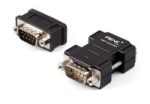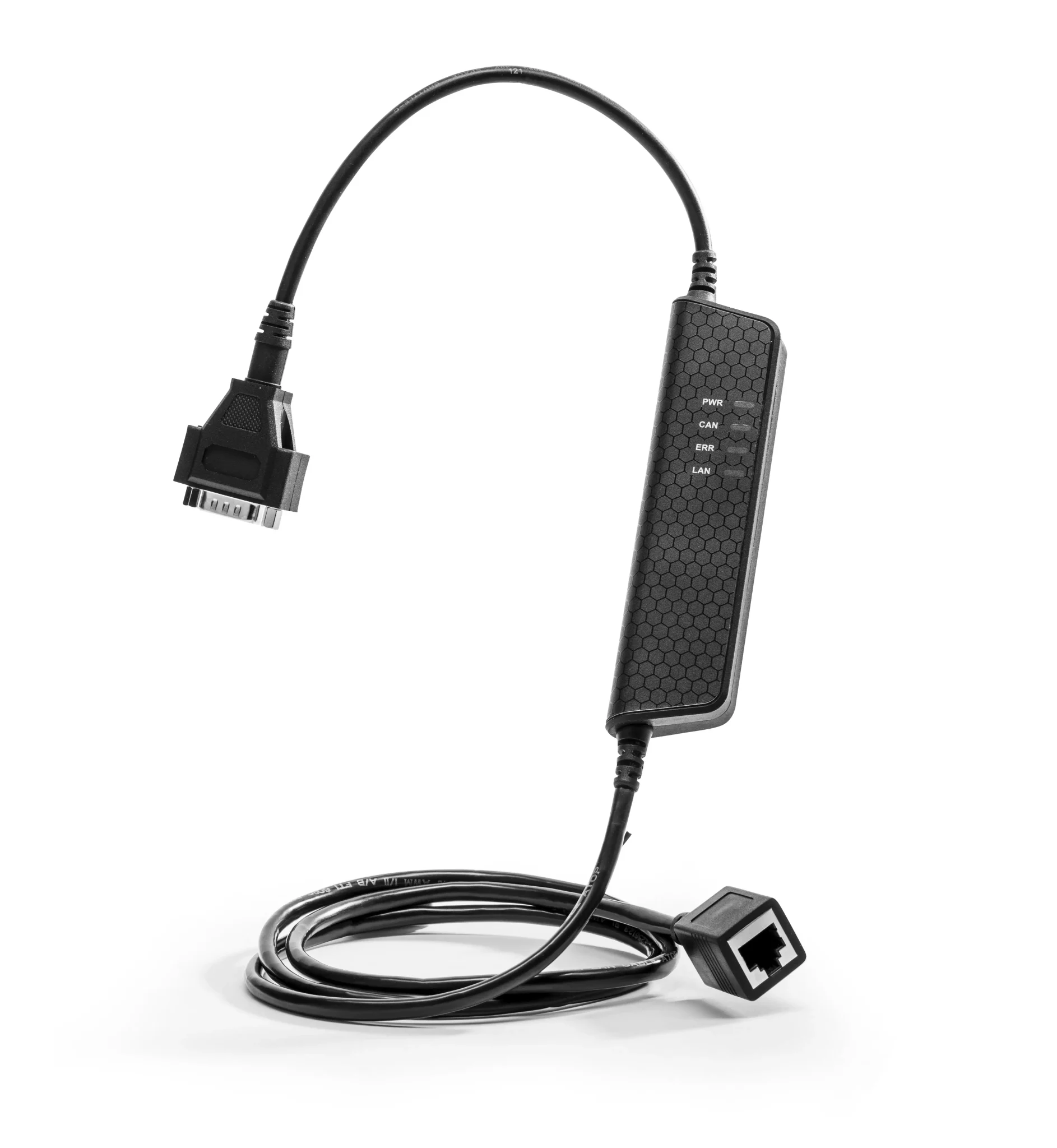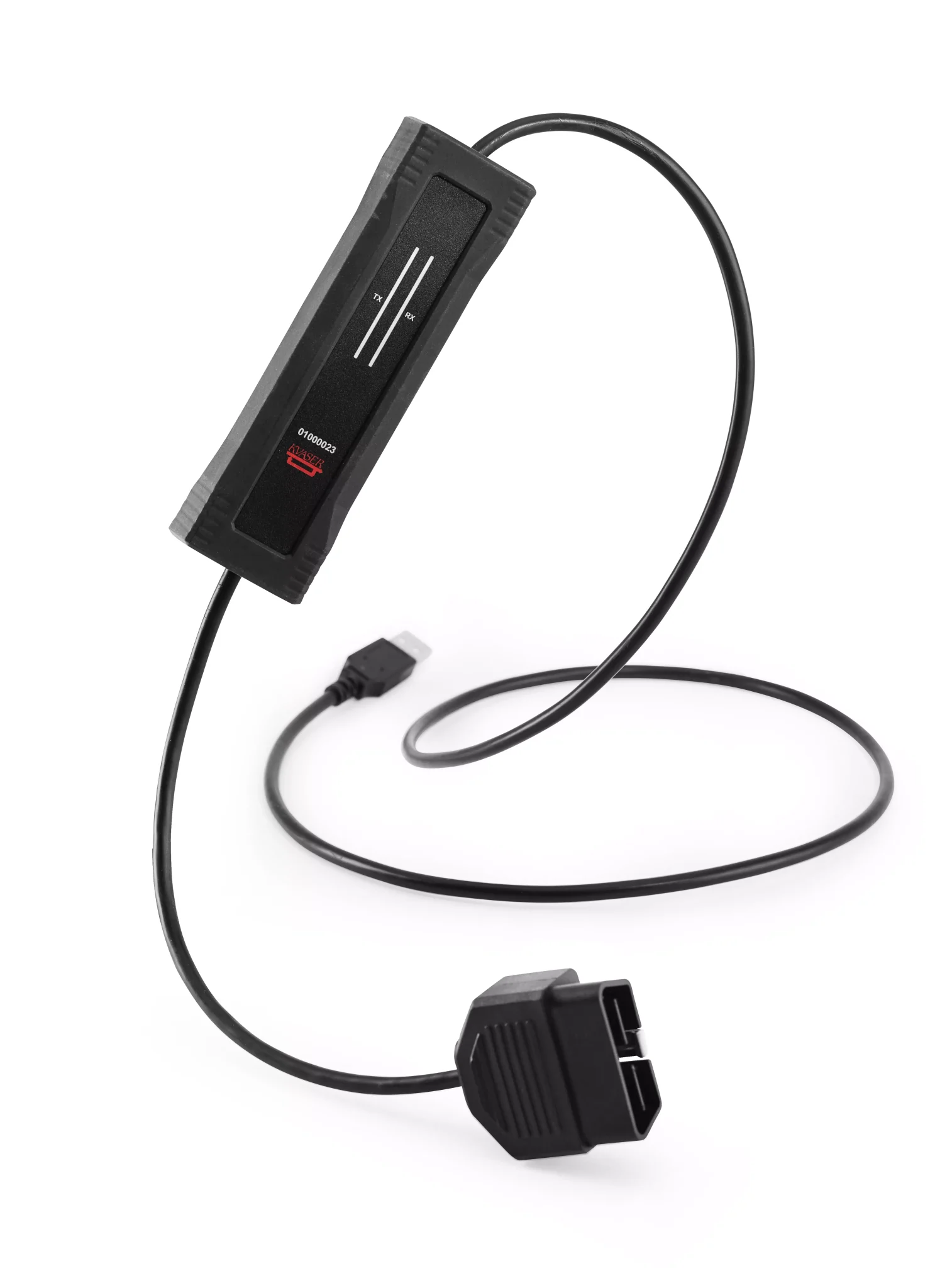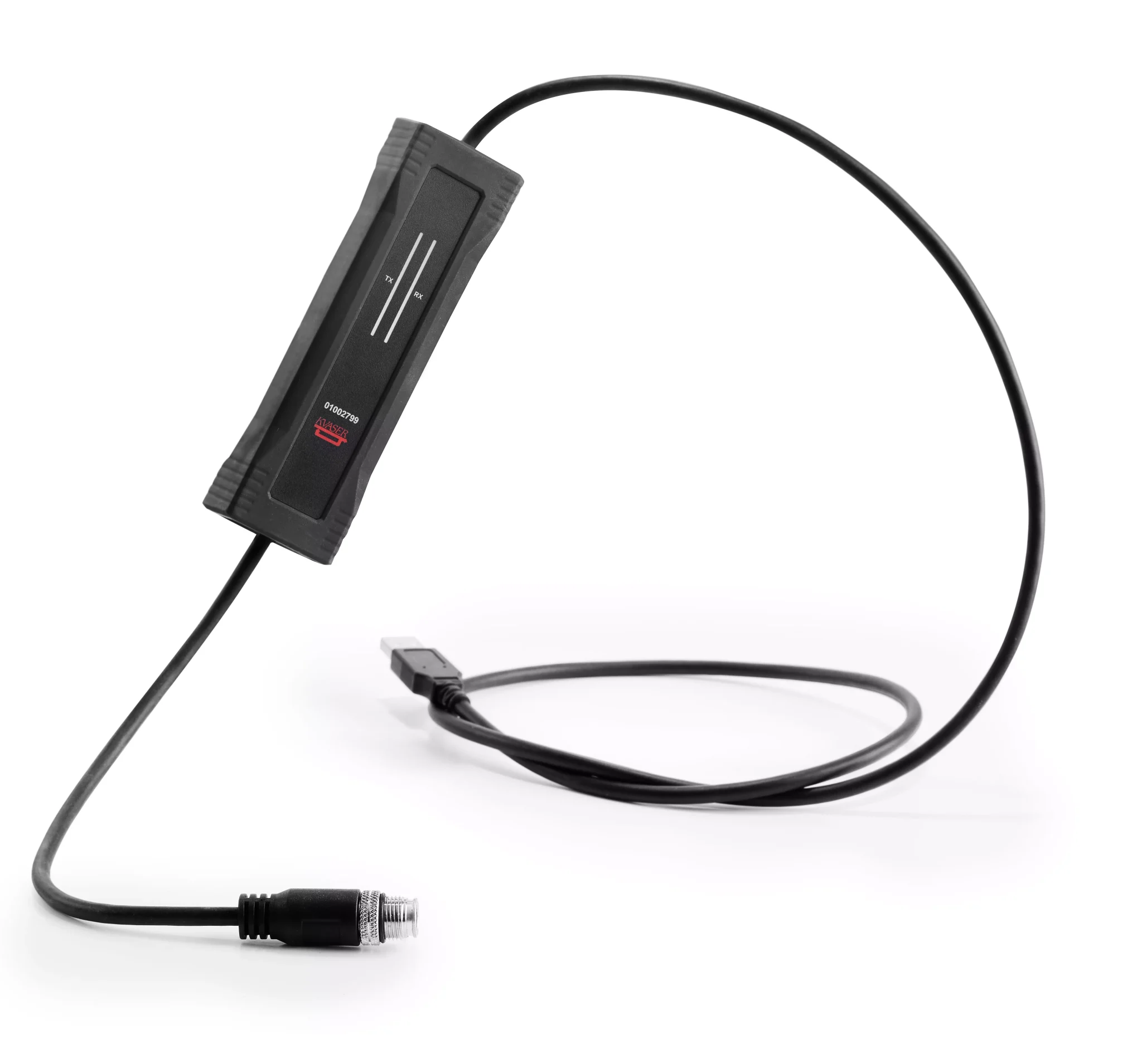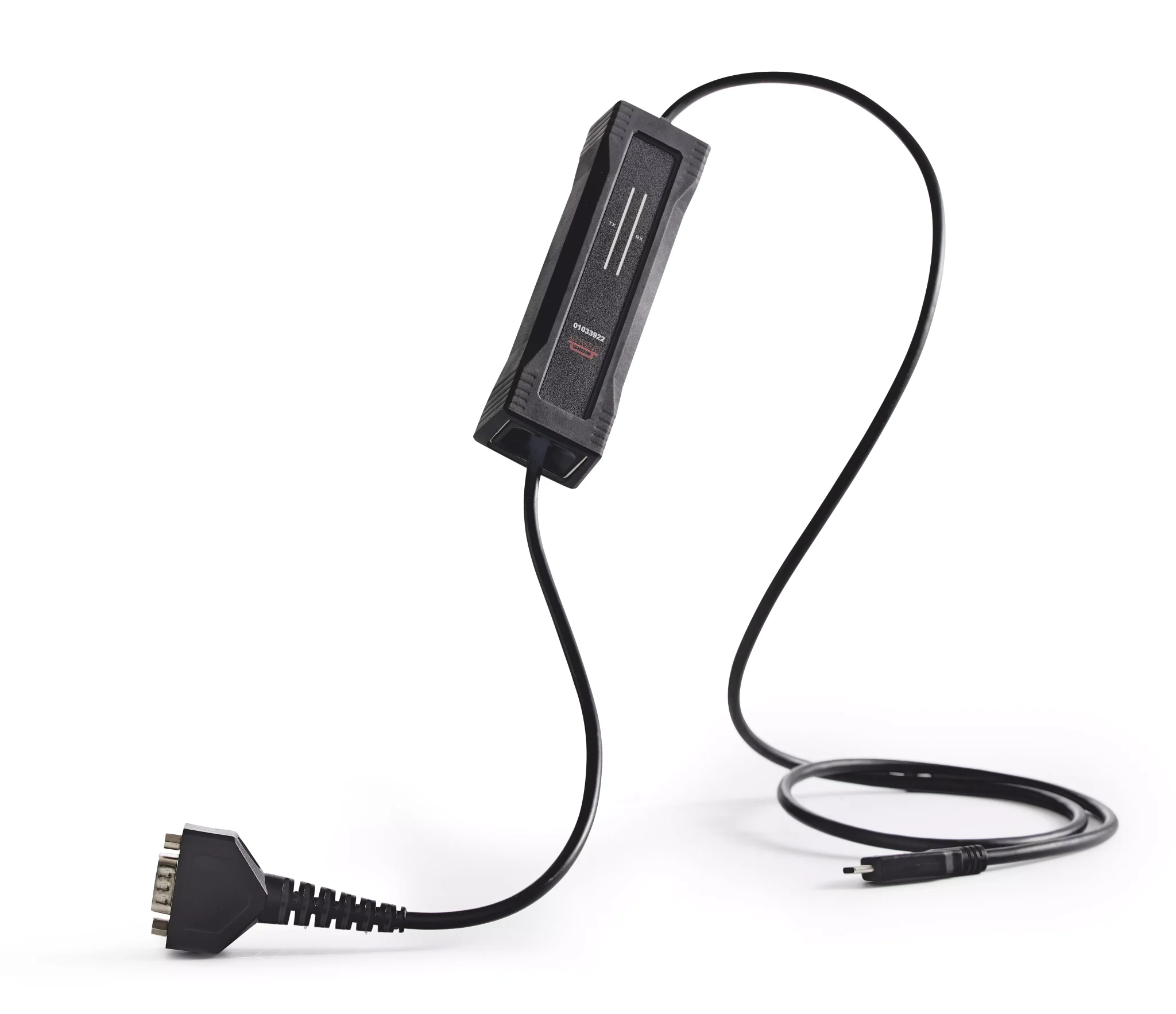

Many modern motor vehicles have an OBD-2 interface for connecting various diagnostics and testing tools. This adapter cable can be used to access the contained CAN lines.

Many modern motor vehicles have an OBD-2 interface for connecting various diagnostics and testing tools. This adapter cable can be used to access the contained CAN lines.
The PCAN-miniPCIe FD is a CAN interface for the PCI Express Mini slot. With its space-saving format, the plug-in card is a suitable solution for connecting embedded systems to up to four CAN FD and CAN networks. There is galvanic isolation of up to 300 Volts between the computer and CAN sides. The card is available as a single, dual, or four-channel version.
The CAN FD standard (CAN with Flexible Data rate) is primarily characterized by higher bandwidth for data transfer. The maximum of 64 data bytes per CAN FD frame (instead of 8 so far) can be transmitted with bit rates up to 12 Mbit/s. CAN FD is downward-compatible to the CAN 2.0 A/B standard, thus CAN FD nodes can be used in existing CAN networks. However, in this case the CAN FD extensions are not applicable.
The monitor software PCAN-View and the programming interface PCAN-Basic for the development of applications with CAN connection are included in the scope of supply and support the standard CAN FD.
Options:
| EAN | Description |
| IPEH-004045 | PCAN-miniPCIe FD Single Channel |
| IPEH-004046 | PCAN-miniPCIe FD Dual Channel |
| IPEH-004047 | PCAN-miniPCIe FD Four Channel |
High-speed CAN buses (ISO 11898-2) must be terminated at their ends by resistors.
The adapters PCAN-Term and PCAN-MiniTerm are used if no CAN node or a CAN node without internal termination is connected at these points.
The termination adapters can also be used for CAN FD buses.
Options:
| EAN | Description |
| IPEK-003002 | PCAN-Term |
| IPEK-003002-Mini | PCAN-MiniTerm |
The PCAN-Ethernet Gateway DR allows the connection of different CAN buses over IP networks. CAN frames are wrapped in TCP or UDP message packets and then forwarded via the IP network from one device to another. The PCAN-Ethernet Gateway DR provides one LAN connection and two High-speed CAN interfaces. With its DIN rail casing and the support of the extended temperature range, the module is suitable for use in an industrial environment.
The PCAN-Gateway product family is configured via a convenient web interface. Alternatively, the JSON interface allows access via software. Both options provide status information and settings of the devices, the various communication interfaces, message forwarding, and filters.
Peak System’s PCI Express products, particularly in the context of automotive and industrial applications, offer several key features and advantages:
Features:
Advantages:
These features and advantages make Peak System’s PCI Express products a strong choice for engineers and developers in automotive and industrial fields.
Options:
| EAN | Description |
| IPEH-003026 | PCAN-PCI Express Single Channel galv. isolated |
| IPEH-003027 | PCAN-PCI Express Dual Channel galv. isolated |
The Peak System PCAN-PCI interface comes in several variants and offers various options tailored for different needs in CAN communication. Here are some detailed aspects and options:
Key Models and Features
PCAN-PCI:
Software and Compatibility
Drivers: Available for various operating systems including Windows, Linux, and real-time environments.
API and Libraries: Comes with a software development kit (SDK) and libraries for easy integration into applications.
Tools: PEAK offers various software tools like PCAN-View for monitoring and analyzing CAN messages.
Accessories:
Cables: Various cable options for connecting to CAN networks.
Terminating Resistors: Can include optional resistors for proper network termination.
Applications
Automotive: Ideal for vehicle diagnostics and development.
Industrial Automation: Used in manufacturing and control systems.
Research and Development: Suitable for academic and engineering projects involving CAN networks.
The Peak System PCAN-PLIN is a PC interface designed for connecting a computer to LIN (Local Interconnect Network) and CAN (Controller Area Network) buses. It supports LIN communication as well as CAN, allowing for monitoring, data logging, and control of both network types. The PCAN-PLIN interface is especially useful for automotive and industrial applications, where LIN and CAN buses are commonly used for communication between different vehicle or device components.
Key Features:
1. Dual Support: LIN and CAN:
2. PC Connection:
3. LIN Features: LIN Master and Slave Modes:
4. CAN Features:
5. Driver and API Support:
6. Error Detection and Debugging:
7. Additional Features:
Applications:
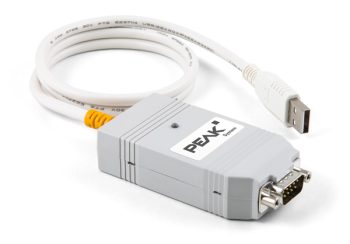
The Peak System PCAN-USB Opto-Decoupled is a USB-to-CAN interface designed for connecting a computer to a CAN (Controller Area Network) bus via a USB port. It provides opto-decoupling for electrical isolation between the PC and the CAN bus, which is essential for protecting sensitive electronics and preventing damage caused by voltage differences or ground loops.
Key Features:
1. Opto-Decoupling: Electrical isolation of up to 500 volts between the CAN side and the USB side ensures that the PC is protected from high voltages or ground differences that may occur on the CAN bus.
2. USB Interface: The device connects to the PC via USB, making it highly portable and easy to use without the need for additional hardware like PCI cards.
3. CAN Bus Interface: Supports High-Speed CAN (ISO 11898-2) with bit rates from 5 kbit/s to 1 Mbit/s.
4. Driver Support: Compatible with Windows, Linux, and MacOS. The drivers provided by PEAK-System allow access to the CAN bus for applications developed with the PCAN-Basic API.
5. CAN Status LEDs: The device is equipped with LEDs that indicate CAN bus status, including power, data transmission, and error conditions, making troubleshooting easier.
6. Compact and Portable: Its small form factor and USB connection make it suitable for both desktop and mobile use in a wide variety of environments.
7. Galvanic Isolation: Protects the CAN hardware against disturbances caused by electromagnetic interference (EMI).
Applications:
• Automotive diagnostics and testing
• Industrial automation systems
• CAN bus monitoring and development
• Robotics and embedded systems
Technical Specifications:
• USB Standard: USB 2.0, compatible with 1.1
• CAN Protocols: ISO 11898-2 (High-Speed CAN), ISO 11898-5
• CAN Connector: D-Sub, 9-pin
• Operating Temperature: Typically -40 to 85°C
• Power Supply: Power supplied via the USB port
• Maximum CAN bus length: Depends on CAN bus speed (as per CAN specification)
This device is widely used in industries that rely on CAN networks, including automotive, industrial automation, and research and development projects. The opto-decoupled design enhances reliability and safety in potentially harsh or electrically noisy environments.
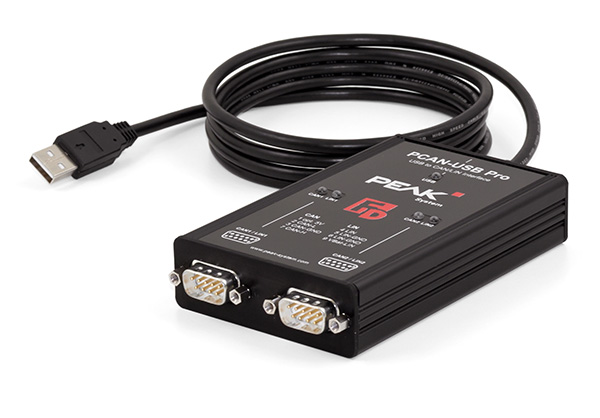
The PCAN-USB Pro FD adapter enables the connection of CAN FD and LIN networks to a computer via USB. Two field buses can be connected at the same time, up to four with appropriate adapter cables (2 x CAN FD, 2 x LIN). Each CAN FD channel is separately isolated against USB and LIN with a maximum of 500 Volts. Its robust aluminum casing makes the PCAN-USB Pro FD adapter suitable for mobile applications.
The CAN FD standard (CAN with Flexible Data rate) is primarily characterized by higher bandwidth for data transfer. The maximum of 64 data bytes per CAN FD frame (instead of 8 so far) can be transmitted with bit rates up to 12 Mbit/s. CAN FD is downward-compatible to the CAN 2.0 A/B standard, thus CAN FD nodes can be used in existing CAN networks. However, in this case the CAN FD extensions are not applicable.
The monitor software PCAN-View and the programming interface PCAN-Basic for the development of applications with CAN connection are included in the scope of supply and support the standard CAN FD. The monitor application PLIN-View Pro as well as the PLIN programming interface are also included in the scope of supply.
The PCAN-USB adapter enables simple connection to CAN networks. Its compact plastic casing makes it suitable for mobile applications.
The opto-decoupled version guarantees galvanic isolation of up to 500 Volts between the PC and the CAN side.
The package is also supplied with the CAN monitor PCAN-View for Windows® and the programming interface PCAN-Basic.
Based on the static properties of the program code CMT++ and CMTJava gives estimates how error prone the program source code is due to its complexity, how long it will take to understand the code, what is the logical volume of the code, etc …
As the project team has not usually time to inspect all the code produced by the project, CMT++/CMTJava can assist in locating the modules, which are most likely to cause problems in the future.
Testwell CMT++ und Testwell CMTJava help by measuring the code quality. This is particularly interesting for companies which subcontract their software development. Subcontractors can proof the quality of their code with Testwell CMT++/CMTJava.

Testwell CTC++ was originally developed for source code in the C language. It supports C++ for over 30 years and continuously keeps pace with its highly dynamic language standards.
The C language family has some special challenges for coverage measurement:
An add-on is available for the Java language.
Testwell CTC++ offers all coverage measures required by various safety standards:

Executed, non-executed and only partially executed lines of code are visually highlighted (Line Coverage).
When human lives are at risk, various safety standards such as ISO 26262 in the automotive sector or DO-178C in aviation require the measurement of code coverage.
Several hundred companies worldwide use Testwell CTC++ in this development environment to cover all coverage requirements of their standard up to the highest required level of MC/DC.

Testwell CTC++ is certified by TÜV Süd for functional safety in accordance with IEC 61508, ISO26262, EN 50128 and IEC 62304.
All types of tests, whether unit tests, integration tests or complete system tests, can be carried out as usual. Testing can be done fully automated, partially automated or manually.
The instrumented program or test executable writes the data to a file during testing. When the test is executed on a target, this writing out is fully customizable; the data can, for example, be transferred directly to the host.
With Testwell CTC++, all test runs of a project can be combined into a single report. It works with all common unit test tools, test platforms and frameworks.
Our HTML report offers overview views and shows the details of the coverage measurement in the source code. Its reporting levels can be configured to suit the project.
Testwell CTC++ creates all coverage reports based on templates and thus supports all text-based formats such as XML, CSV or JSON. This way, third-party systems such as dashboards can easily be supplied with the required data.

Missing coverage is explained and documented via Justifications. Testwell CTC++ shows the impact of Justifications on all coverage measures – so it is clear and transparent whether 100% of the code has been tested or at least explained.
The coverage measurement for software on embedded targets has some specific challenges:
div
| Low Memory | The instrumentation overhead is basically low and can be further reduced through various workflows. In extreme cases, the coverage is measured over individual bits and can be read out via the debugger. |
|---|---|
| Coverage Data | Any communication interface between target and host can be used for writing out coverage data. The runtime library for writing out the coverage data is supplied as C code that can be adapted to the capabilities of the target. |
| Cross-Compiler | Testwell CTC++ works independently of the compiler and can be configured for any C / C++ compiler. We provide our users with numerous compiler configurations and support them in adapting to new compilers. |
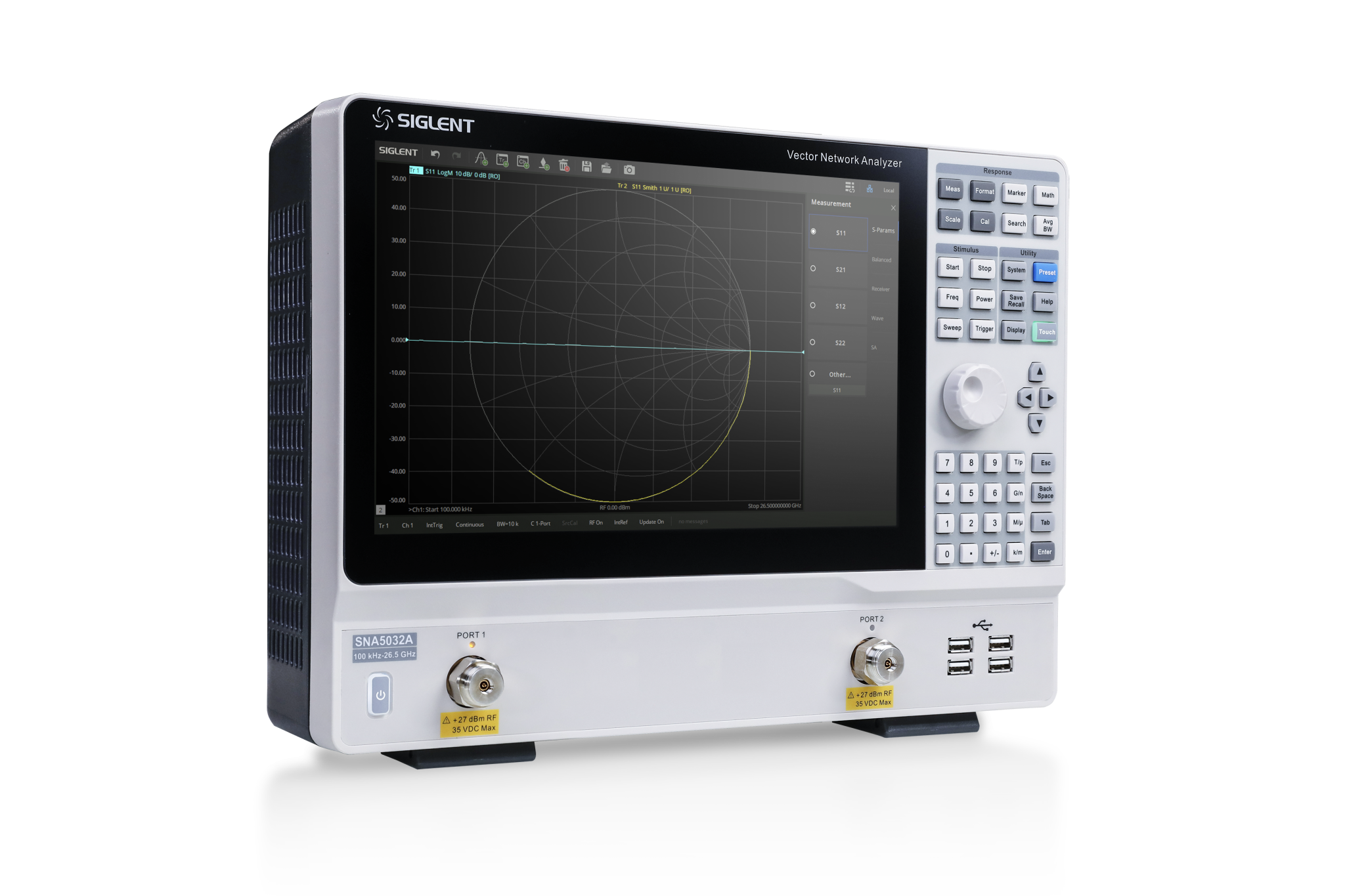
The SIGLENT SNA5000A series of Vector Network Analyzers have a frequency range of 9 kHz to 8.5 GHz and 100 kHz to 26.5 GHz, which support 2/4-port scattering parameter, differential-parameter, and time-domain parameter measurements. The SNA5000A series of VNAs are effective instrumentation for determining the Q-factor, bandwidth, and insertion loss of a filter, They feature impedance conversion, movement of measurement plane, limit testing, ripple test, fixture simulation, and adapter removal/insertion adjustments. The VNAs have five sweep types: Linear-Frequency mode, Log-Frequency mode, Power-Sweep mode, CW-Time mode, and Segment-Sweep mode. The SNA5000A series VNAs also support scattering-parameter correction of SOLT, SOLR, TRL, Response, and Enhanced Response for increased flexibility in R&D and manufacturing applications.
| Frequency Range | Ports | Dynamic Range | Trace Noise | Range of Output | |
|---|---|---|---|---|---|
| SNA5002A | 9 kHz~4.5 GHz | 2 | 125 dB | 0.003 dB rms,0.03° rms | -55 ~ +10 dBm |
| SNA5004A | 9 kHz~4.5 GHz | 4 | 125 dB | 0.003 dB rms,0.03° rms | -55 ~ +10 dBm |
| SNA5012A | 9 kHz~8.5 GHz | 2 | 125 dB | 0.003 dB rms,0.03° rms | -55 ~ +10 dBm |
| SNA5014A | 9 kHz~8.5 GHz | 4 | 125 dB | 0.003 dB rms,0.03° rms | -55 ~ +10 dBm |
| SNA5022A | 100 kHz~13.5 GHz | 2 | 125 dB | 0.003 dB rms,0.03° rms | -55 dBm ~ +10 dBm |
| SNA5032A | 100 kHz~26.5 GHz | 2 | 125 dB | 0.003 dB rms,0.03° rms | -55 dBm ~ +10 dBm |
SIGLENT digital oscilloscopes provide the perfect balance between features and price. With bandwidths from 50 MHz to 2 GHz, low noise vertical scales down to 500 uV/div, and features like Eye diagram / Jitter analysis, serial decoding and MSO capabilities, SIGLENT will quickly become your scope of choice.
Event frequency indicated by color temperature. “Hot” colors (red) identify frequent events while “cool” (blue) colors are reserved for events that occur less often.
Quickly add one of over 30 automatic measurements like peak voltage, frequency, and more
Edge, Slope, Pulse, Window, Runt, Interval Dropout, Pattern, Video (HDTV supported), and serial trigger modes on many of our digital oscilloscopes
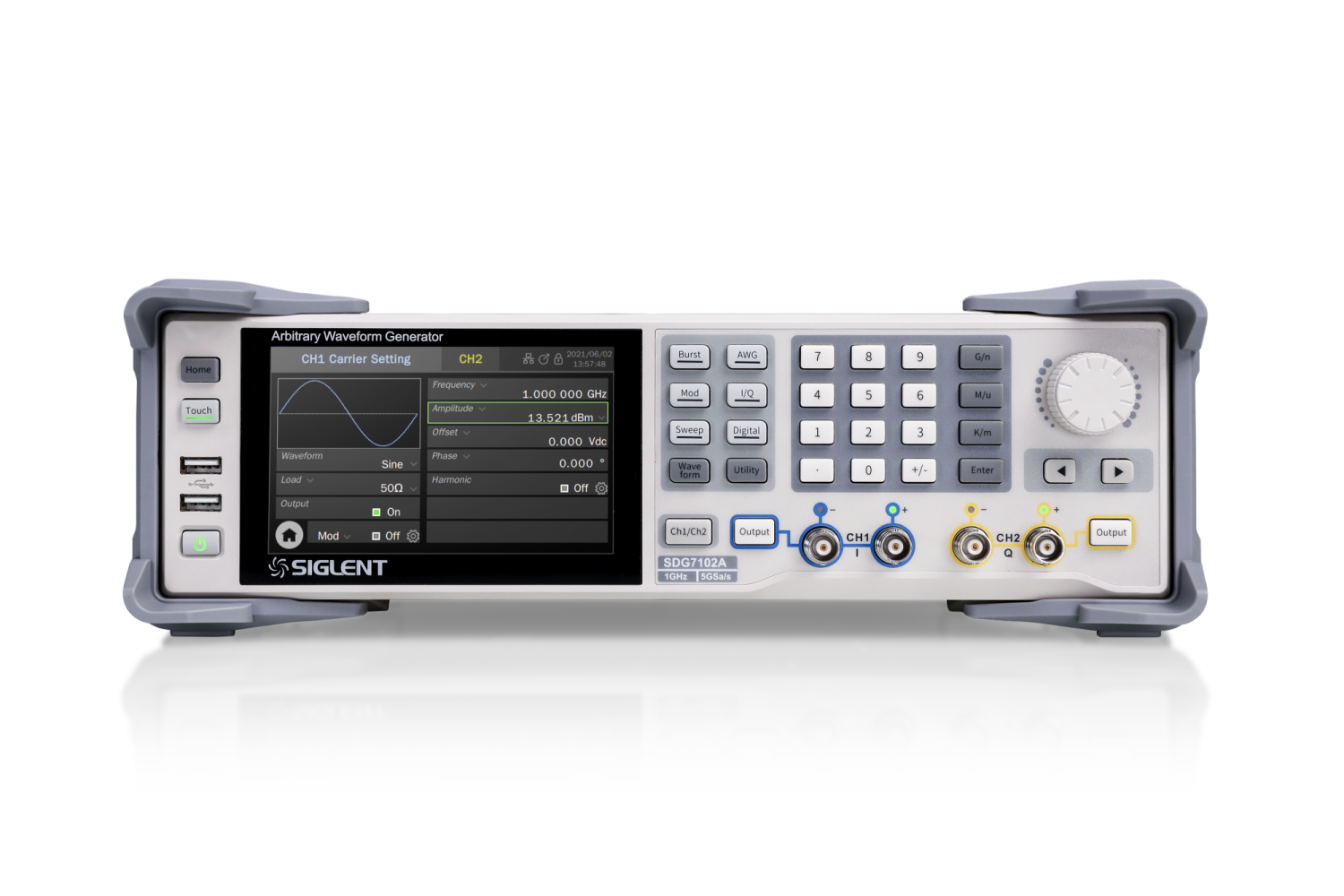
SIGLENT’s function generators / arbitrary waveform generators use advanced Digital Frequency Synthesis (DDS) technology to produce high quality standard function and arbitrary waveform signals. They also provide a wide range of analog and digital modulation functions.
No need for external adapters and cabling. Quickly combine CH1 and CH2 outputs internally (Most SDG models)
Lock phases for greater inter-channel phase control. Independent mode smooths parameter transitions (Most SDG models)
Independent channels with full specifications for two times the instrument (Most SDG models)
SIGLENT’s SDM3000 Series Digital Multimeters are dual-display multimeters offering 4½, 5½ and 6½-digit resolution with up to 35 PPM DCV accuracy and a powerful feature set at an excellent price.
Digital multimeters observe measurements vs. time
Quickly obtain standard deviation and more with DMMs
Multi-channel scanner models available (SDM3055 and SDM3065X with SC1016 option only)
Siglent’s innovative spectrum analyzers provide reliable measurement precision and a wide range of RF measurement functions. They incorporate all-digital IF technology and have frequency ranges from 9 kHz to 7.5 GHz for use for almost any application.
Observe and compare multiple signals on the same display.
View time varying signals, observe drift, and more using the convenient color temperature waterfall (Option AMK-SSA3000X)
All SSAs have the tracking generator hardware installed for easy component/filter testing
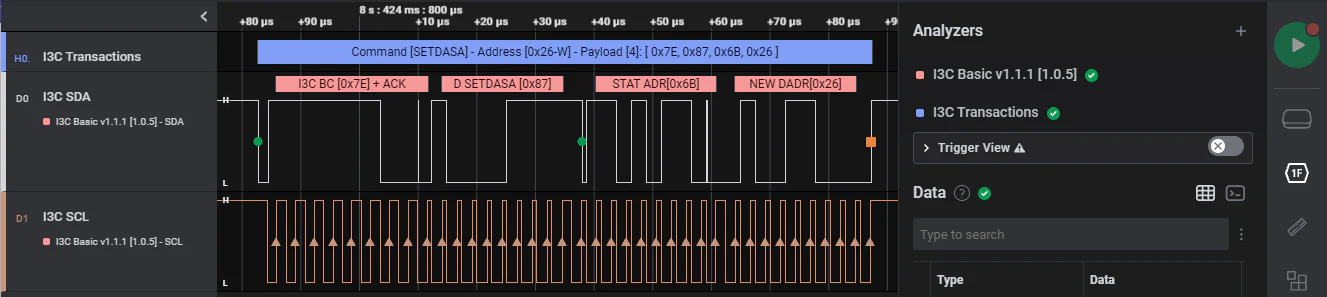
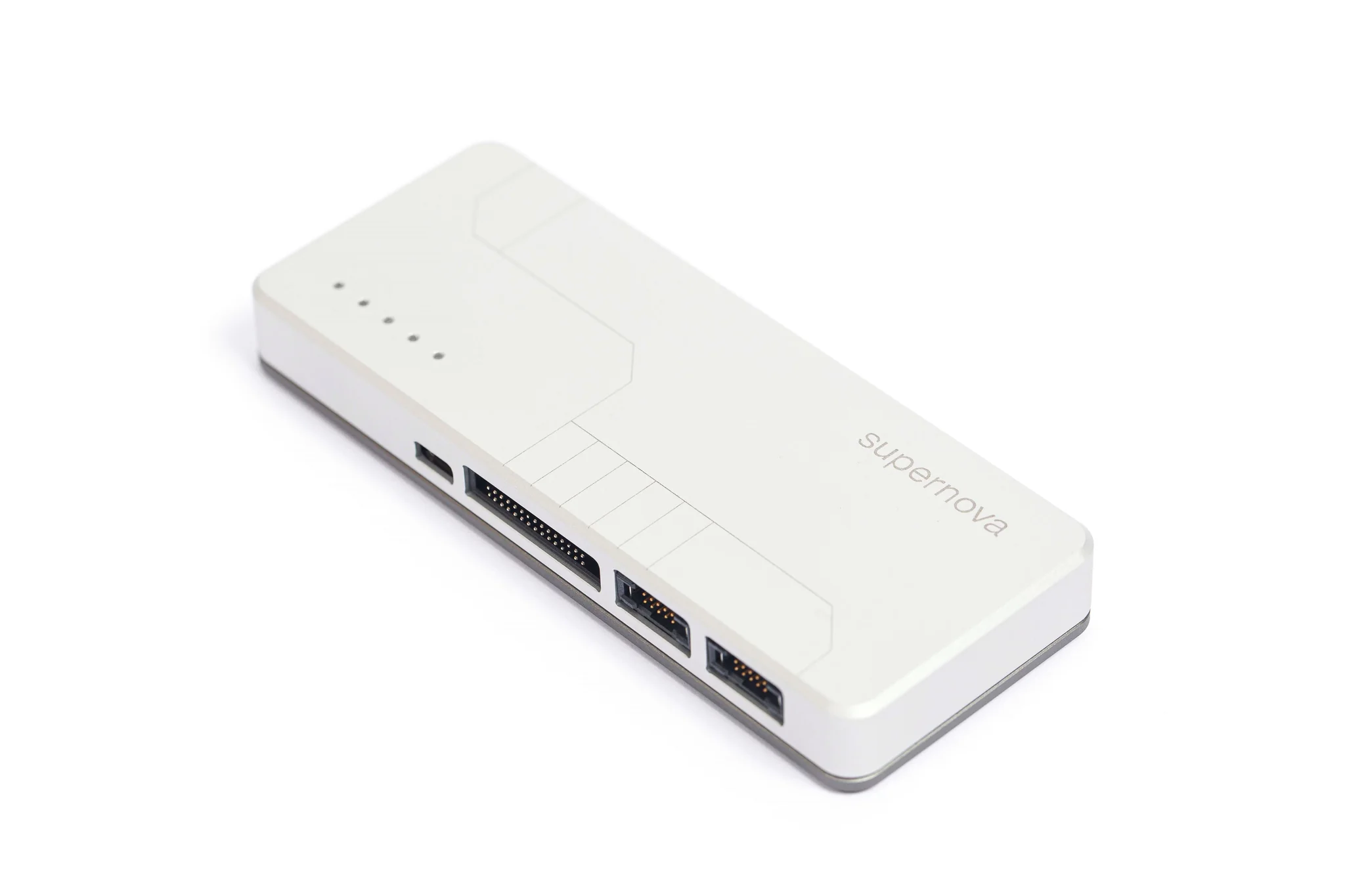
Binho is proud to introduce the first I3C BasicSM Protocol Analyzer for firmware development and embedded systems testing. Leave that stack of silicon-validation equipment in the lab, speed up development, and save a pile of money all at the same time.
The Binho Nova comes along with a helpful breadboard breakout adapter and a 1 foot USB type C (male) to type A (male) cable in a soft-shell zippered case.
I3C Bus Capabilities:
Support for MIPI I3C Basic v1.0 and v1.1.1
12.5MHz SDR mode and HDR-DDR mode support
I3C Controller and Target role support
Supported voltage range from 0.8V to 3.3V
Can provide downstream power to test circuit, programmable voltage.
Implements best-in-class coax wire harness to maintain signal integrity.
But wait, there’s more:
Supports I2C Master
Support for SPI, UART, and GPIO operations coming soon
Download our Product Brief for additional details. More documentation will be published before launch.
Use our Binho Mission Control cross-platform desktop GUI software to point-and-click to send I3C Transactions. Supernova also comes with a fully-baked python library to make automated testing a breeze. We even provide examples for real-time data streaming from I3C Targets using Jupyter Notebook. For those looking to implement Supernova into their own software applications, we also offer a C/C++ SDK for direct device access.
Supernova comes everything you need to get up and running:
1 x Binho Supernova
1 x I3C Wire Harness
3 x Qwiic Cables
30 conductor ribbon cable
2.54mm Breakout Board
1 x USB Type C to USB Type C Cable
1 x USB Type C to USB Type A Adapter
2 x Mounting Screws
Zippered Case
Kvaser DIN Rail SE410S-X10 is a powerful Ethernet to CAN/CAN FD interface with support for Kvaser t programs. It has 4 CAN/CAN FD channels, support for I/O via add-on modules and 16GB flash storage. Kvaser DIN Rail SE410S-X10 acts as a master for the add-ons. The housing has a smart mounting clip that attaches to a DIN rail for easy installation. The communication between the I/O modules and the Kvaser DIN Rail SE410S-X10 uses an optical bus, thus there is no need for cables in between. The I/O modules can be controlled either from Kvaser’s CANlib SDK (over Ethernet) or directly on the unit using Kvaser t programs. The Kvaser DIN Rail SE410S-X10 is compatible with applications that use Kvaser’s CANlib SDK.
The Kvaser Ethercan HS is a powerful, real-time Ethernet to CAN interface that, when linked over the Internet to an Ethernet-equipped PC, allows CAN data to be remotely accessed from anywhere in the world. Built-in Power over Ethernet (PoE) eliminates the need for a separate power cable when you can’t power the device from the CAN bus.
Kvaser’s Ethercan product range makes it easy to implement the Internet of Things (IoT) concept by enabling data from any CAN product or system to be sent over a corporate network or WAN, using the standard Kvaser CANlib API. Users of the Kvaser Ethercan HS can also choose to connect to the device using the built-in REST API for web-enabled devices, such as smartphones.
As a programmable interface, the Kvaser Ethercan HS is suited to advanced applications, such as ECU reflashing. For example, a t program could be created to process CAN messages locally in the device, removing the latency of WiFi and/or Ethernet.
The Kvaser Ethercan Light HS is a CAN to Ethernet interface that, when linked over the Internet to an Ethernet-equipped PC, allows CAN data to be remotely accessed from anywhere in the world.
Ethercan makes it easy to implement the Internet of Things (IoT) concept by enabling data from any CAN product or system to be sent over a corporate network or the Cloud, using the standard Kvaser API. The Kvaser Ethercan device can be configured with a static IP and comes with an Ethercan Factory Reset Device to reset the configuration to factory default DHCP settings at the push of a button.
Kvaser Mini PCI Express 1xCAN v3 is a small, yet advanced, real time CAN interface that handles transmission and reception of standard and extended CAN messages on the bus with a high time stamp precision. The Kvaser Mini PCI Express 1xCAN v3 is compatible with applications that use Kvaser‘s CANlib.
Kvaser PCIEcan 2xCAN v3 is a small, yet advanced, CAN multi-channel real time CAN interface that handles transmission and reception of standard and extended CAN messages on the bus with a high time stamp precision. The Kvaser PCIEcan 2xCAN v3 is compatible with applications that use Kvaser‘s CANlib.
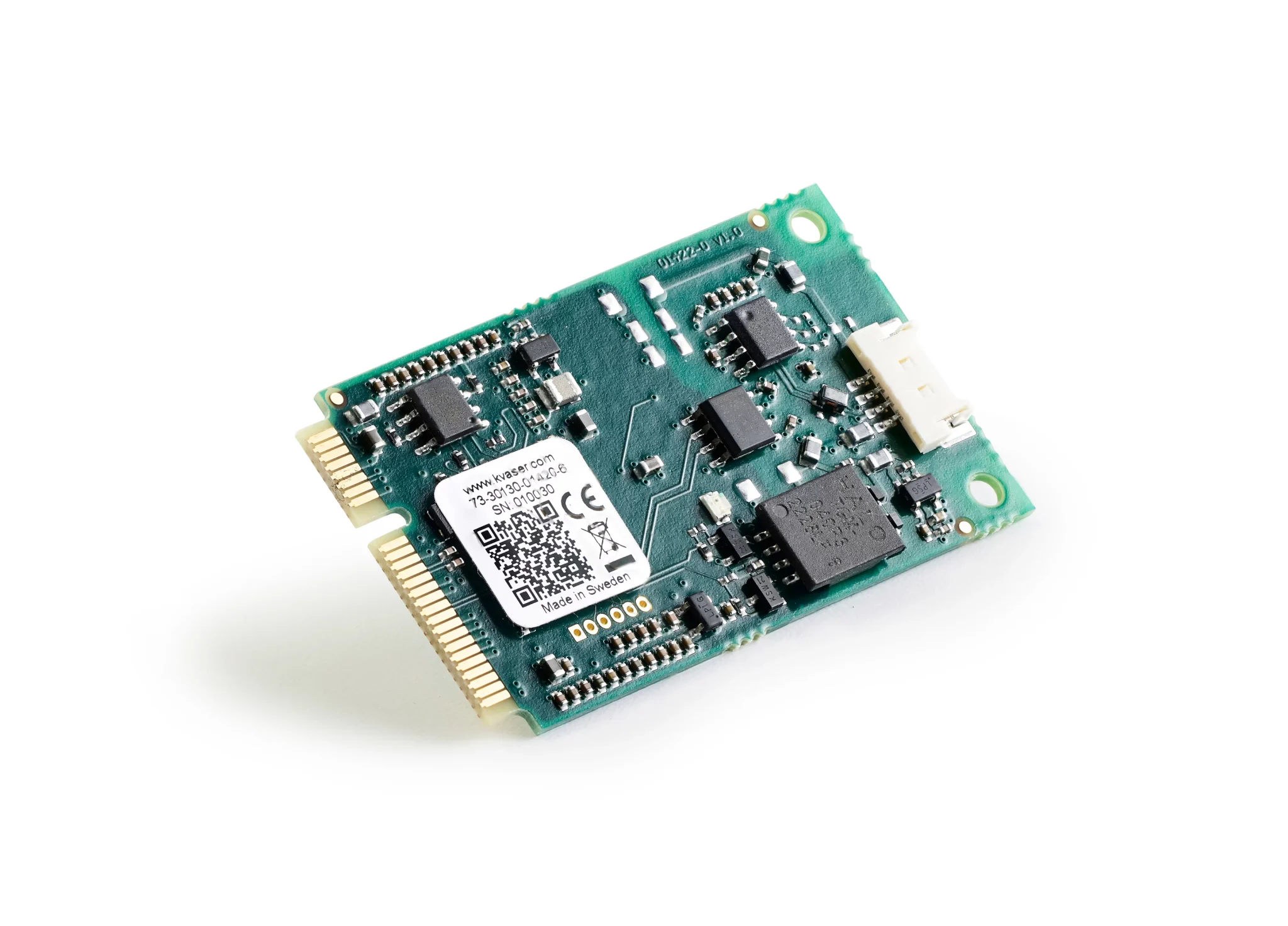
The Kvaser Mini PCI Express HS is a highly-integrated CAN (controller area network) add-on board that lets embedded system developers add CAN functionality to any standard computer board with mini PCI Express capability.
The add on board offers a single channel, high speed CAN interface with error frame detection and on-board buffer. This board has a low profile connector that complies with the mini PCI Express standard, which connects via a cable to a DSUB connector (or other type) at the computer housing. With just the CAN communication link itself exposed, total system EMC performance is protected because all the electronics remain inside the computer housing.
Measuring 30 x 51mm, the Kvaser Mini PCI Express 2xHS is a highly integrated CAN (controller area network) add-on board that adds two high speed CAN channels to any standard computer board with mini PCI Express capability. Offering silent mode, error frame detection and an on-board buffer, the small form factor board fits any embedded data acquisition systems, but is particularly suitable for fleet management to monitor key parameters such as fuel economy, engine speed, braking and accelerator pressure, and gearshift patterns.
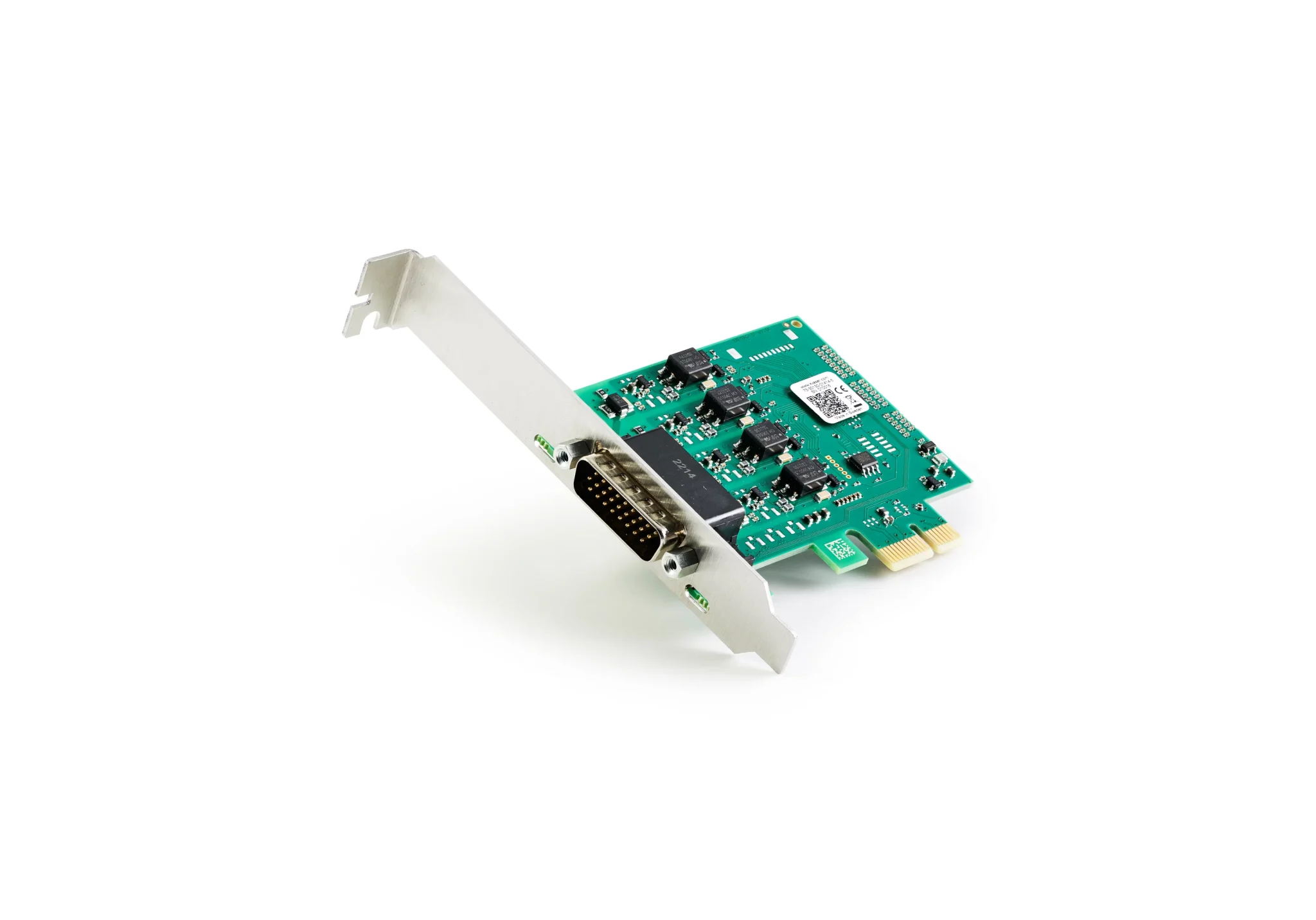
Kvaser PCIEcan 4xCAN v2 is a small, yet advanced, CAN multi channel real time CAN interface that handles transmission and reception of standard and extended CAN messages on the bus with a high time stamp precision. It is compatible with applications that use Kvaser‘s CANlib.
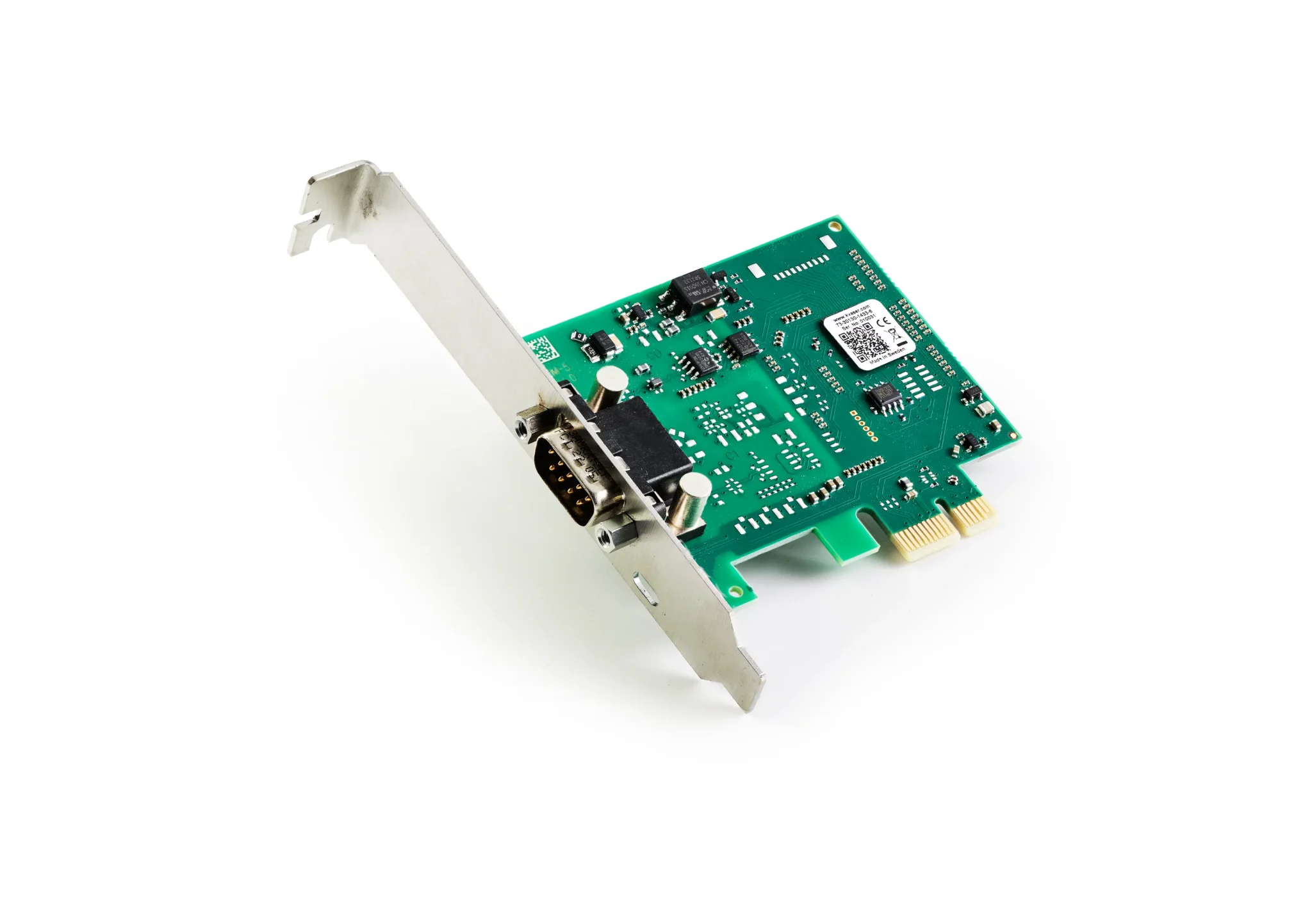
Kvaser PCIEcan 1xCAN v3 is a small, yet advanced, real time CAN interface that handles transmission and reception of standard and extended CAN messages on the bus with a high time stamp precision. The Kvaser PCIEcan 1xCAN v3 is compatible with applications that use Kvaser‘s CANlib.
Kvaser Mini PCI Express 2xCAN v3 is a small, yet advanced, CAN multi-channel real time CAN interface that handles transmission and reception of standard and extended CAN messages on the bus with a high time stamp precision. The Kvaser Mini PCI Express 2xCAN v3 is compatible with applications that use Kvaser‘s CANlib.
The Kvaser PCIcanx II HS/HS is a dual channel, high speed CAN (controller area network) interface board for the PCI-X and PCI bus. It features an on-board microcontroller for offloading your main CPU and galvanic isolation for protection against voltage spikes.
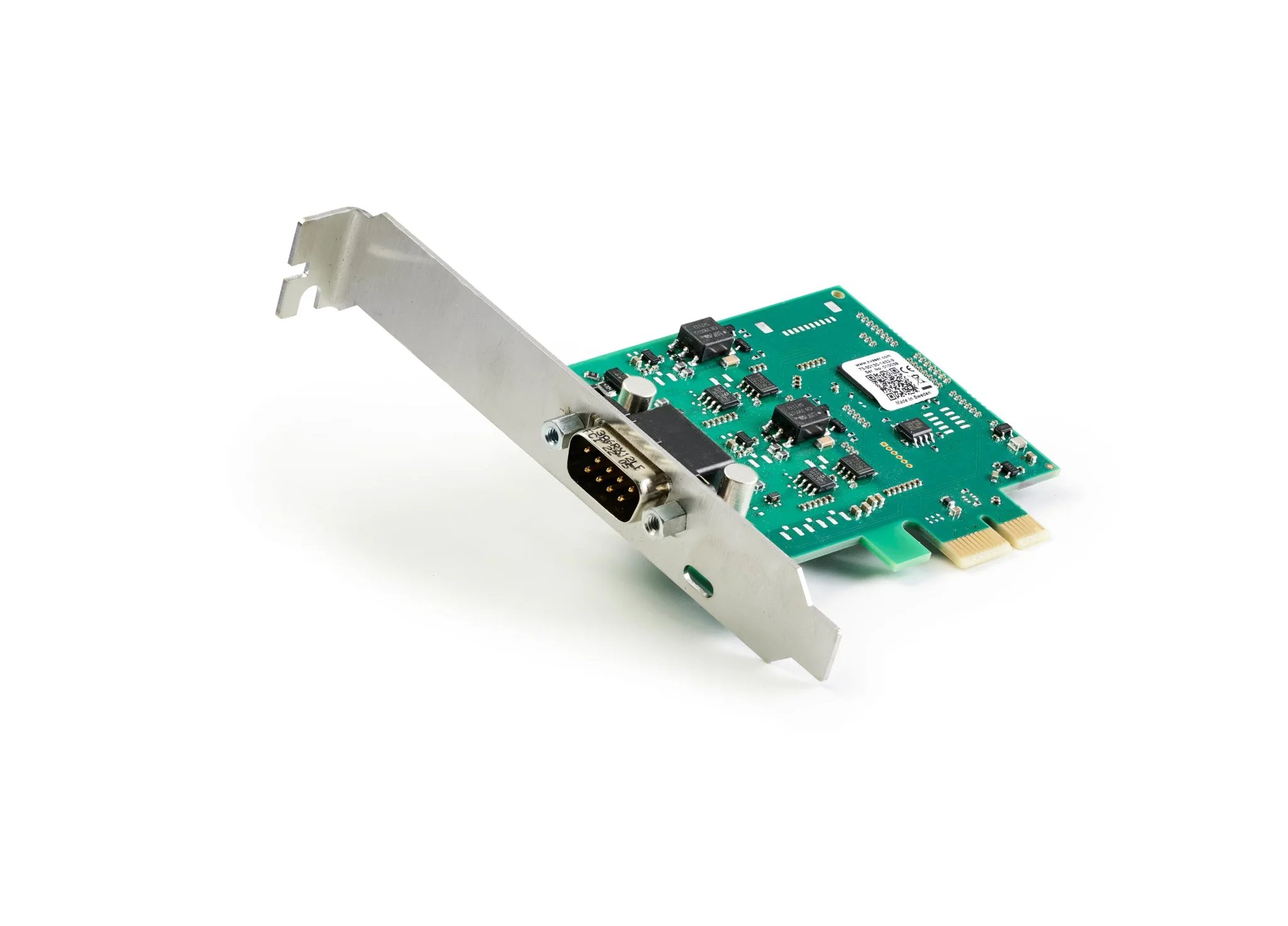
The Kvaser PCIcanx II HS is a single channel, high speed CAN (controller area network) interface board for the PCI-X and PCI bus. It features an on-board microcontroller for offloading your main CPU and galvanic isolation for protection against voltage spikes.
Kvaser PC104+ HS/HS is a two channel, PC/104+ compatible CAN (controller area network) interface with DSUB CAN connectors. It includes a high-performance, on-board microcontroller for CPU offloading, ensuring fast response times.
Kvaser PC104+ HS/HS IDC is a two channel, PC/104+ compatible CAN (controller area network) interface with IDC Header CAN connectors. It includes a high-performance, on-board microcontroller for CPU offloading, ensuring fast response times.
Kvaser PC104 HS/HS IDC is a two channel, PC/104 compatible CAN (controller area network) interface with IDC Header CAN connectors. It includes a high-performance, on-board microcontroller for CPU offloading, ensuring fast response times.
Kvaser PCIcanx 4xHS is a four channel, high speed CAN (controller area network) interface that can be used in both regular PCI and PCI-X slots. A galvanically isolated CAN bus driver protects the hardware. The onboard CAN controller is I/O mapped for quick reaction times. The PCIcanx 4xHS is ideal for multichannel data gathering applications, such as in laboratories.
Kvaser PCIcanx HS is a one channel, high speed CAN (controller area network) interface that can be used in both regular PCI and PCI-X slots. A galvanically isolated CAN bus driver protects the hardware. The onboard CAN controller is I/O mapped for quick reaction times.
Kvaser PCIcanx HS/HS is a dual channel, high speed CAN (controller area network) interface that can be used in both regular PCI and PCI-X slots. A galvanically isolated CAN bus driver protects the hardware. The onboard CAN controller is I/O mapped for quick reaction times.
The Kvaser Leaf Light HS v2 represents one of the easiest and lowest-cost methods of connecting a computer to a CAN bus network. With its USB 2.0 compliant connector and 9-pin D-SUB connector, the Leaf Light HS v2’s sleek, ergonomically designed housing is both robust enough for everyday use and small and flexible enough to be used in space-constrained applications. Now with galvanic isolation as standard.
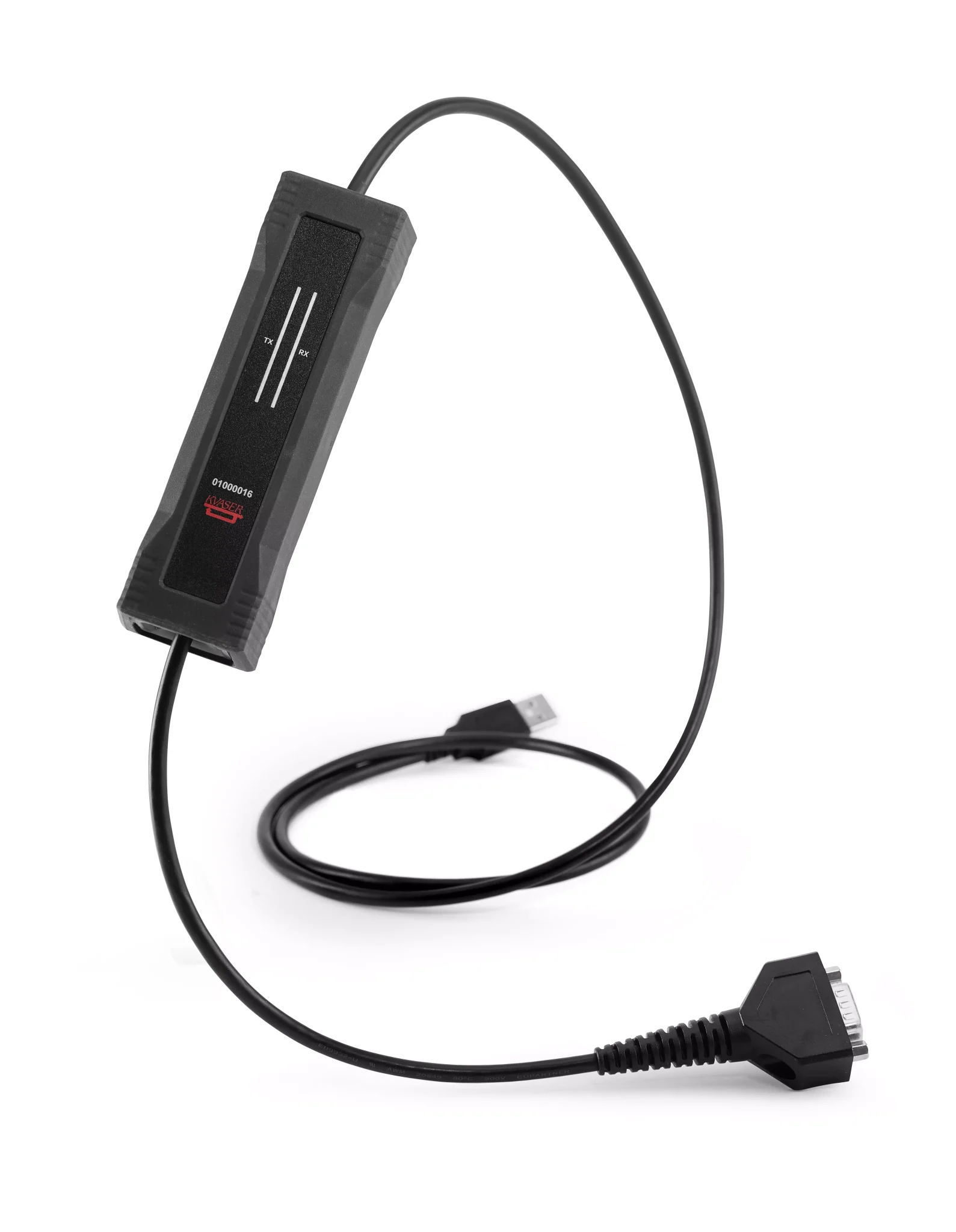
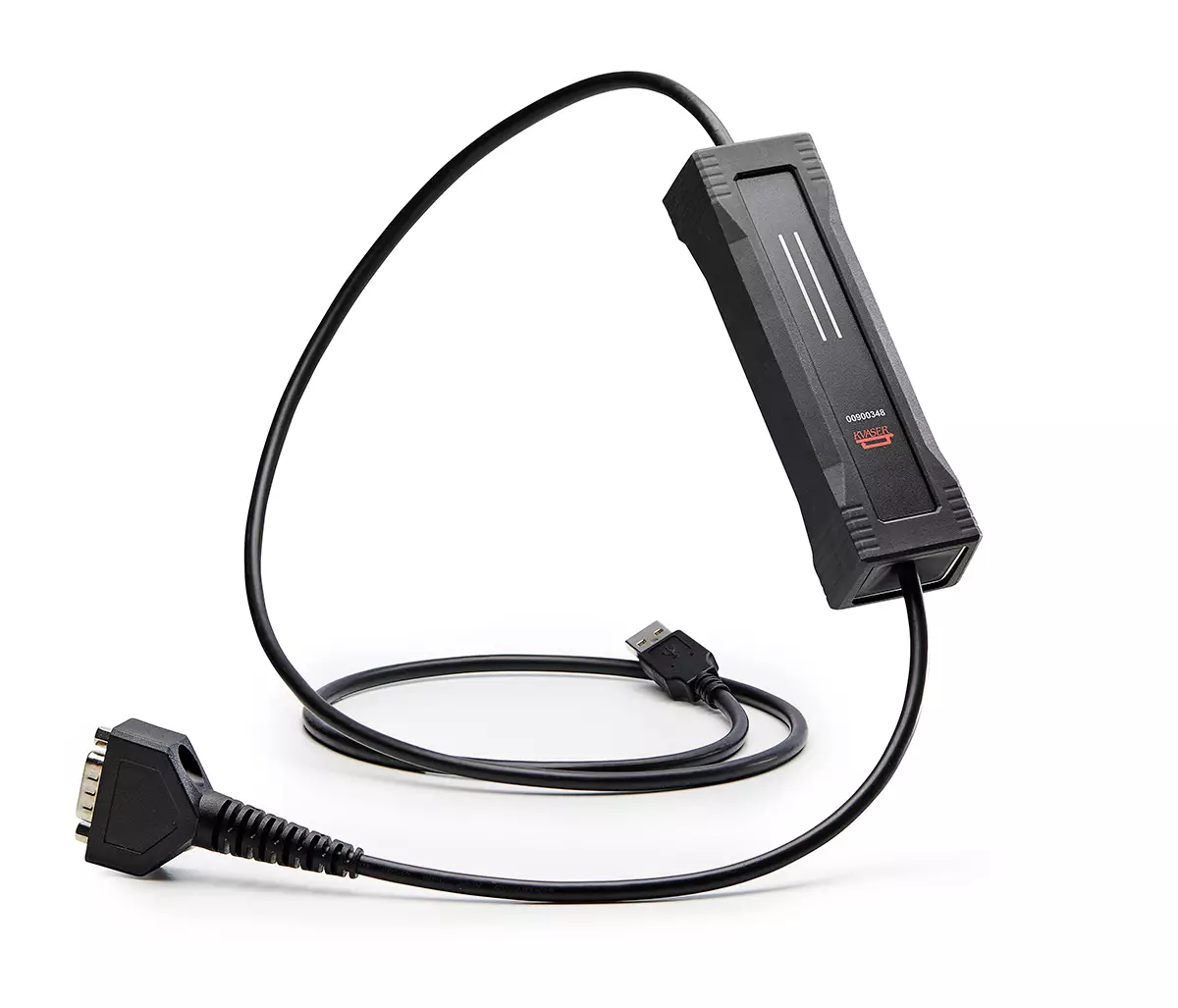
The Kvaser U100 is a robust, galvanically-reinforced (Tested according EN 60335) single-channel CAN/CAN FD to USB interface. Signal and power isolated, the Kvaser U100 offers enhanced electrical protection, a vibration, shock and drop-proof housing and high-quality cabling that establishes a new reference in CAN interface design.
With an intelligent LED that display bus loads and error frames, an industry-leading IP67 rating and an innovative connector system, the U100 has numerous stand-out features. Fully compatible with J1939, CANopen, NMEA 2000® and DeviceNet, this suits rugged and higher voltage applications in marine, industrial, construction, heavy-duty, agriculture, and automotive, including electric vehicle markets. This device has a Type-A USB connector; a Type-C USB connector is also available.
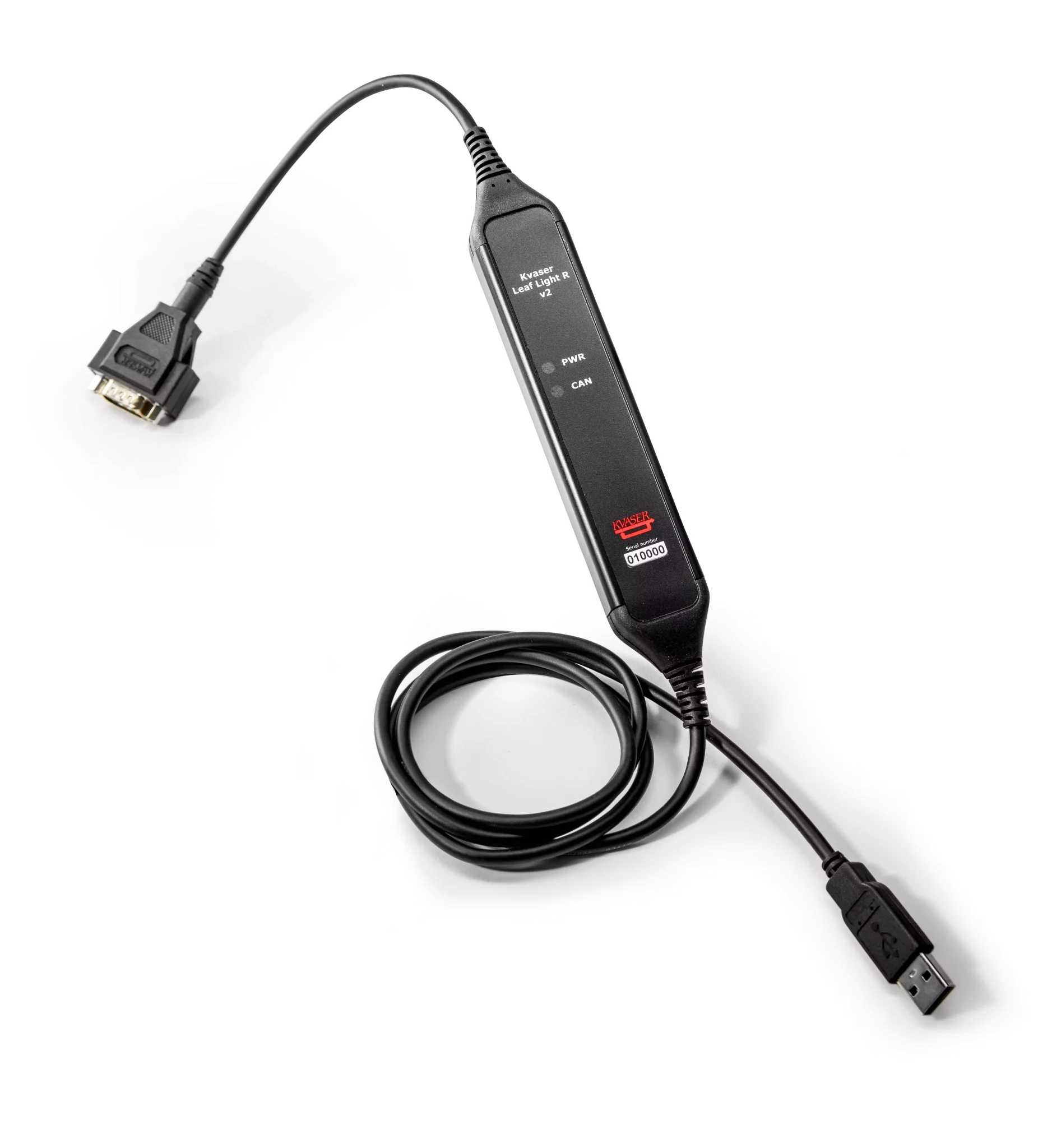
The Kvaser Leaf Light R v2 is the rugged version of Kvaser’s popular Leaf Light v2 interface. This is a single channel CAN bus interface with a lightweight yet highly durable, IP65-rated housing that assures reliable protection against water and dust ingress. Vibration, shock and drop proof, this interface belongs to Kvaser’s Rugged range and operates over a temperature range of -40 to +70°C.
With a standard USB2.0 connection and a high-speed CAN channel in a 9-pin D-SUB CAN connector, the Kvaser Leaf Light R v2 handles transmission and reception of standard and extended CAN messages, with a time stamp precision of 100 microseconds. Features include error frame detection and LED indicators for power and CAN channel status.
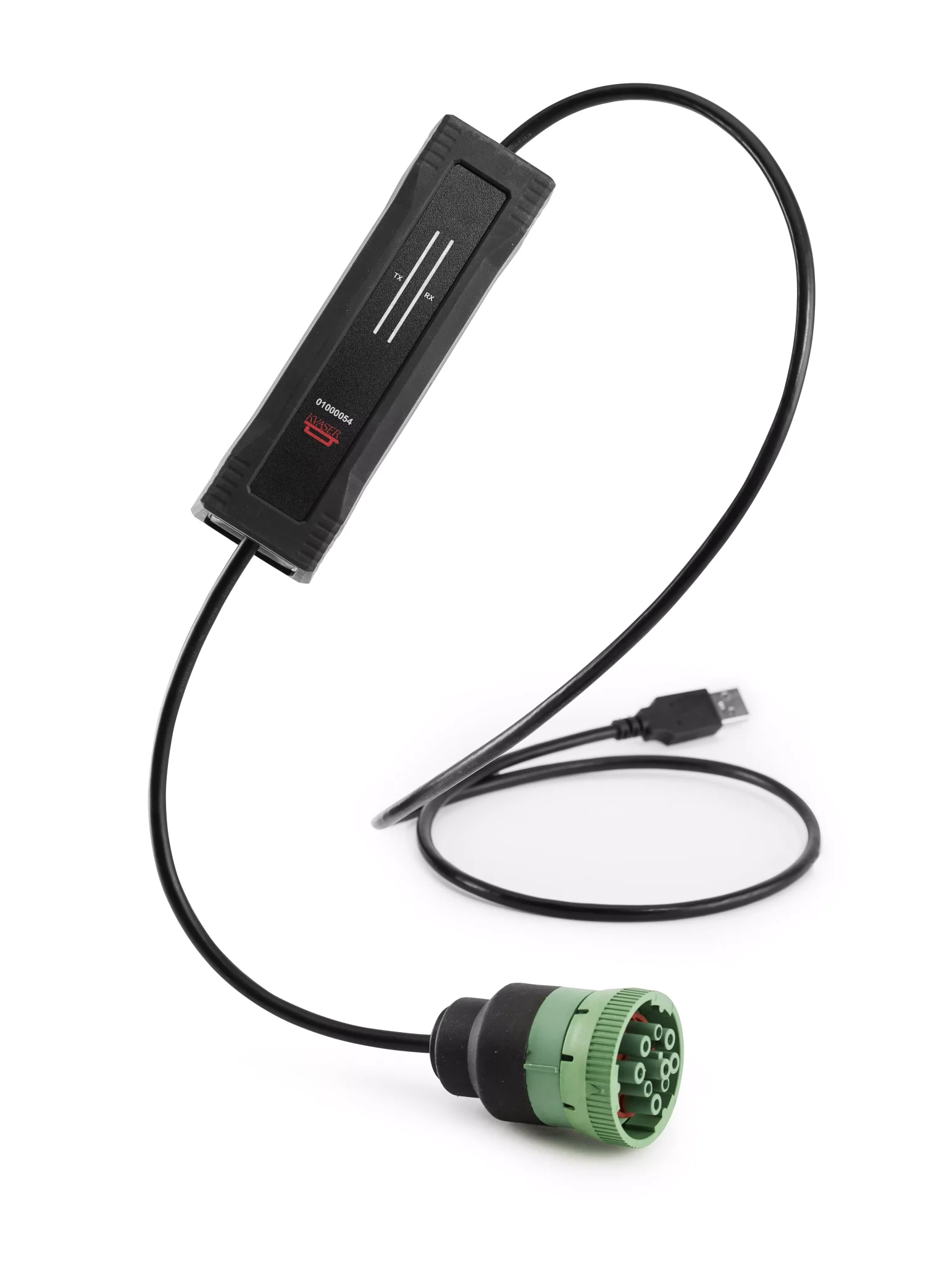
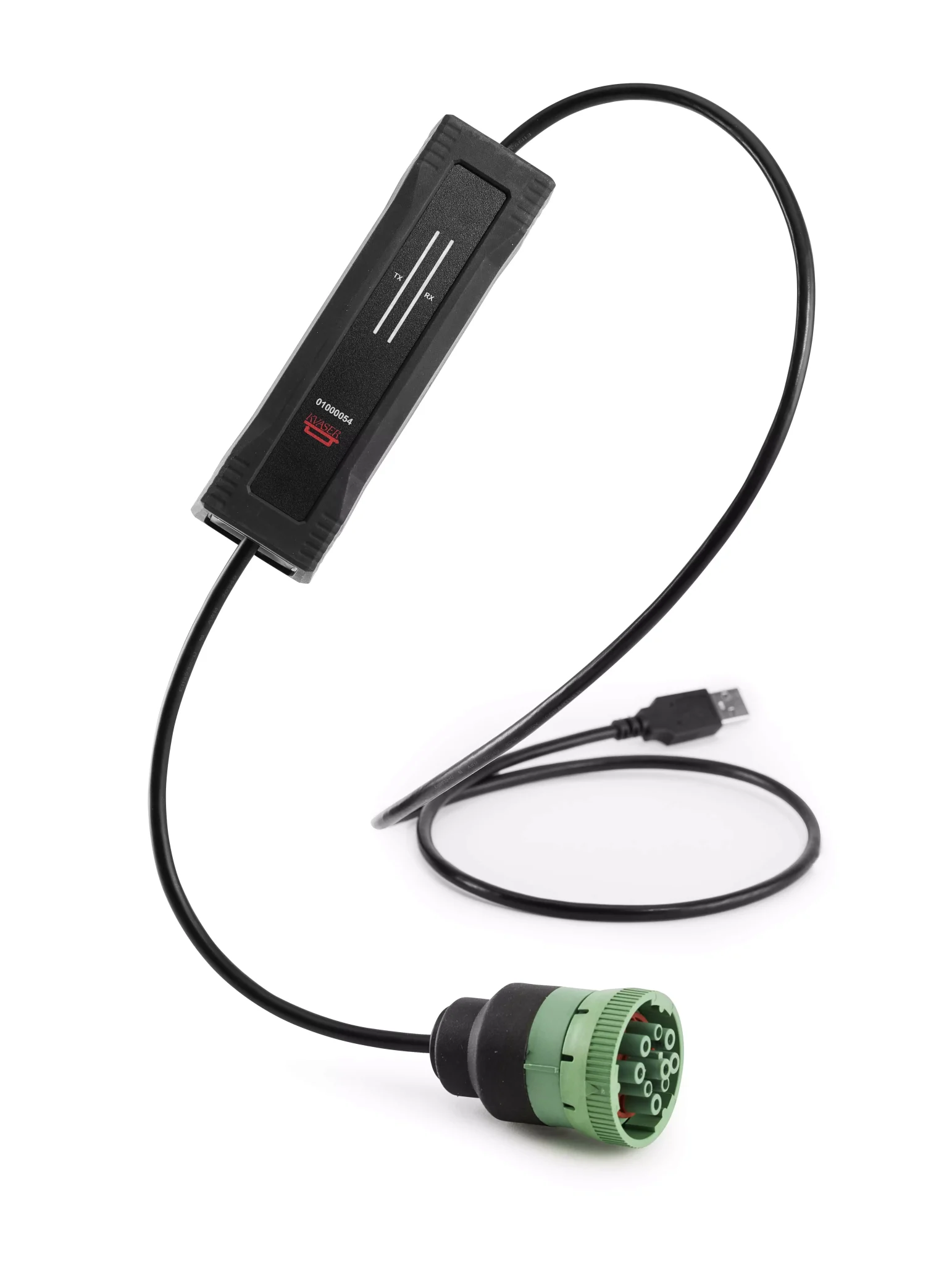
The Kvaser U100-X1 is a robust, galvanically-reinforced (Tested according EN 60335) single-channel CAN/CAN FD to USB interface with a 9-pin J1939-13 Type II CAN connector.
Signal and power isolated, the Kvaser U100 offers enhanced electrical protection, a vibration, shock and drop-proof housing and high-quality cabling that meets the needs of CAN system developers through to service technicians.
With an intelligent LED that displays bus loads and error frames, an industry-leading IP67 rating and an innovative connector system, the U100 has numerous stand-out features. Fully compatible with J1939, CANopen, NMEA 2000® and DeviceNet, this suits rugged and higher voltage applications in marine, industrial, construction, heavy-duty, agriculture and automotive, including electric vehicle markets.
The Kvaser U100 is also available with 9-pin D-SUB, M12 or OBD-II CAN connectors.
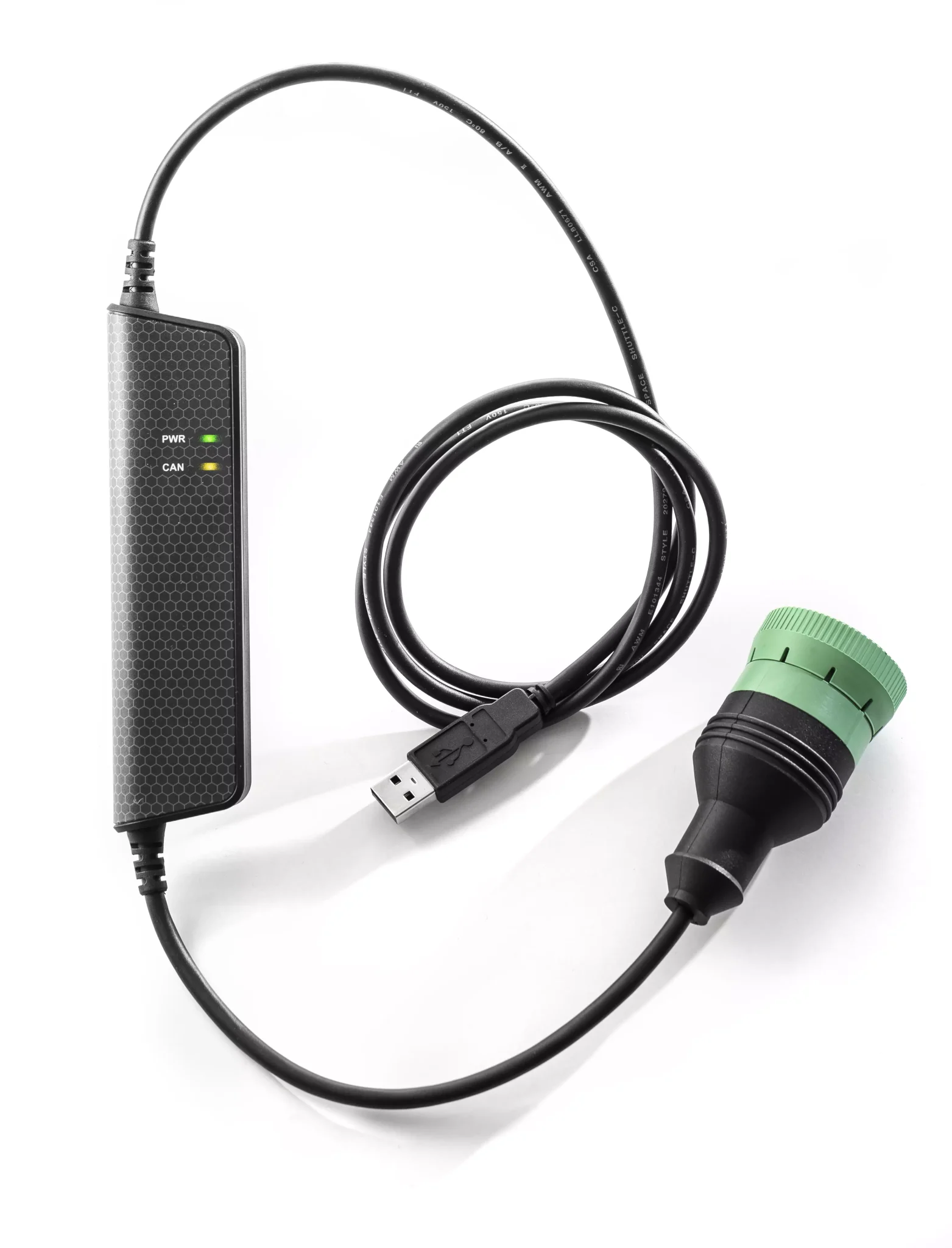
The Leaf Light HS v2 J1939-13 Type II provides a simple way of connecting a PC with the on-board computer of any J1939 compliant vehicle or industrial system. Get diagnostic data by means of its USB 2.0 connector and a 9-pin J1939-13 (Type II) compliant CAN connector, which is colour-coded in green and supports either 250 Kbps or 500 Kbps vehicle networks.
The Kvaser U100P is the Precision version of Kvaser’s U100 range of CAN to USB interfaces. The Kvaser U100P delivers advanced features for engineers working in system development and difficult troubleshooting situations. Get more precise timestamping, synced time measurements across multiple devices, and listen to the CANbus in silent mode.
The Kvaser U100P is also available with J1939, M12 or OBD-II CAN connectors.
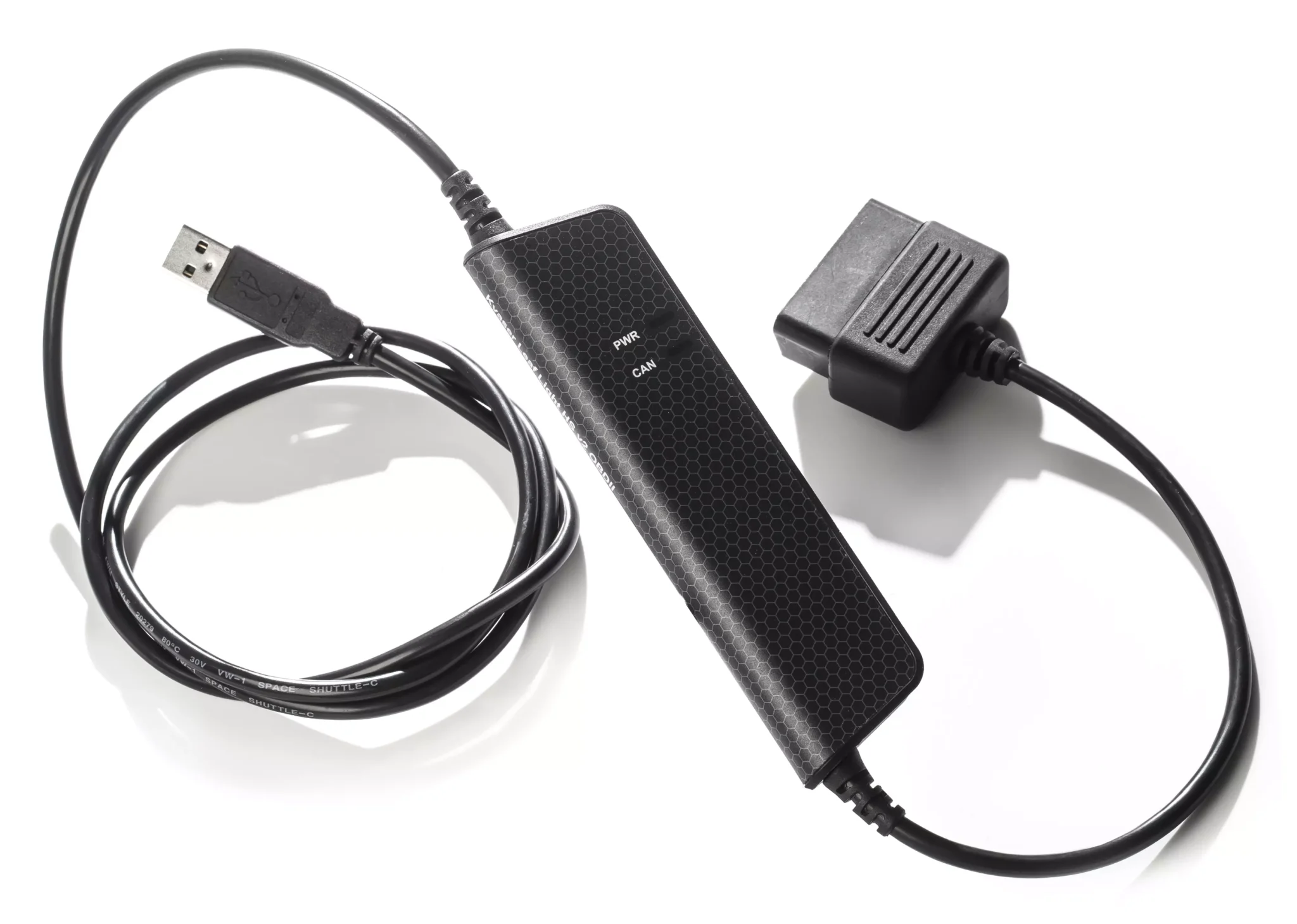
The Leaf Light v2 OBDII provides a simple way of connecting a PC with a vehicle’s on-board computer by means of USB 2.0 connector and a 16-pin OBDII-compliant CAN connector. Having made its name as the work-horse of USB to CAN interfaces, Kvaser’s Leaf Light product series provides reliable, low cost tools for connecting any CAN network to a PC or mobile computer in vehicle diagnostic applications and beyond.
The Leaf Light HS v2 M12 is the marine version of Kvaser’s popular Leaf Light v2 interface. This device provides a simple way of connecting a PC with a marine electronics system by means of its standard USB 2.0 connector and a NMEA compatible 5-pin connector.
The Leaf Light HS v2 M12 is ideal for diagnosing NMEA bus issues, configuring and flashing NMEA bus nodes, monitoring NMEA bus traffic and load conditions and stimulating or emulating NMEA nodes.
Please note: This product is not an NMEA 2000® Certified Product that complies with the NMEA’s current test procedures. ‘NMEA’ in this context refers simply to the type of CAN connector used.
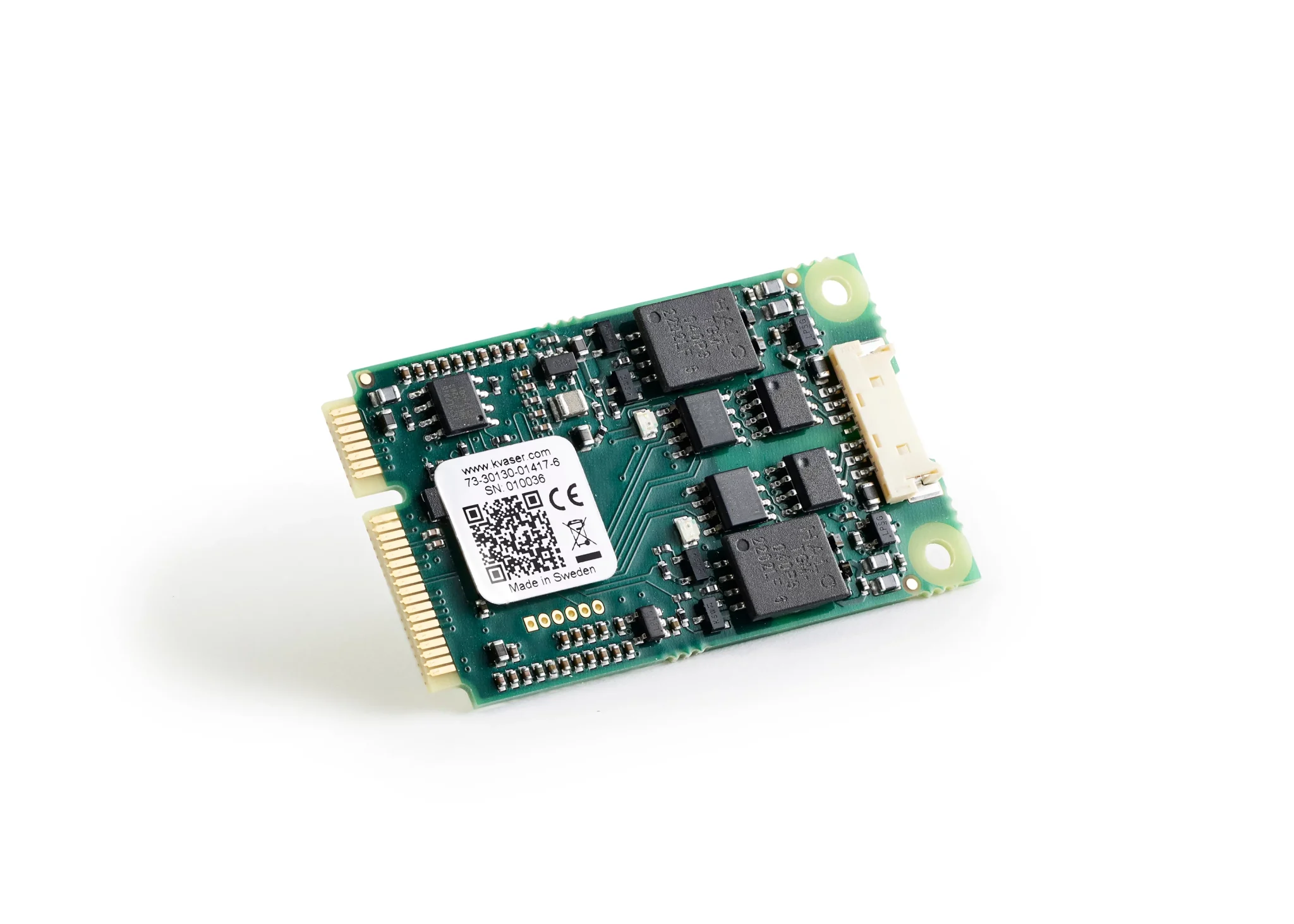
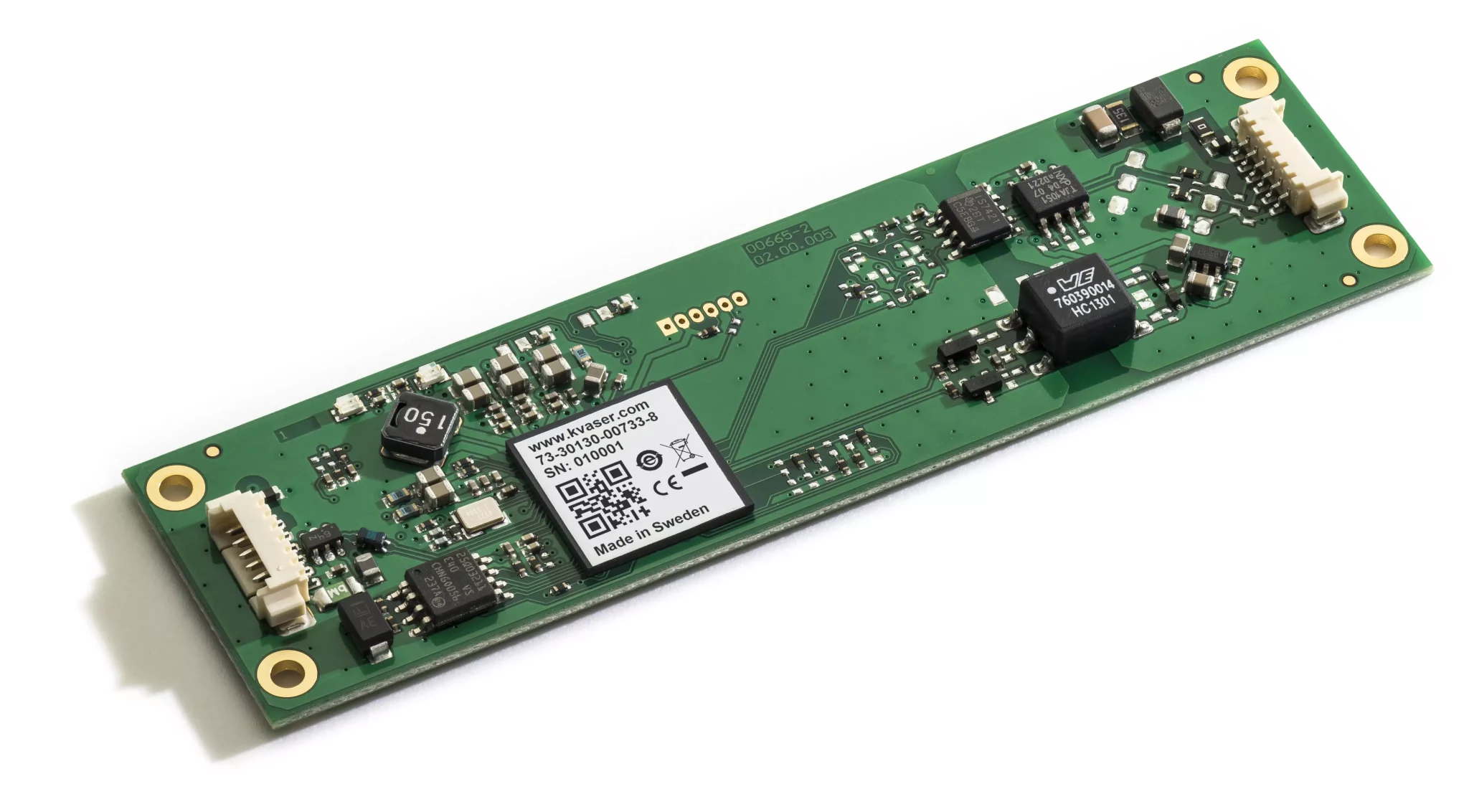
The Leaf Light v2 CB is the bare circuit board version of Kvaser’s popular Leaf Light v2 interface – a single-channel, high speed, USB-to-CANbus interface. Having made its name as the work-horse of USB to CAN interfaces, Kvaser’s Leaf Light product series provides reliable, low cost connection to the PC.
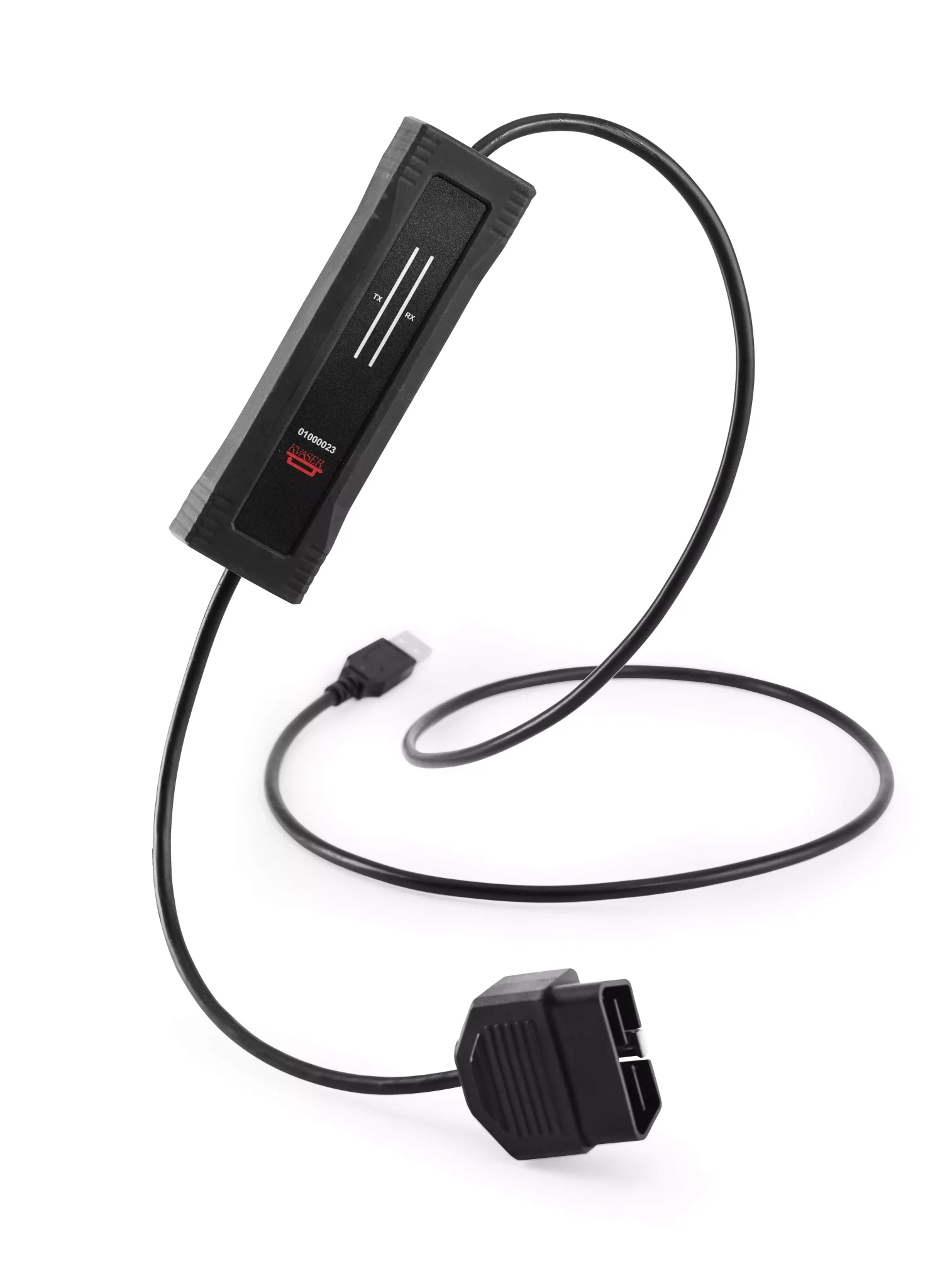
The Kvaser U100-X3 is a robust, galvanically-reinforced (Tested according EN 60335) single-channel CAN/CAN FD to USB interface with a 16-pin OBDII plug.
Signal and power isolated, the Kvaser U100 offers enhanced electrical protection, a vibration, shock and drop-proof housing and high-quality cabling that meets the needs of CAN system developers through to service technicians.
With an intelligent LED that displays bus loads and error frames, an industry-leading IP67 rating and an innovative connector system, the U100 has numerous stand-out features. Fully compatible with J1939, CANopen, NMEA 2000® and DeviceNet, this suits rugged and higher voltage applications in marine, industrial, construction, heavy-duty, agriculture and automotive, including electric vehicle markets.
The Kvaser U100 is also available with 9-pin D-SUB, J1939-13 Type II or M12 CAN connectors.
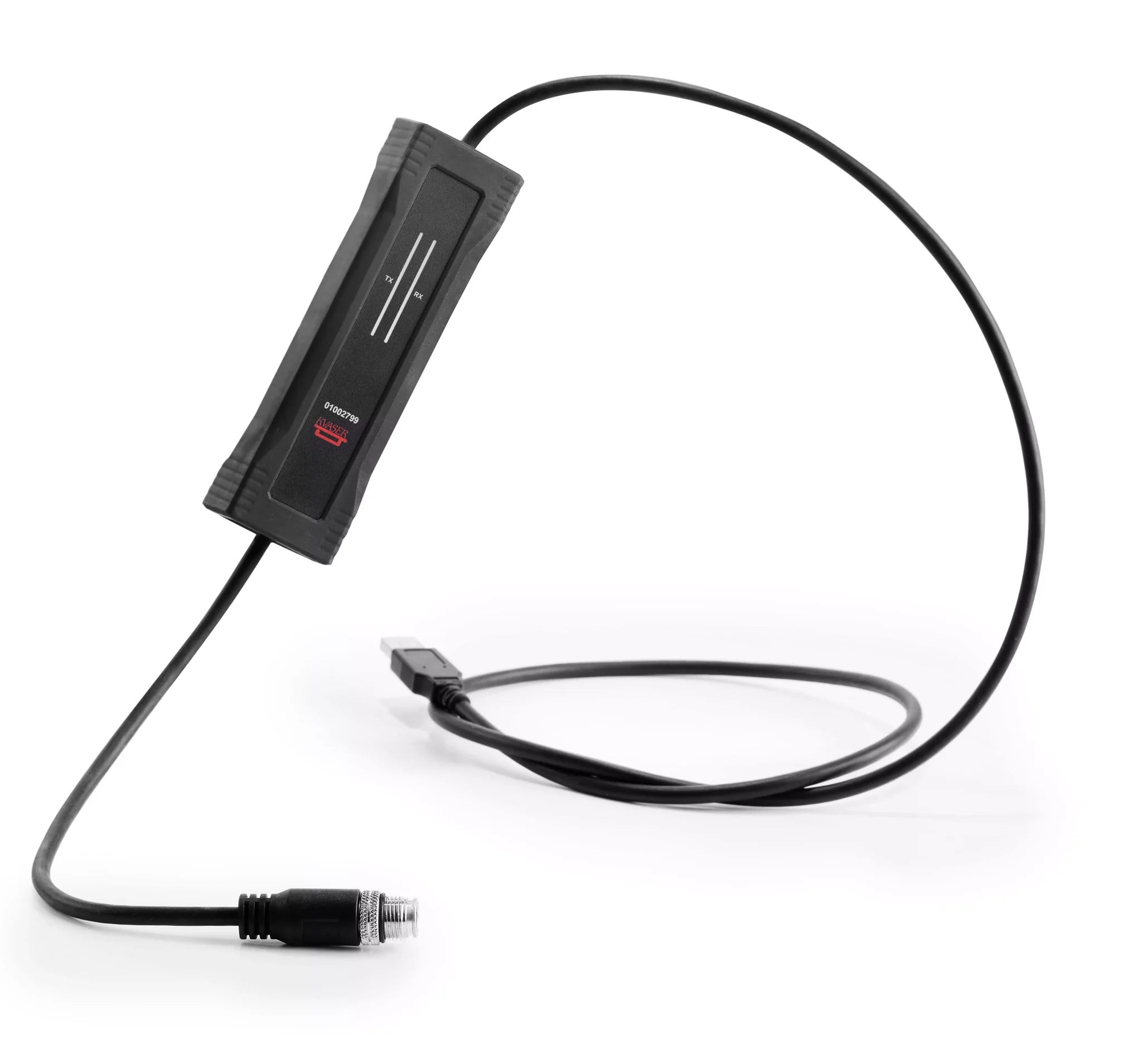
The Kvaser U100-X2 is a robust, galvanically-reinforced (Tested according EN 60335) single-channel CAN/CAN FD to USB interface with a 5-pole M12 connector.
Signal and power isolated, the Kvaser U100 offers enhanced electrical protection, a vibration, shock and drop-proof housing and high-quality cabling that meets the needs of CAN system developers through to service technicians.
With an intelligent LED that displays bus loads and error frames, an industry-leading IP67 rating and an innovative connector system, the U100 has numerous stand-out features. Fully compatible with J1939, CANopen, NMEA 2000® and DeviceNet, this suits rugged and higher voltage applications in marine, industrial, construction, heavy-duty, agriculture and automotive, including electric vehicle markets.
The Kvaser U100 is also available with 9-pin D-SUB, J1939-13 Type II or OBD-II CAN connectors.
The latest laptops and PCs come with USB-C slots only, so the Kvaser U100-C (01340-7) has been added to Kvaser’s U100 range of robust, single-channel CAN/CAN FD to USB interfaces. This interface is based on the standard Kvaser U100 with DB-9 connector, but replaces the standard USB type “A” connector with the smaller USB-C format. As with other devices in the range, this is powered via the USB bus.
Robust, galvanically-reinforced (Tested according EN 60335) and signal and power isolated, the Kvaser U100 range offers enhanced electrical protection, a vibration, shock and drop-proof housing and high-quality cabling that establishes a new reference in CAN interface design.
Other variants of the U100 range pair a standard USB type “A” connector with a 9-pin D-SUB, M12 or OBD-II CAN connector. A Precision version is also available – the Kvaser U100P – with a standard USB type “A” connector to a 9-pin D-SUB.
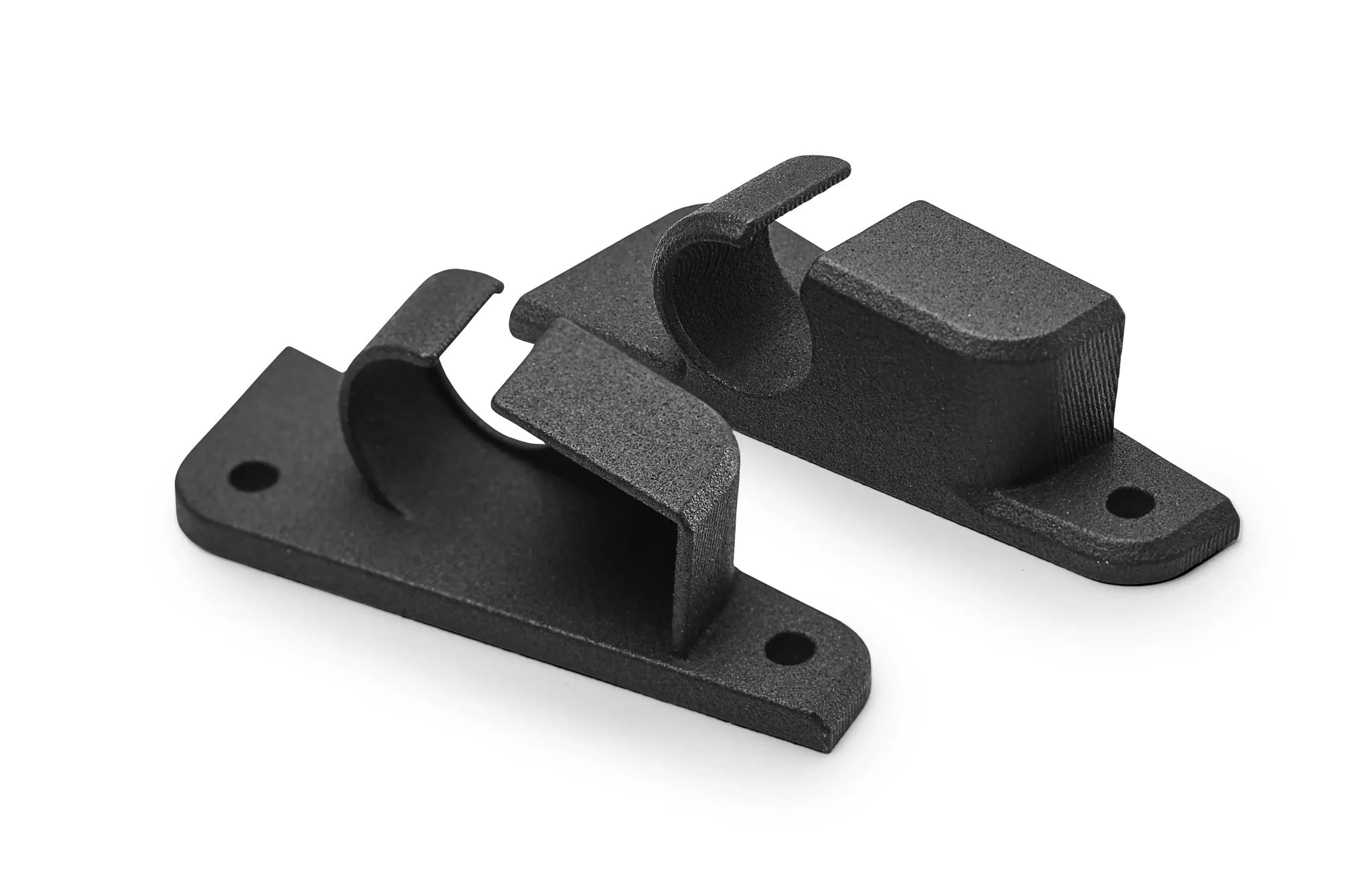
The Kvaser Leaf v2 Family Mounting Brackets offer a new way to mount your Kvaser interface with professional grade 3D printed brackets. They are lightweight and can be easily mounted with double-sided tape yet sturdy enough to be securely fastened with screws via the pre-drilled holes on either side of the bracket without adding unnecessary bulk to the device. The material used to 3D print the brackets, PA 2200, a high-performance alternative to plastics like ABS, is a strong and chemical-resistant material that is highly resistant to the elements and UV degradation, making it perfect for your toughest applications.
The Kvaser U100P-X3 is a robust, single-channel CAN/CAN FD to USB interface with reinforced galvanic isolation (Tested according EN 60335) that squarely addresses the needs of the evolving automotive development market. Fully compatible with J1939, CANopen, NMEA 2000® and DeviceNet, this is the first in a new range of interfaces that is also suited to rugged applications in marine, industrial, heavy duty vehicle and heavy industries.
The Kvaser U100P is also available with 9-pin D-SUB, J1939 or M12 CAN connectors.
The Kvaser U100P-X2 is a robust, single-channel CAN/CAN FD to USB interface with reinforced galvanic isolation (Tested according EN 60335) that squarely addresses the needs of the evolving automotive development market. Fully compatible with J1939, CANopen, NMEA 2000® and DeviceNet, this is the first in a new range of interfaces that is also suited to rugged applications in marine, industrial, heavy duty vehicle and heavy industries.
The Kvaser U100P is also available with 9-pin D-SUB, J1939 or OBD-II CAN connectors.
The Kvaser U100P-X1 is a robust, single-channel CAN/CAN FD to USB interface with reinforced galvanic isolation (Tested according EN 60335) that squarely addresses the needs of the evolving automotive development market. Fully compatible with J1939, CANopen, NMEA 2000® and DeviceNet, this is the first in a new range of interfaces that is also suited to rugged applications in marine, industrial, heavy duty vehicle and heavy industries.
The Kvaser U100P is also available with 9-pin D-SUB, M12 or OBD-II CAN connectors.