




SSA3000X-R Real-Time Spectrum Analyzers


- Spectrum Analyzer Frequency Range from 9 kHz up to 3.2 GHz / 5.0 GHz / 7.5 GHz
- Now with VNA and DTF functions, free!
- -165 dBm/Hz Displayed Average Noise Level (Typ.)
- -98 dBc/Hz.@10 kHz Offset Phase Noise (1 GHz, Typ.)
- Level Measurement Uncertainty < 0.7 dB (Typ.)
- Up to 40 MHz Real Time Analysis Bandwidth
- Web Browser Remote Control on PC and Mobile Terminals and File Operation
Product Overview
SIGLENT SSA3000X-R real-time spectrum analyzers are powerful and flexible tools for complex RF signal monitoring and analysis. With a capability of 40 MHz analysis bandwidth and 7.2 µs 100% POI, the SSA3000X-R spectrum analyzers can provide multi-dimensions data displays, advanced triggering, and RF data capturing, to solve modern RF spectrum challenges, like hopping frequency, conflict channel, spectrum interference, etc. They also provide a standard tracking generator for network analysis, optional wideband digital modulation analysis, and EMI pre-compliance test.
SSA3000X-R applications include broadcast monitoring/evaluation, cellular site, IoT, WiFi, Bluetooth surveying, research and development, education, production, and maintenance.
These powerful spectrum analyzers are even more useful with the addition of free Vector Network Analysis (VNA) and Distance-to-fault (DTF) functions included. Now, you can perform critical real-time analysis and RF device characterization with one instrument!
| Frequency Range | Resolution Bandwidth (RBW) | Phase Noise | Total Amplitude Accuracy | Display Average Noise Level (DANL) | |
|---|---|---|---|---|---|
| SSA3032X-R | 9 kHz~3.2 GHz | 1 Hz~3 MHz | <-98 dBc/Hz | < 0.7 dB | -165 dBm/Hz |
| SSA3050X-R | 9 kHz~5.0 GHz | 1 Hz~3 MHz | <-98 dBc/Hz | < 0.7 dB | -165 dBm/Hz |
| SSA3075X-R | 9 kHz~7.5 GHz | 1 Hz~3 MHz | <-98 dBc/Hz | < 0.7 dB | -165 dBm/Hz |
Key Features
- Spectrum Analyzer Frequency Range from 9 kHz up to 3.2 GHz / 5.0 GHz / 7.5 GHz
- VNA and DTF included
- -165 dBm/Hz Displayed Average Noise Level (Typ.)
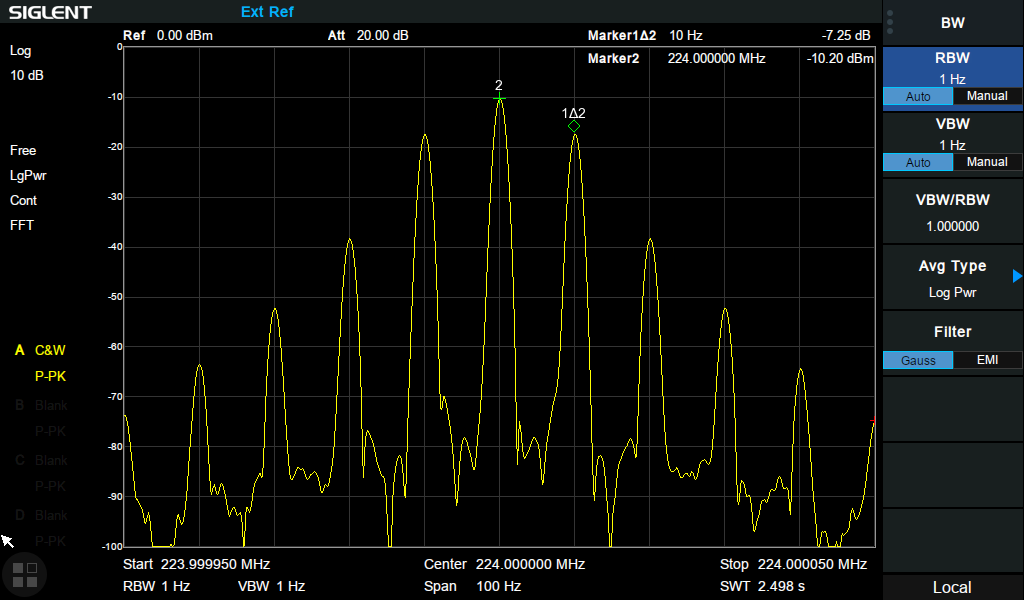
- -98 dBc/Hz.@10 kHz Offset Phase Noise (1 GHz, Typ.)
- Level Measurement Uncertainty < 0.7 dB (Typ.)
- 1 Hz Minimum Resolution Bandwidth (RBW)
- Preamplifier and Tracking Generator Standard
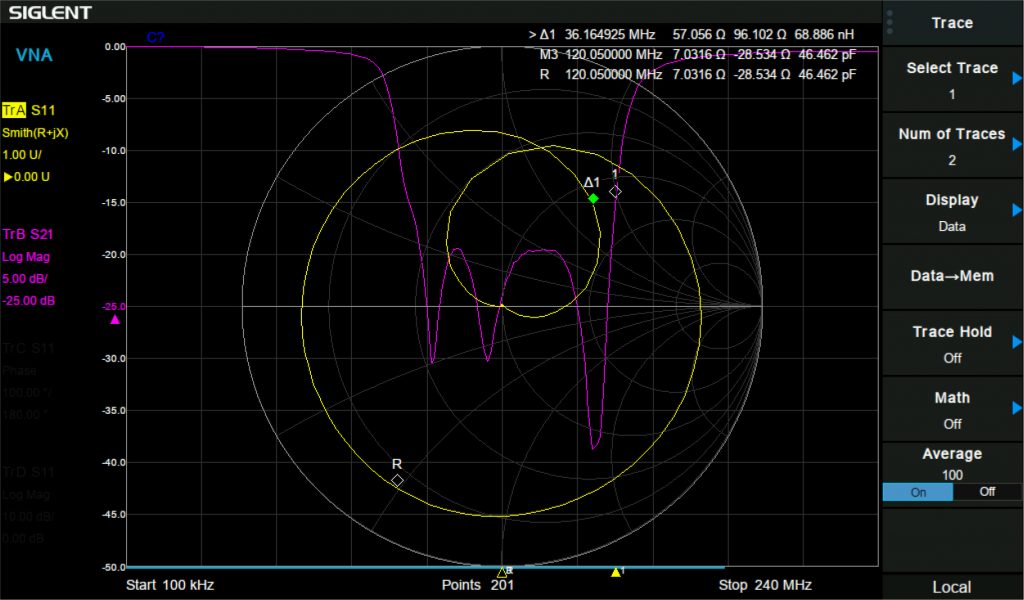
- Vector Network Analyzer Mode Standard
- Distance to Fault Mode Standard
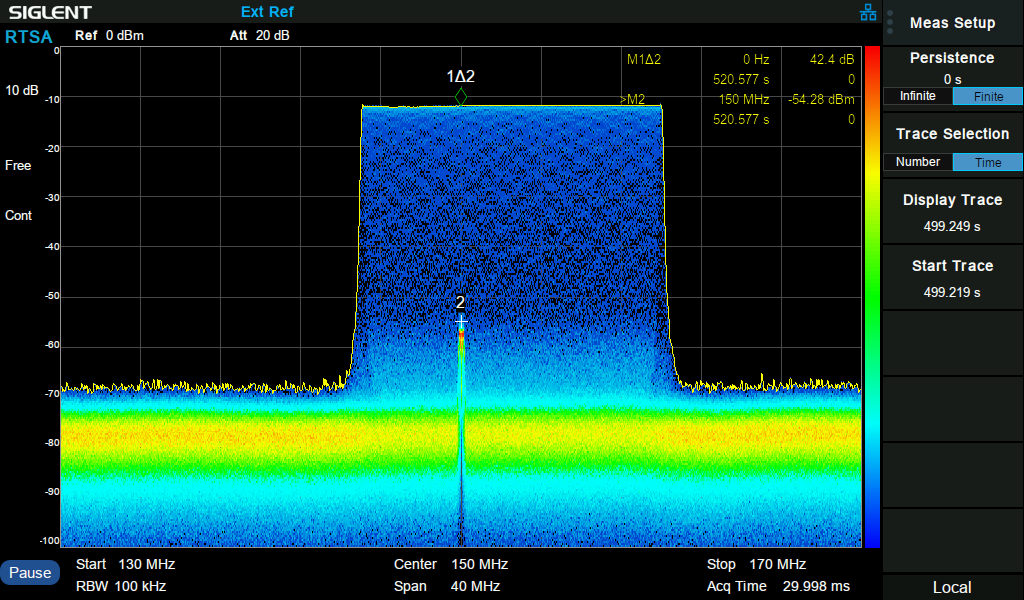
- Up to 40 MHz Real Time Analysis Bandwidth
- 100% POI 7.20 μs, Dynamic Range 60 dB
- Multi-view for Density, Spectrogram, PvT, and multi trigger and FMT
- Modulation Analysis (Opt.)
- EMI Filter and Quasi-Peak Detector Kit(Opt.)
- Advanced Measurement Kit (Opt.)
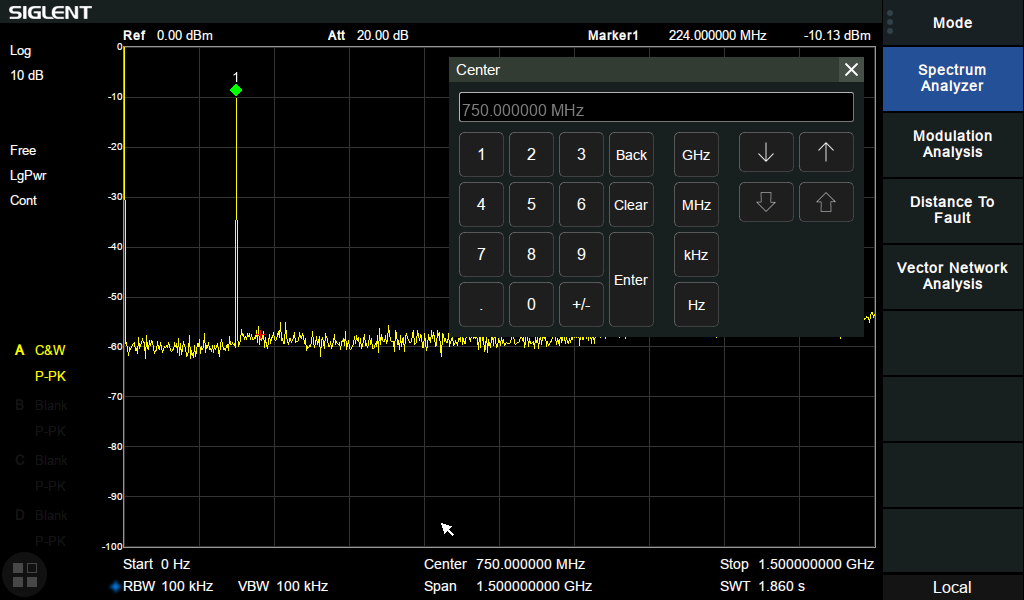
- 10.1 inch Multi-Touch Screen , Mouse and Keyboard supported
- Web Browser Remote Control on PC and Mobile Terminals and File Operation
Product Characteristics
Real Time Analysis Mode
Vector Network Analyzer Mode
Modulation Analysis Mode

10.1 lnch Display with Multi-Touch Screen
Phase noise
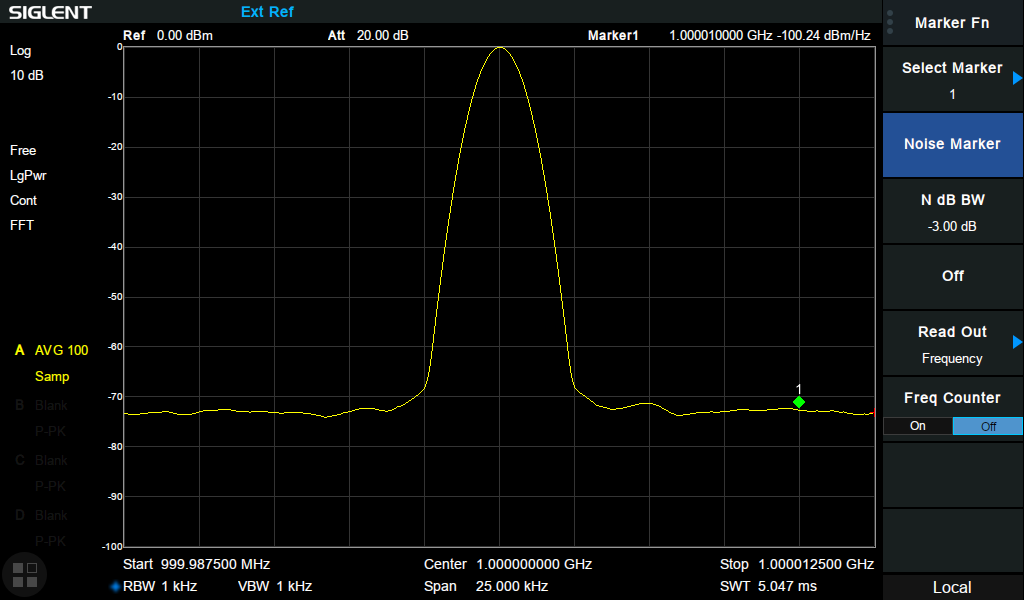
Resolution Bandwidth