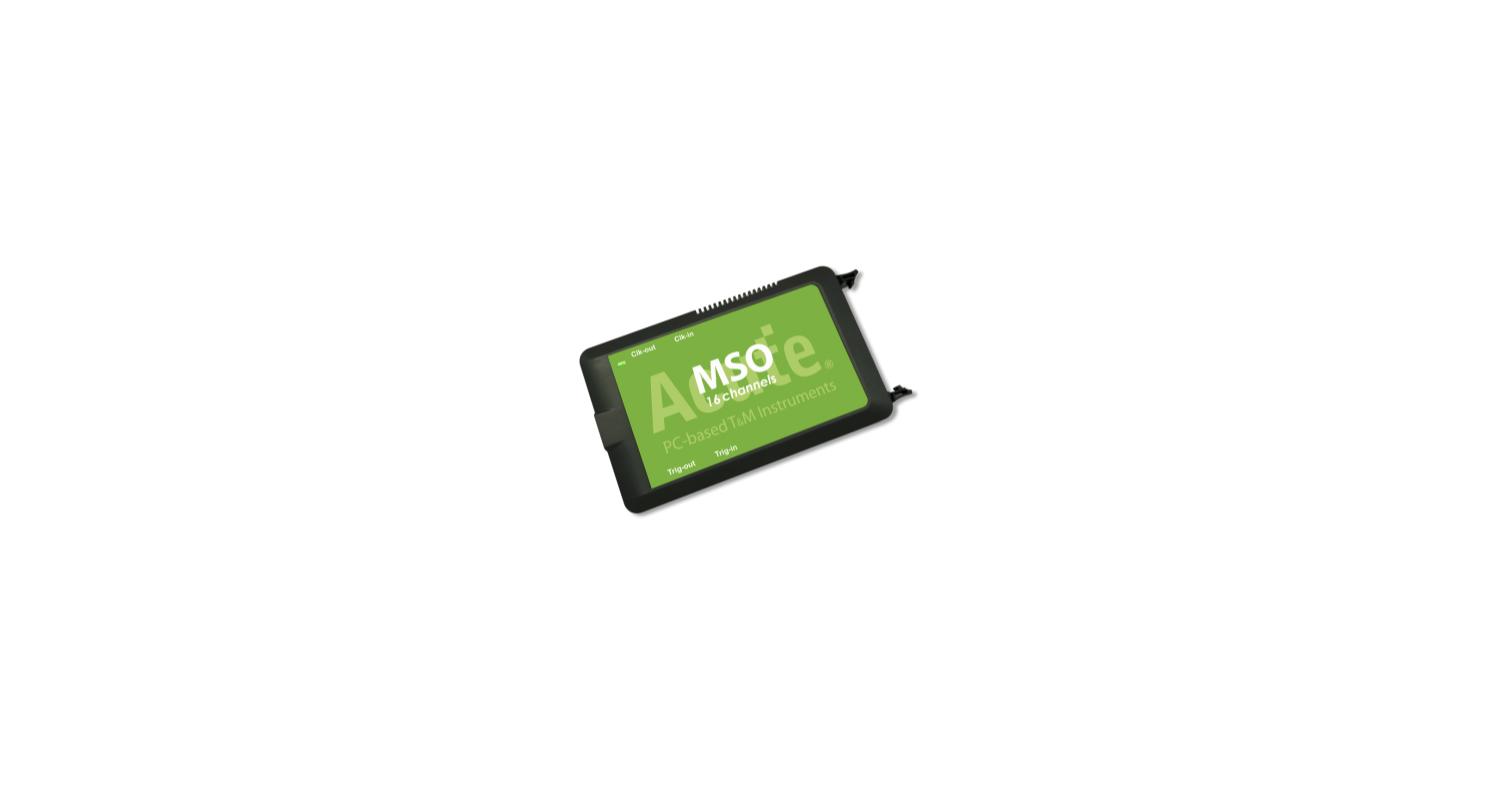
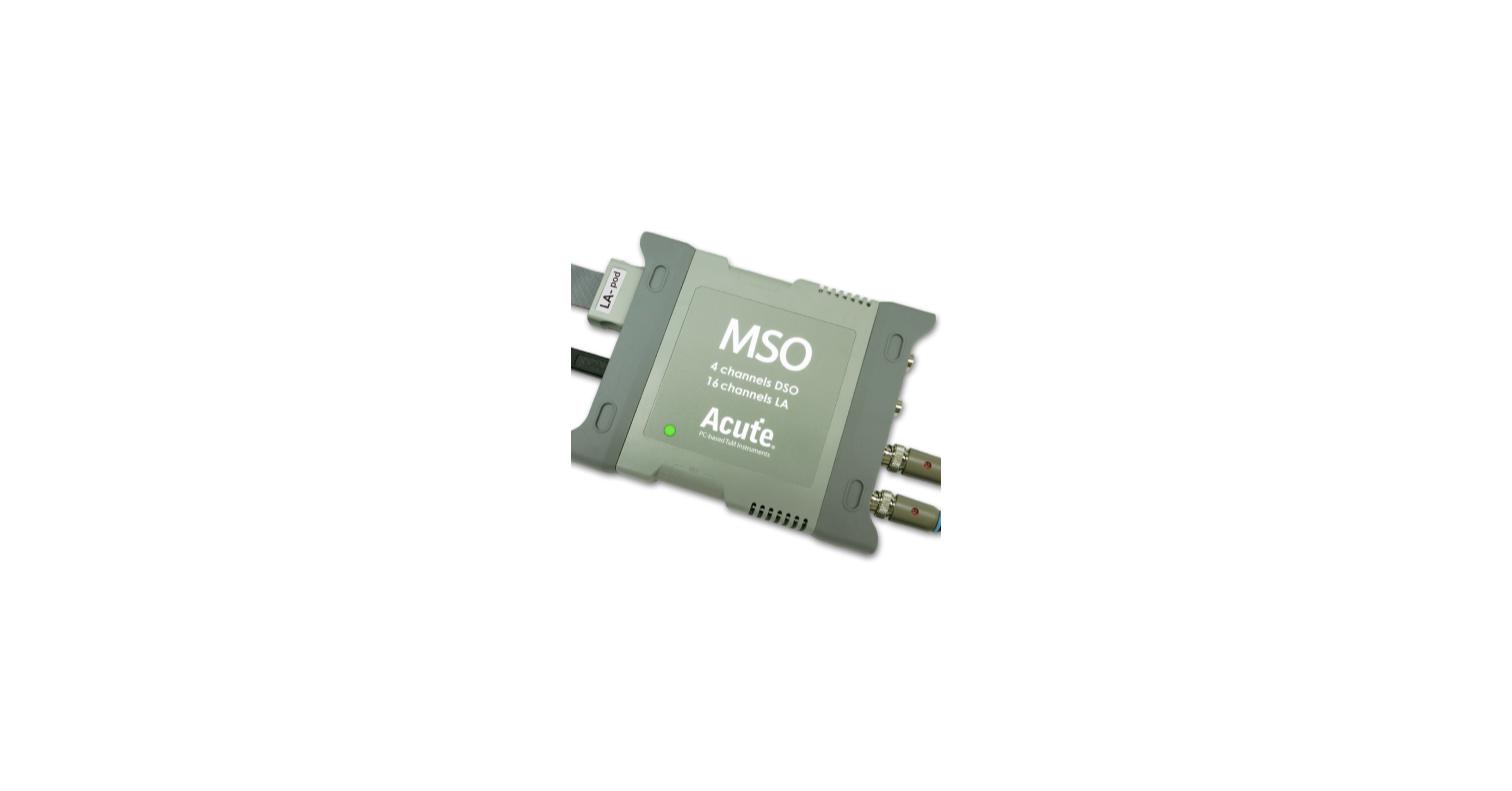
MSO2000 & MSO3000 Series
Description
Analog scope and digital logic analyzer in one instrument, one trigger, one timebase
A TravelScope and a TravelLogic can already be cascaded together to look at analog and digital signals side by side — but the MSO2000 and MSO3000 series build that combination into a single box, with one trigger engine and one timebase across both domains instead of two instruments to correlate afterward. Choose MSO2000 for a compact, general-purpose mixed-signal setup, or MSO3000 where the analog side needs real oscilloscope bandwidth and 16-bit vertical resolution.
40 / 200 MHz
Bandwidth (2000 / 3000)
200 MS/s – 1 GS/s
Sample rate
8 / 16-bit
Vertical resolution
Why engineers reach for it
- One trigger event arms both the analog front end and the digital channels together — a glitch on an enable line and the resulting droop on a rail land in the same capture, already time-aligned, with no manual correlation step afterward
- MSO3000's "V" variant adds electrical validation: protocol-aware triggering and decode (I2C, I3C, SPI, UART and more) directly on the analog waveform, not just the digital channels — useful when the signal of interest hasn't been buffered down to clean logic levels yet
- MSO3000's "H" variant cascades with other Acute units to extend channel count further, for boards too wide for one box
- Same protocol decode and trigger library as the rest of Acute's line, so setups built on a standalone TravelLogic or TravelScope carry across directly
Where it earns its keep
- Power-sequencing and rail-droop debug, where a digital control edge and its analog consequence need to be seen on the same timeline
- Mixed-signal board bring-up — an analog sensor front end next to a digital control bus — without swapping between two separate instruments mid-session
- Any bench that's short on space or budget for a dedicated scope and a dedicated logic analyzer side by side
Key specifications
| Model | Analog / digital ch | Bandwidth | Sample rate | Total memory | Timing / state | Notes |
|---|
| MSO2116E | 16 [same ch] | 40 MHz | 200 MS/s | 4 Gb | 2 GHz / 200 MHz | — |
| MSO2116B | 16 [same ch] | 40 MHz | 200 MS/s | 4 Gb | 2 GHz / 200 MHz | — |
| MSO2216B | 16 [same ch] | 40 MHz | 200 MS/s | 8 Gb | 2 GHz / 200 MHz | eSPI, SVI3, SVID support |
| MSO3124E | 4 analog / 16 digital | 200 MHz | 1 GS/s | — | — | 8-bit vertical |
| MSO3124B | 4 analog / 16 digital | 200 MHz | 1 GS/s | — | — | 8-bit vertical |
| MSO3124H | 4 analog / 16 digital | 200 MHz | 1 GS/s | — | — | 16-bit, cascade, eSPI/SVI3/SVID |
| MSO3124V | 4 analog / 16 digital | 200 MHz | 1 GS/s | — | — | 16-bit, electrical validation decode, eSPI/SVI3/SVID |
Not sure whether you need MSO2000's channel count or MSO3000's bandwidth and resolution? Tell us the signal you're chasing and we'll point you to the right variant.